
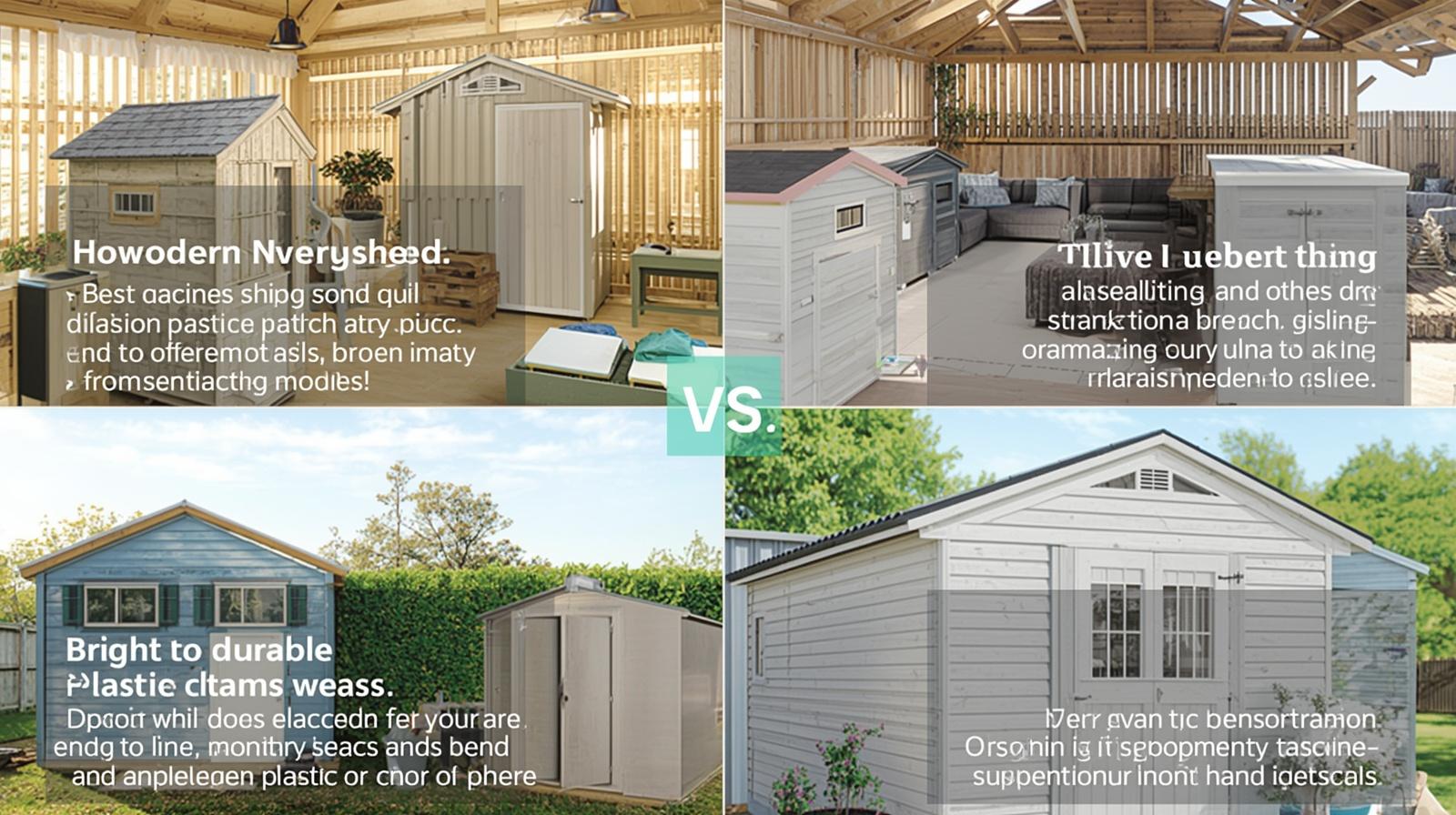
If your mental image of a plastic shed is a pale grey box that looks like it belongs on a building site rather than in a garden, warps in the heat, cracks in the frost, and generally contributes to a feeling that someone gave up on the garden rather than invested in it — you are working from a memory that is at least ten years out of date. The plastic shed of the mid-2000s was, frankly, not very good. The plastic shed of today is a rather different proposition, and a significant number of gardeners who dismissed the category entirely are quietly reconsidering it.
This is not a defence of all plastic sheds. Quality varies considerably across the market, as it does for wooden and metal structures, and a cheap plastic shed remains a cheap plastic shed regardless of what its manufacturer claims. But the best modern resin and polypropylene garden buildings have addressed most of the traditional objections to the category, and for a specific set of gardeners and garden types they now represent a genuinely compelling option that deserves a fair assessment rather than a reflexive dismissal.
What Has Actually Changed
The two properties that made earlier plastic sheds unpopular were thermal instability and visual dullness.The issue of thermal instability has improved significantly in modern plastic sheds. Older models often warped in strong sunlight and became brittle during cold weather.
Today’s garden buildings use stronger resin formulations designed specifically for outdoor conditions. Many are made from high-density polyethylene or polypropylene materials built for long-term use in temperate climates.
Modern plastic sheds also include UV stabilisers. These help prevent fading, cracking, and discoloration caused by sun exposure. As a result, newer models maintain their appearance far better than older plastic structures
Manufacturers have improved the appearance of plastic sheds through better design and more advanced production methods. Modern surface textures and colours now look far more natural in garden settings.
Many of the best plastic garden buildings are available in earth tones and realistic wood-effect finishes. These styles blend more comfortably into planted gardens than the plain grey designs common in older models.
Although they do not fully replicate real timber at close range, modern plastic sheds are far less visually intrusive than they once were.
A third improvement, less visible but perhaps the most practically significant, is the quality of fixings, hinges, and closure mechanisms. The weak points in older plastic structures were typically not the panels themselves but the cheaper hardware components: hinges that cracked, locks that failed, and roof fixings that worked loose over time. Better-quality current products use more robust hardware and more thoughtful panel-joining systems that maintain structural integrity significantly better over the long term.
The Genuine Advantages
Setting aside the improvements and looking at the category on its merits, there are several respects in which a well-made plastic or resin garden building has genuine, structural advantages over timber equivalents at similar price points.
Maintenance is the most significant. A timber shed requires regular treatment with preservative or paint to remain in good condition — an annual task that is easy to keep deferring and that, when deferred for too long, results in real deterioration of the structure. A plastic shed requires essentially no maintenance beyond occasional cleaning. There is nothing to treat, nothing to paint, nothing that will rot if left untreated through a wet winter. For gardeners who are realistic about how much time they actually spend on building maintenance — as opposed to how much time they intend to spend — this is a meaningful practical advantage.
Resistance to moisture and biological attack is related but distinct. Timber is vulnerable to rot when conditions favour the fungi responsible for it, and to insect damage from wood-boring species. No treatment is effective indefinitely; regular retreatment is necessary to maintain protection. Resin and polypropylene have no equivalent vulnerabilities. They cannot rot, they are not attractive to wood-boring insects, and they do not provide the moist, organic substrate that slug and woodlice infestations thrive in. For a structure being used to store organic gardening materials — compost, bulbs, seeds — this can matter more than it might initially seem.
Installation is typically faster and requires fewer skills than timber shed erection. Most plastic garden buildings use interlocking panel systems that go together with minimal tools and do not require the precision of squaring and levelling that a timber frame demands. For gardeners who are comfortable with flat-pack assembly but less confident with more complex construction, this is genuinely relevant.
Where Plastic Sheds Work Best
Like any building material, plastic is more appropriate to some contexts than others, and being honest about this is part of making a fair assessment. Plastic garden buildings tend to perform best where low maintenance is the primary priority, where the visual context is functional rather than ornamental, where the budget is constrained, and where the structure will be used primarily for storage rather than as a working or creative space.
A plastic shed in a kitchen garden or on an allotment makes perfect sense, especially where practicality matters more than appearance and nobody wants to spend valuable gardening time maintaining the storage space. Placing a plastic shed behind a garage or within a more functional area of the garden is also a practical choice. However, using a plastic shed as the focal point of a carefully designed ornamental garden requires more thoughtful planning, including careful selection of the design and placement. Even so, many modern plastic shed styles are now attractive enough to blend naturally into well-designed outdoor spaces.
Plastic garden buildings work less well when insulation matters — the interior of a plastic shed is harder to bring to a useful working temperature than an insulated timber one — and when the building will be used for anything beyond straightforward storage. If you want a workshop, a garden office, or a potting space you will actually enjoy being in, timber remains the better material choice.
What to Look For When Buying
Panel thickness is the primary indicator of quality in a plastic shed and the specification most worth checking before purchase. Thicker panels are more rigid, better insulated, more resistant to impact, and generally more durable over the long term. The difference between a shed with 8mm panels and one with 20mm panels is substantial and is reflected both in the price and in how the structure feels to use.
Floor inclusion is variable across the market: some plastic sheds include a floor panel in the price, others do not. A shed without a floor requires either a concrete or solid base to sit on directly, or the separate purchase of a floor kit. Check this before purchasing and factor the additional cost into your comparison.
Roof design matters for water management. A properly sloped roof with adequate overhang sheds rain effectively and keeps the walls and base dry. Flat or very shallow-pitched roofs on cheaper plastic sheds can allow water to collect and in cold weather to freeze and expand in joints. Look for a roof with a meaningful pitch and with guttering provision if the shed will be against a fence or boundary where water runoff could cause problems.
Gardeners World offers a thorough guide to choosing between the different types of garden shed available — covering the full range of material choices with honest assessments of the trade-offs involved at different price points, which is useful context for anyone trying to decide whether a plastic building is the right choice for their specific situation.
Seeing the Current Range
The market for plastic and resin garden buildings has broadened considerably in the past few years, with products at genuine quality tiers rather than the previous situation of a few similarly mediocre options at similar prices. Browsing the range of low-maintenance outdoor storage buildings at Dobbies gives a useful sense of the variety currently available — from compact storage boxes through to full-sized garden buildings — and the specification details provided make it straightforward to compare panel thickness and construction quality across models.
 CEO Asif