
Introduction
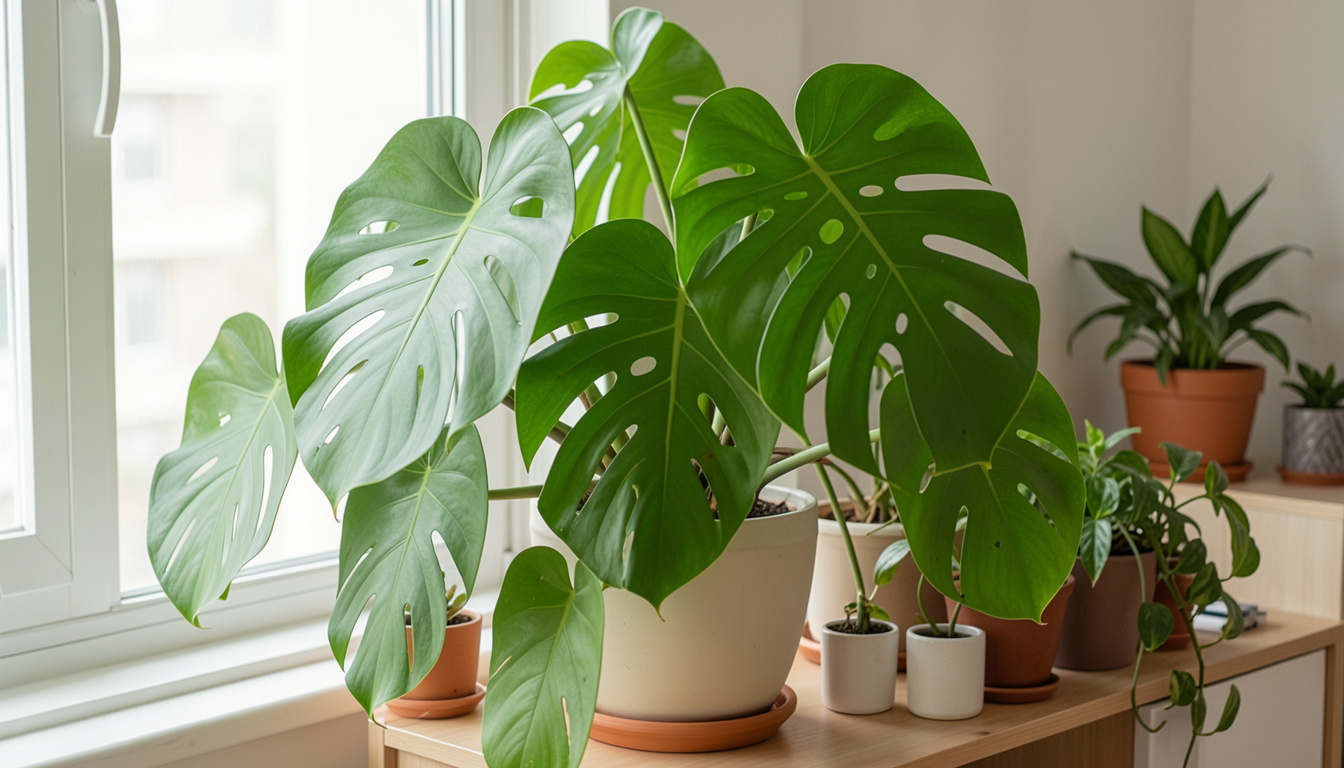
Monstera plants have become a staple of modern interiors, but the classic Monstera deliciosa can outgrow small apartments fast, stretching several feet wide within a couple of years. The good news is that the monstera family includes several compact varieties that deliver the same dramatic, tropical look without demanding a living room’s worth of floor space.
This guide covers the best monstera varieties for apartments and tight rooms, how to keep them appropriately sized, and how to style them so they feel intentional rather than crowded.
Why Standard Monsteras Struggle in Small Spaces
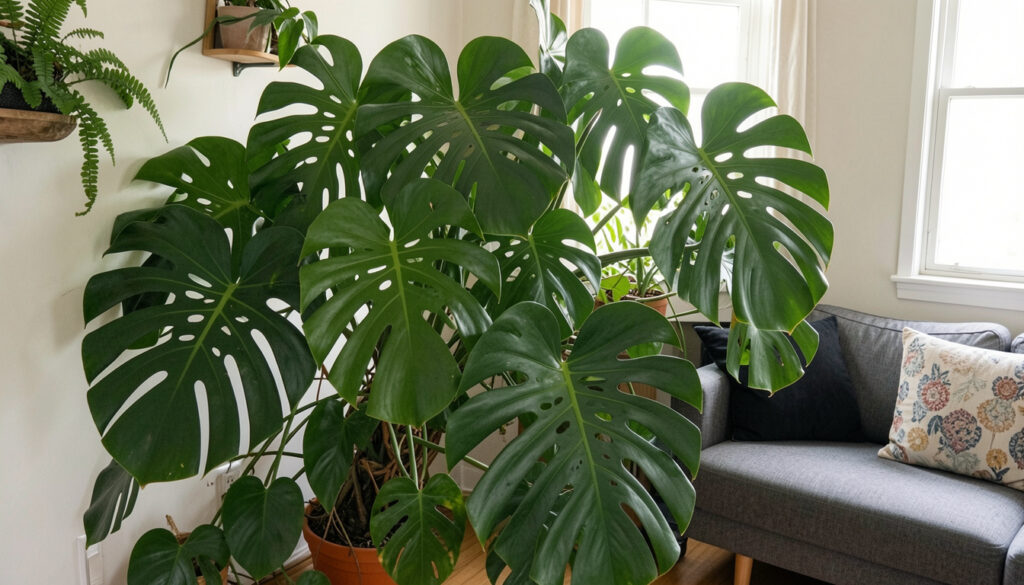
A mature Monstera deliciosa can reach six to eight feet tall indoors with leaves spanning over a foot wide, which quickly overwhelms studio apartments or small rental rooms. Its aerial roots and climbing habit also mean it needs a moss pole or trellis, adding to its footprint.
For renters and small-space dwellers, choosing a naturally compact monstera species from the start avoids the awkward cycle of constant pruning or having to rehome a plant that has simply outgrown its home.
Top Monstera Varieties for Apartments
Several monstera relatives stay compact enough for shelves, side tables, or hanging baskets, making them ideal for tight square footage.
Compact Monstera Varieties Compared
| Variety | Mature Size | Growth Habit | Best For |
| Monstera adansonii (Swiss Cheese Vine) | 2–4 ft trailing | Vining, trailing | Hanging baskets, shelves |
| Monstera peru | 1–2 ft compact | Slow, upright | Desks, side tables |
| Monstera obliqua | 1–2 ft delicate | Slow, trailing | Small terrariums, collectors |
| Monstera dubia | 2–3 ft climbing | Shingling climber | Small moss poles, walls |
| Mini Monstera (Rhaphidophora tetrasperma) | 3–5 ft | Climbing | Corners with a small trellis |
How to Keep Any Monstera Compact
Even naturally larger varieties can be kept apartment-sized with the right approach.
- Prune new growth tips regularly to encourage bushier, shorter growth instead of tall climbing stems
- Use a smaller pot than the plant technically needs, since tighter roots naturally slow growth
- Choose a moss pole under three feet tall to physically limit climbing height
- Rotate the plant weekly for even light exposure instead of letting it stretch toward one window
Light and Watering Needs in Small Rooms
Apartments often have less consistent natural light than houses, especially in units facing narrow courtyards or other buildings. Most compact monsteras still need bright, indirect light to maintain their signature leaf fenestrations, the natural holes and splits in the leaves.
Without enough light, even a small monstera can develop solid, hole-free leaves and leggy stems as it stretches toward any available brightness. A spot near an east or west-facing window, or a few feet back from a south-facing one, usually works well.
Styling Monsteras in Tight Layouts
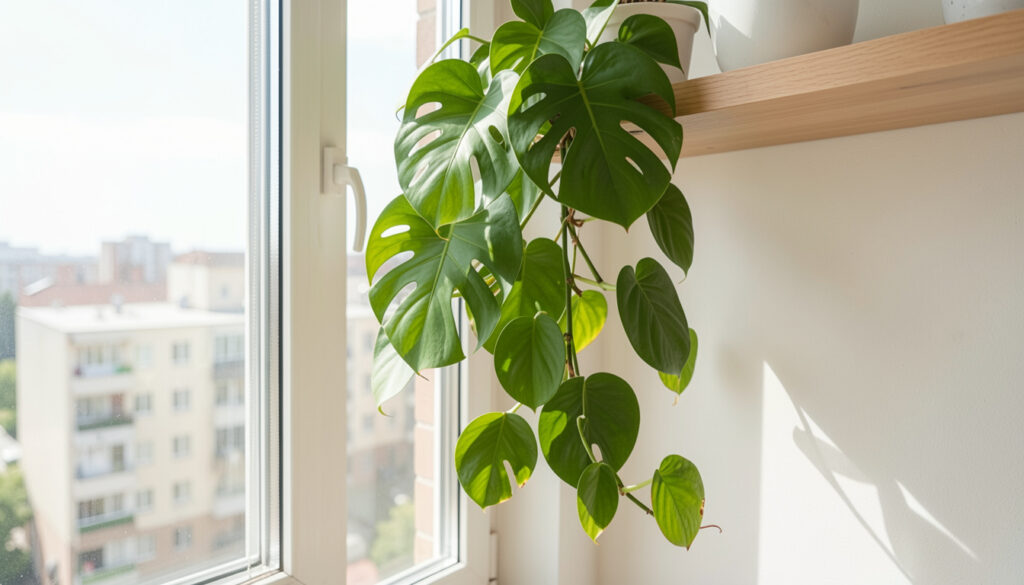
In small spaces, vertical placement makes a bigger visual impact than floor space ever could.
Best Placement Ideas by Room Size
| Space Type | Recommended Variety | Placement Idea |
| Studio apartment | Monstera adansonii | Hanging basket near a window |
| Small living room | Mini Monstera | Corner shelf with a short trellis |
| Home office desk | Monstera peru | Compact pot on the desk or windowsill |
| Bathroom shelf | Monstera obliqua | Small pot with humidity from showers |
Common Small-Space Monstera Problems
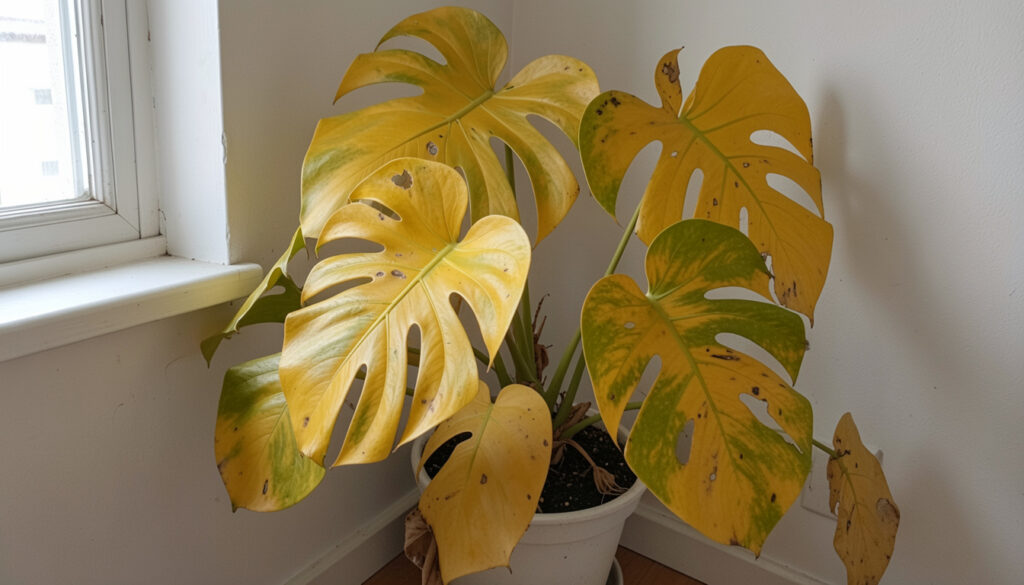
Cramped conditions can amplify small care mistakes. Watch for yellowing lower leaves, which usually signal overwatering in a pot that is too large for the room’s light levels. Leggy, sparse growth points to insufficient light, while brown, crispy leaf edges often mean the air is too dry, common in apartments with central heating or air conditioning.
Practical Tips
- Group a small monstera with one or two other plants of similar size rather than one oversized plant, which creates a lush look without taking over the room.
- Wipe leaves with a damp cloth monthly to keep them dust-free and better able to photosynthesize in already limited apartment light.
- Use a lightweight, well-draining potting mix so pots stay easier to move around when rearranging furniture.
- Avoid placing monsteras directly above radiators or air conditioning vents, which dry out leaves quickly.
- If a variety starts outgrowing its space, propagate cuttings rather than upgrading to a bigger pot, keeping the mother plant compact.
Frequently Asked Questions
What is the smallest monstera variety for apartments?
Monstera obliqua and Monstera peru are among the smallest, typically staying under two feet even at full maturity.
Can Monstera adansonii be kept small permanently?
Yes, regular pruning and a smaller pot will keep it compact indefinitely, since it naturally trails rather than growing tall.
Do compact monsteras still develop leaf holes like Monstera deliciosa?
Yes, though fenestration depends on the variety, plant maturity, and light levels rather than pot size alone.
How much light does a small monstera need in a low-light apartment?
Aim for bright, indirect light for at least a few hours daily; a north-facing window alone is usually too dim for strong fenestration.
Is a mini monstera actually a true monstera?
No, Rhaphidophora tetrasperma is a closely related but separate species, often called mini monstera because of its similar leaf shape.
How do I stop my monstera from outgrowing my small apartment?
Choose a naturally compact variety, prune regularly, keep it in a slightly snug pot, and propagate cuttings instead of repotting into larger containers.
Conclusion
You do not need a spacious living room to enjoy the bold, tropical look of a monstera. Compact varieties like Monstera adansonii, peru, and obliqua bring the same iconic leaf shapes into apartments and small rooms without overwhelming the space.
With the right variety, consistent pruning, and thoughtful placement near natural light, a small-space monstera can thrive for years while staying perfectly scaled to your home.