
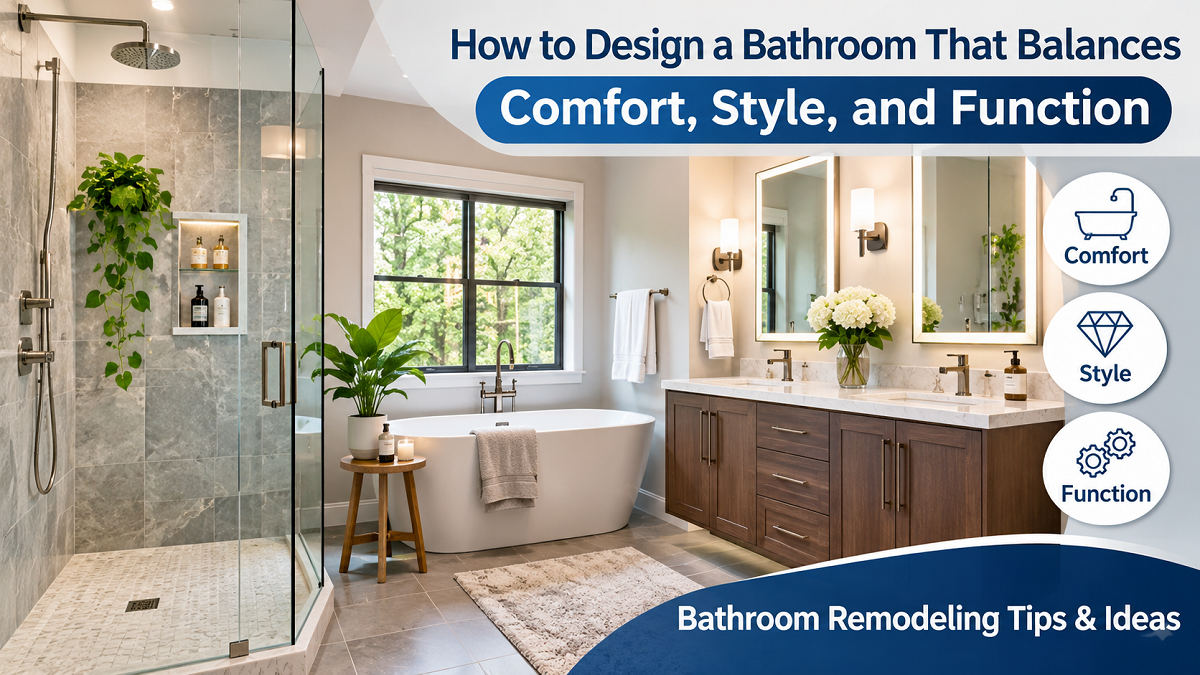
Bathrooms play an important role in daily comfort. However, many older bathrooms contain limited storage, outdated fixtures, poor ventilation, and layouts that make simple activities difficult. These issues can reduce convenience and make the room feel less welcoming. Bathroom remodeling provides an opportunity to improve the space through better planning and material selection. A thoughtfully designed bathroom can offer safer movement, convenient storage, easier cleaning, and a more attractive appearance. However, homeowners should not choose fixtures only because they look appealing in photographs. The room’s size, plumbing arrangement, moisture conditions, and household needs should guide every major decision.
Identify the Bathroom’s Main Design Challenges
Every bathroom renovation should begin with an evaluation of existing problems. Some homeowners need additional storage, while others want a larger shower or better lighting. For these situations, custom bathroom remodeling can help align fixtures, layout decisions, and finishes with the available space. However, homeowners should first decide which improvements are essential.
Review the Existing Layout
A bathroom may feel crowded because of a poorly positioned vanity, oversized bathtub, or inward-opening door. Therefore, the layout should receive attention before decorative finishes. Sometimes, replacing one fixture with a more suitable option can create additional usable space.
Consider the Household’s Needs
A family bathroom may require a bathtub and generous storage. Meanwhile, a bathroom used by older adults may benefit from easier shower access and additional safety features. Therefore, the renovation should reflect actual users rather than a general design trend.
Key Takeaways
- Bathroom remodeling should improve layout, storage, comfort, and moisture management before focusing on decorative upgrades.
- Durable materials, suitable ventilation, and careful waterproofing support a bathroom’s long-term performance.
- Comparing detailed estimates and planning construction stages can help homeowners manage their renovation budgets.
Create a Bathroom Remodeling Budget
Bathroom costs vary because projects involve different fixtures, materials, and construction requirements. A simple update may focus on surface finishes, while a complete remodel can include plumbing changes, waterproofing, and fixture replacement. Therefore, homeowners should understand the project scope before setting a final budget.
Understand the Main Cost Factors
The bathroom remodel price depends on bathroom size, labor, fixture selection, tile work, and construction complexity. For example, replacing a vanity may involve less work than moving a toilet or expanding a shower. Additionally, water damage can introduce repair costs.
Prioritize Important Improvements
Waterproofing, ventilation, plumbing, and safe electrical work should remain priorities. Meanwhile, decorative upgrades can be adjusted when the budget becomes limited. For example, homeowners may choose a simple mirror and spend more on a durable shower system. This approach can help protect the quality of the renovation.
Request Itemized Estimates
A written estimate should clearly describe included work. Homeowners should check whether it covers demolition, waste disposal, waterproofing, tile installation, plumbing fixtures, and finishing. Therefore, comparing complete estimates creates a more useful understanding of project costs.
Decide Between a Bathtub and Shower
Bathtubs and showers support different household needs. Therefore, homeowners should consider how they use the bathroom every day.
Keep a Bathtub When It Adds Value
A bathtub may be useful for families with small children. Additionally, some homeowners enjoy bathing as part of their routine. However, an oversized tub can limit storage or movement in a smaller bathroom.
Consider a Walk-In Shower
Walk-in showers can provide easier access and a more open appearance. They may also offer flexibility for seating, grab bars, and adjustable showerheads. However, careful waterproofing and drainage planning are essential.
Review Shower Door Options
Clear glass doors can make a bathroom feel more open. Meanwhile, framed doors or shower curtains may suit different budgets and layouts. Therefore, homeowners should compare accessibility, cleaning requirements, and available clearance.
Choose a Bathroom Vanity That Fits the Space
A vanity supports everyday activities such as washing, grooming, and storing personal items. However, a vanity that is too large may make the room difficult to navigate.
Select Practical Storage
Drawers can keep smaller items organized. Meanwhile, cabinet doors may provide room for larger products. Therefore, the best vanity depends on what the household needs to store.
Consider Floating Vanities
Wall-mounted vanities can create more visible floor space. They may suit modern bathrooms and provide a lighter appearance. However, suitable wall support and plumbing arrangements are necessary.
Compare Countertop Materials
Quartz, natural stone, and other bathroom countertop materials provide different appearances and care requirements. Homeowners should consider moisture exposure, cleaning habits, and budget before choosing.
Improve Bathroom Lighting
Bathroom lighting should provide enough visibility for grooming while creating a comfortable atmosphere. However, one overhead light may cause unwanted shadows.
Add Mirror Lighting
Lighting near the mirror can improve visibility during shaving, makeup application, and other routines. Fixtures should provide balanced illumination rather than harsh glare.
Use Layered Lighting
General ceiling lights can illuminate the room. Meanwhile, vanity lights provide focused illumination. Therefore, combining sources can create a more useful lighting arrangement.
Consider Lighting Color
Very cool lighting may make warm materials appear different. Consequently, homeowners should compare lighting temperatures with tile, cabinetry, and paint samples.
Choose Suitable Bathroom Flooring
Bathroom floors experience moisture and frequent cleaning. Therefore, flooring materials should support both safety and durability.
Prioritize Slip Resistance
A visually attractive tile may not provide sufficient traction when wet. Homeowners should review the manufacturer’s suitability guidance for bathroom floors. Additionally, shower floors may need different material specifications from the main bathroom floor.
Coordinate Colors and Patterns
Large neutral tiles can create a simple appearance. Meanwhile, smaller patterned tiles may add decorative character. However, too many strong patterns can make the room feel crowded.
Consider Maintenance
Grout, surface texture, and tile finish affect cleaning. Therefore, homeowners should compare everyday maintenance requirements before purchasing.
Plan Moisture Control and Ventilation
Moisture management is essential in bathrooms. Without suitable ventilation and waterproofing, water can damage surrounding materials.
Install Appropriate Ventilation
An effective exhaust fan helps remove moist air. However, fan selection and installation should suit the bathroom’s size and layout. Additionally, proper vent routing matters.
Understand Waterproofing
Tile and grout alone do not create a complete waterproof shower system. Therefore, showers require appropriate waterproofing behind or beneath their finishes. Professional installation helps support long-term performance.
Check Existing Water Damage
Before installing new finishes, contractors should examine affected areas for damaged materials. Otherwise, hidden moisture problems may continue after the renovation.
Add Storage Without Crowding the Room
Bathroom organization becomes easier when storage supports everyday routines. However, adding too many cabinets can make a small bathroom feel narrow.
Use Recessed Shower Niches
A shower niche can provide convenient space for shampoo and soap. However, its placement must work with the waterproofing system and wall structure.
Consider Wall Cabinets
A shallow cabinet may provide useful storage above a toilet or in an unused wall area. Meanwhile, open shelves can hold frequently used products. However, decorative shelving should not replace necessary concealed storage.
Choose Fixtures for Long-Term Use
Faucets, showerheads, toilets, and other fixtures influence daily convenience. Therefore, homeowners should compare quality, maintenance, water efficiency, and available replacement parts.
Match Fixture Finishes
Brushed nickel, chrome, black, and brass finishes can complement different bathroom styles. However, the exact finish should coordinate with nearby materials.
Consider Future Accessibility
Comfort-height toilets, suitable doorway clearances, and shower seating may support changing household needs. However, accessibility requirements vary. Professional guidance can help homeowners evaluate appropriate options.
Work With Qualified Renovation Professionals
Bathroom projects combine plumbing, electrical work, waterproofing, and finish installation. Therefore, coordination matters. Homeowners in Columbia, Maryland, should compare the experience, written proposals, relevant credentials, and project methods of potential remodeling contractors in Columbia MD. Additionally, homeowners should ask how the contractor handles hidden water damage, change orders, and inspections. Clear communication helps reduce confusion.
Final Thoughts
Bathroom remodeling can improve everyday comfort while creating a cleaner and more functional space. However, attractive finishes alone cannot solve poor layouts, moisture problems, or inadequate storage. Homeowners should prioritize practical improvements, compare durable materials, and understand the complete construction process. With thoughtful planning, a bathroom can become easier to maintain, more comfortable to use, and visually appealing for years.
 CEO Asif