
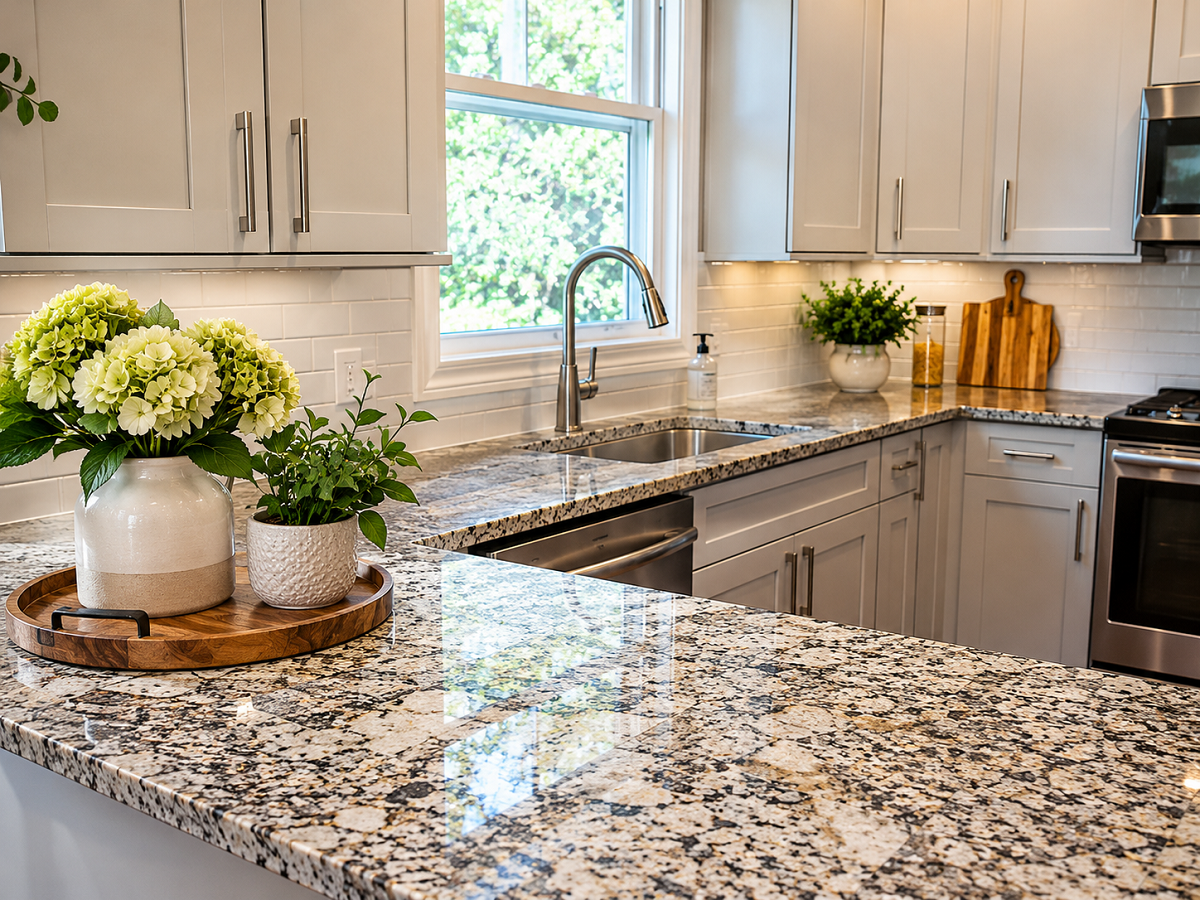
Kitchen countertops need to handle daily cooking, cleaning, food preparation, and frequent use. However, choosing a surface often begins with appearance instead of practical requirements. This can lead homeowners to select a beautiful material that does not match their routines or renovation budget.
Granite offers distinctive natural patterns and useful durability. Its colors range from light neutrals to darker mineral combinations. Therefore, it can complement many kitchen styles, including traditional, modern, and transitional interiors.
However, not every granite slab has the same appearance or maintenance requirements. Homeowners should compare actual materials, understand fabrication needs, and review installation expenses before making a final decision.
Start With How the Countertop Will Be Used
Every household uses its kitchen differently. Some families cook several meals daily, while others use the kitchen mainly for light preparation and entertaining.
Therefore, countertop selection should reflect the amount and type of activity the surface will experience.
Choosing a granite countertop for kitchen renovation can offer a combination of natural beauty and practical performance. However, homeowners should also consider cleaning habits, edge durability, and the location of sinks and cooking areas.
For homeowners in Columbus, Ohio, United States, examining available slabs alongside existing cabinetry may help narrow down suitable options.
Consider Food Preparation Habits
Homeowners who cook frequently need practical preparation areas. Therefore, the countertop should offer enough uninterrupted space for cutting boards, appliances, and cookware. A surface that looks impressive but leaves little preparation space may reduce everyday convenience.
Review Cleaning Preferences
Granite generally offers a durable surface, but cleaning and sealing requirements vary by stone. Therefore, homeowners should understand the selected material’s care instructions before purchasing.
Understand Granite’s Natural Patterns
Granite forms through geological processes that produce distinctive mineral structures. Therefore, each slab can contain different colors, movement, and decorative details. Some granite varieties have fine mineral patterns, while others show stronger movement. However, the trade name of a stone does not always describe its exact appearance.
Fine Mineral Patterns
Fine patterns can create a quiet visual effect. Therefore, they may work well in kitchens with detailed cabinets or decorative backsplashes. However, homeowners should review the full slab because patterns can vary.
Bold Natural Movement
Granite with strong movement can become the main decorative feature in a kitchen. For example, a large island may display dramatic mineral patterns. However, surrounding surfaces should remain balanced to avoid visual clutter.
Mixed Mineral Colors
Some granite slabs contain several colors, including white, gray, beige, black, and brown. Therefore, these materials can provide flexibility when choosing cabinet hardware and flooring.
Choose Granite Colors That Complement Cabinets
Cabinet colors influence how granite appears in the finished kitchen. Therefore, homeowners should compare surfaces together rather than make separate selections. The available colors of granite countertop materials can create different effects depending on cabinet finishes, room size, and lighting.
White Granite With Dark Cabinets
White granite can create strong contrast against navy, charcoal, or dark wood cabinets. However, the exact stone pattern should complement the surrounding materials.
Black Granite With White Cabinets
Black granite can create a classic contrasting design. Meanwhile, white cabinetry may help maintain a bright appearance. However, certain polished dark surfaces can show fingerprints or water marks more clearly.
Beige Granite With Wood Cabinets
Beige granite can reinforce the warmth of natural wood finishes. Therefore, this combination may suit traditional kitchens. However, homeowners should compare undertones before finalizing the design.
Gray Granite With Modern Cabinets
Gray granite may complement flat-panel cabinets and stainless steel appliances. However, cool and warm gray shades create different results. Therefore, samples should be reviewed under the intended lighting.
Compare Granite With Other Countertop Materials
Granite is one of several popular countertop materials. However, homeowners should understand the differences before purchasing.
Granite Versus Quartz
Granite forms naturally and contains unique mineral patterns. Engineered quartz offers manufactured designs and generally does not require routine sealing. However, quartz contains resin components that can suffer damage from excessive heat. Therefore, the choice should consider both appearance and maintenance.
Granite Versus Marble
Marble offers attractive natural veining. However, acidic substances can etch its surface. Granite generally provides better resistance to common kitchen acids, although performance varies. Therefore, maintenance expectations should influence the decision.
Granite Versus Quartzite
Quartzite is another natural stone that may display flowing mineral patterns. However, hardness, porosity, and maintenance can differ between individual materials. Homeowners should compare specific slabs rather than rely only on material categories.
Understand Granite Durability
Granite generally provides good performance for everyday kitchen use. However, no countertop is completely resistant to damage.
Protect the Surface From Scratches
Granite is relatively hard and generally resists ordinary scratching. However, using cutting boards protects the surface and reduces wear on kitchen knives.
Use Protection Against Heat
Granite usually tolerates heat well. However, sudden temperature changes and concentrated heat may still create risks. Therefore, homeowners should use trivets beneath hot cookware.
Prevent Edge Damage
Countertop edges can chip after strong impacts. Therefore, heavy pots should not strike exposed corners. The edge profile may also influence how easily certain areas become damaged.
Understand Granite Sealing and Cleaning
Some granite varieties require sealing to reduce liquid absorption. However, not all stone needs the same maintenance schedule. Therefore, homeowners should ask the supplier about the specific slab.
Clean Spills Promptly
Oils, wine, and other liquids can leave marks on certain natural stone surfaces. Therefore, wiping spills quickly remains important.
Use Suitable Cleaning Products
A soft cloth and stone-safe cleaning product usually support routine care. However, abrasive tools and strong chemicals may affect finishes or sealers.
Check Sealing Recommendations
Sealing can help reduce staining, but it does not make granite completely stain-proof. Therefore, homeowners should follow professional instructions rather than use a universal sealing schedule.
Plan Granite for Kitchen Islands
Kitchen islands often provide large countertop areas. Therefore, they can highlight natural granite patterns. However, island dimensions and construction affect material requirements.
Review Slab Dimensions
Large islands may require more than one slab. Therefore, the fabricator should review available material before the design receives final approval.
Consider Waterfall Edges
Waterfall edges extend stone vertically down an island side. However, they require additional material and precise fabrication. Therefore, homeowners should compare their visual benefits against added costs.
Plan Seating Overhangs
Seating areas may require countertop extensions. However, additional support may be necessary depending on dimensions and material thickness. Professional evaluation helps ensure suitable construction.
Coordinate Granite With the Backsplash
The backsplash should complement the countertop. For example, a strongly patterned granite surface may look best with simple ceramic tile. Meanwhile, quieter granite can allow decorative backsplash designs.
Choose Neutral Tile
White, cream, and light gray tile can complement many granite varieties. However, undertones should match the stone.
Consider Matching Granite
A matching granite backsplash can create a continuous appearance. However, it requires additional stone and fabrication. Therefore, budget planning should include this feature.
Understand the Complete Granite Installation Cost
The granite countertop cost per square foot is one useful pricing measure. However, the quoted rate may not include every part of the project. Total installation expenses may also depend on slab availability, labor, delivery, and complex fabrication.
Consider Fabrication Requirements
Sink cutouts, edge profiles, seams, and unusual countertop shapes can increase fabrication work. Therefore, homeowners should request estimates based on actual measurements.
Include Existing Countertop Removal
Removing old countertops may require demolition and disposal. However, some proposals treat these as separate expenses.
Review Plumbing Costs
Sink replacement may involve disconnecting and reconnecting plumbing. Therefore, homeowners should confirm who handles this work.
Consider Cabinet Repairs
Stone countertops require suitable support. If existing cabinets are damaged or uneven, repairs may be necessary. Consequently, a contingency allowance may help manage unexpected expenses.
Choose the Right Supplier and Installation Team
Granite selection should involve more than comparing photographs.
Homeowners should review full slabs, inspect finished edges, and ask about fabrication methods. For residents around Dublin, Columbus, Ohio, comparing stone samples with cabinet and flooring materials may help create a coordinated design.
Request a Written Estimate
A complete proposal should explain material selection, fabrication, installation, and related work. Additionally, it should identify excluded services.
Review Previous Projects
Photographs of completed installations can help homeowners understand workmanship and design options. However, these should be genuine examples rather than generic stock images.
Confirm the Installation Process
Homeowners should understand who measures the kitchen, prepares the stone, coordinates delivery, and completes final fitting. This helps prevent misunderstandings.
Final Thoughts
Granite countertops can provide natural beauty, useful durability, and a distinctive kitchen appearance. However, successful selection requires attention to practical needs and complete installation requirements.
For homeowners in Columbus, Ohio, United States, comparing full slabs and itemized estimates can help reduce unexpected expenses.
Ultimately, choosing the right granite involves balancing appearance, maintenance, and budget. With thoughtful planning, homeowners in Columbus, Ohio, United States, can create a kitchen that remains attractive and comfortable for everyday use.
 aliza.beth
 olivia.leonard
 heath.henry