
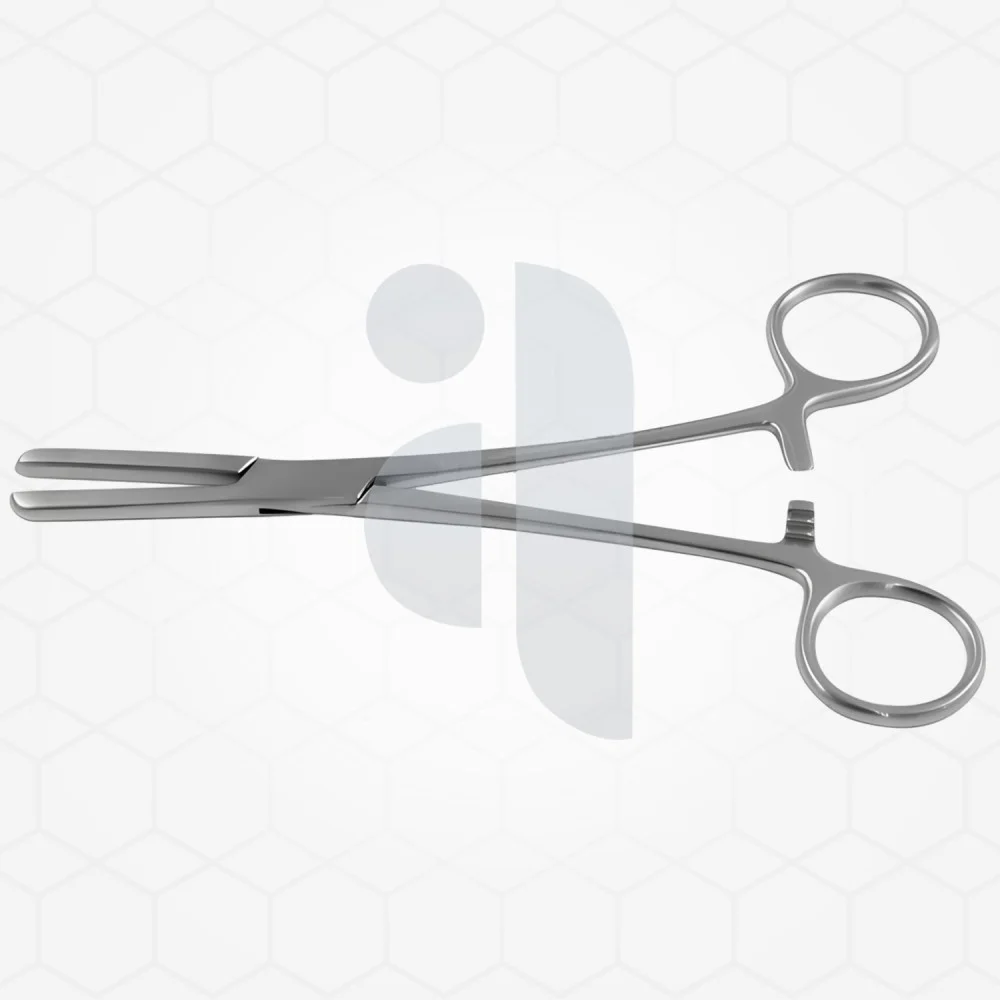
Take a look at almost any surgical tray and you’ll spot at least one clamp. These hardworking tools grip, hold, compress, and secure tissue so surgeons can work with control. We’ll explain what a clamp medical instrument is, how it’s built, where it’s used, and what makes one worth trusting in the operating room.
What Is a Surgical Clamp?
The term clamp medical refers to a broad family of instruments designed to hold something firmly in place. That “something” might be a blood vessel, a section of tissue, surgical drapes, or tubing. Unlike simple forceps, most clamps lock shut, so they keep their grip without constant hand pressure. Because there are so many types, each clamp medical design is shaped to match a specific task.
How Clamps Are Designed
Most clamps share a similar layout. They have two ring handles, a pair of shanks, a box lock or hinge, and a ratchet near the finger rings. The ratchet lets you close the jaws in steps, so you can choose how firmly to hold. At the working end, the jaws may be straight or curved. They may also be smooth, finely serrated, or toothed. A quality clamp medical tool is usually made from surgical-grade stainless steel, which offers strength and stands up to repeated sterilization.
Common Surgical Uses
You’ll find clamps in nearly every specialty, and each style has its own job. Hemostatic clamps, such as Kelly, Crile, and Mosquito clamps, are often used to compress small vessels and help control bleeding. Kocher and Allis clamps help grasp firmer tissue. Babcock clamps offer a gentler hold for delicate structures. Towel clamps secure drapes, while bulldog clamps can temporarily close off vessels. Picking the right clamp medical instrument always depends on the procedure and the surgeon’s judgment.
Handling Benefits
Good handling matters, especially during long cases. A locking ratchet frees the surgeon or assistant to focus on other steps instead of holding pressure by hand. Balanced weight and smooth finger rings help reduce hand fatigue. Clear, crisp ratchet clicks also give helpful feedback, so you know exactly how tightly the jaws are closed. When a transferring forceps tool feels natural in the hand, the whole team can work with more confidence.
Why Choose AzeeMed
AzeeMed focuses on making surgical instruments of the highest quality for the medical community around the globe. With over two decades of experience, we understand that dependable tools start with careful craftsmanship. Every clamp medical product we make is built with precise jaw alignment, secure ratchets, and durable finishes. We also furnish an array of instruments for plastic, dental, ophthalmic, neuro and spine, and orthopedic surgeries. That means you can source what you need from one trusted partner.
Conclusion
Clamps may be simple tools, but they play a central role in keeping surgery safe, steady, and organized. Their locking design, varied jaw styles, and sturdy build make them essential across specialties. When you’re stocking your trays, choose instruments made for precision and long service. Explore AzeeMed’s collection today and give your team clamps they can count on in every case.
 swimmingpool
 kim.sehu
 norynis.ravinwyn