
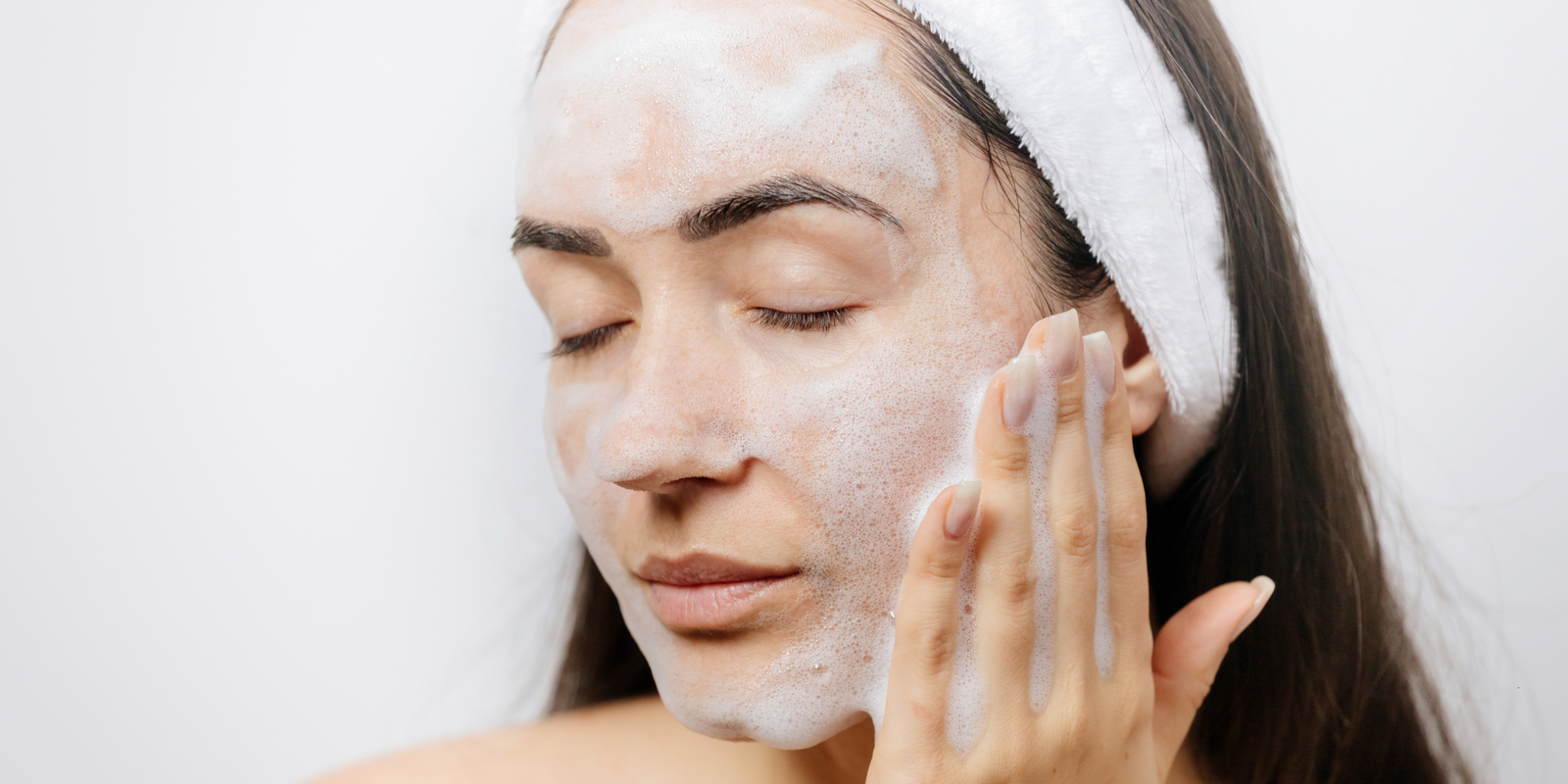
| Quick Answer A good skin care routine for dry skin is short, gentle and consistent. Wash with a low-foaming, fragrance-free cleanser in lukewarm water, apply a hydrating serum to damp skin, then seal it in with a cream or ointment. Add a broad-spectrum sunscreen in the morning.Skip hot water, scrubs and anything that leaves your face feeling squeaky or tight. Most people find their skin feels more comfortable within a couple of weeks of simplifying. |
If your face feels tight after washing, flakes around the nose or looks dull by mid-afternoon, you have probably tried a fair few products already. Often the fix is not another step. It is a calmer routine built around a cleanser that does not strip, and a moisturiser that does the heavy lifting.
This guide sets out a skin care routine for dry skin that you can follow morning and evening. It explains why dryness happens, what to look for on an ingredient list, and which habits quietly make things worse. It is written for everyday dry or sensitive skin. If your skin is cracked, bleeding or intensely itchy, please see a doctor or dermatologist rather than relying on a routine alone.
Why Does Skin Get Dry in the First Place?
Your skin holds on to water thanks to its outermost layer, the skin barrier. A helpful way to picture it is a brick wall: the skin cells are the bricks, and fats such as ceramides and cholesterol are the mortar. When the mortar wears thin, water escapes faster and irritants get in more easily. That is when you notice tightness, rough patches, flaking and sometimes stinging.
Dry skin vs dehydrated skin
The two terms get mixed up constantly, but they describe different things. Many people have a bit of both, which is why the routine below focuses on water and oil together.
| Dry skin | Dehydrated skin | |
|---|---|---|
| What it is | A skin type: not enough oil (lipids) | A temporary state: not enough water |
| Feels like | Rough, flaky, tight all over | Tight, dull, sometimes oily as well |
| Who gets it | Often long-term or hereditary | Any skin type, including oily |
| Helped most by | Rich creams, ointments, barrier lipids | Humectants such as hyaluronic acid, plus sealing moisturiser |
Everyday triggers worth knowing about
- Long, hot showers and very hot water on the face
- Cleansers with harsh surfactants that leave skin squeaky
- Over-exfoliating with scrubs, strong acids or brushes
- Cold air outdoors and dry central heating indoors
- Fragranced products, alcohol-heavy toners and too many active ingredients at once
Age plays a part too, as skin naturally produces less oil over time. If dryness appears suddenly or feels out of proportion, it is worth mentioning to your GP.
The Skin Care Routine for Dry Skin at a Glance
You do not need ten steps. Four well-chosen products cover almost everything.
| Step | What it does | What to look for |
|---|---|---|
| Cleanser | Removes sunscreen, oil and daily grime without stripping | Gentle, low-foaming, fragrance-free, pH around 5 |
| Hydrating serum | Draws water into the surface of the skin | Hyaluronic acid, glycerin |
| Moisturiser | Slows water loss and supports the barrier | Ceramides, cholesterol, fatty acids, shea butter or petrolatum |
| Sunscreen (daytime) | Protects a barrier that is already under strain | Broad-spectrum SPF 30 or higher, fragrance-free |
Step One: Choose a Cleanser That Does Not Strip
Cleansing is where most dry-skin routines go wrong. A cleanser sits on your face for under a minute, yet a harsh one can undo the good work of everything that follows. A gentle skin cleanser should lift away sunscreen, excess oil and everyday impurities while leaving skin soft and comfortable. If your face feels squeaky clean, it has been stripped.
Technique matters as much as the product. Our guide on how to wash your face properly covers water temperature, timing and rinsing in more detail.
What to look for in a hydrating facial cleanser
- Mild surfactants. Amino-acid or coconut-derived cleansing agents tend to be kinder than sulfates.
- Humectants. Glycerin and sodium hyaluronate (the salt form of hyaluronic acid) attract water, so the wash itself adds some comfort.
- A slightly acidic pH. Skin sits at around pH 5, and a cleanser formulated close to that is less likely to leave it tight.
- No added fragrance, essential oils or colour. These are common causes of stinging on dry skin.
- A cushioned gel or cream texture. Big, bubbly foam does not mean a better clean.
A hydrating facial cleanser will not replace your moisturiser, but it should not cost you any moisture either.
Picking a facial cleanser for sensitive skin
Dry skin and sensitive skin often go hand in hand, because a weakened barrier lets irritants through. When you are choosing a facial cleanser for sensitive skin, read the label for fragrance-free and sulfate-free claims, and look for evidence that the formula has been tested for irritation, such as a primary irritation test.
| Expert tip: try the “tight test”After rinsing and patting your face dry, wait a full minute before applying anything. If it already feels tight or pulls when you smile, your cleanser or your water temperature is probably too harsh. If that sounds familiar, our article on why your face feels tight after cleansing explains the usual causes and fixes. |
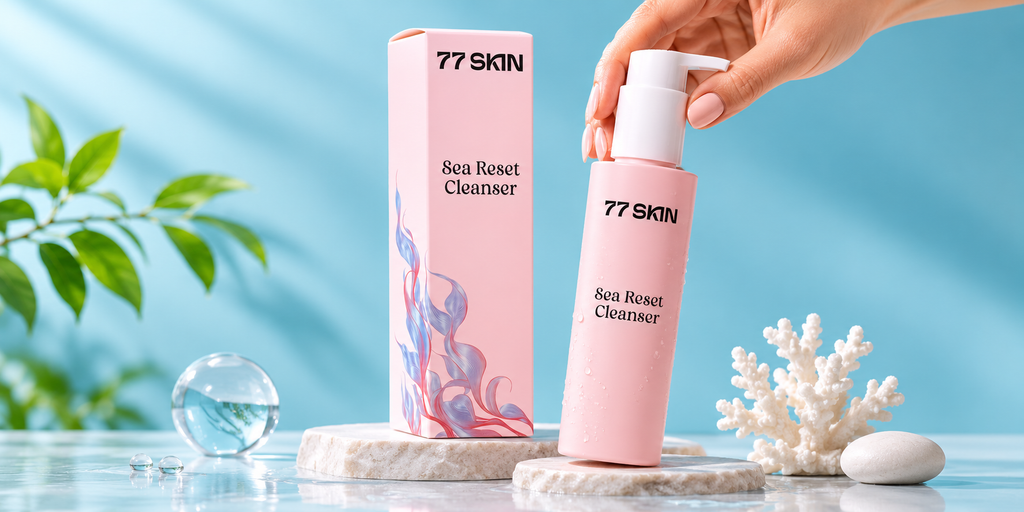
| A simple place to startIf you are looking for a cleanser to try, our Sea Reset Cleanser is a low-pH hydrating gel cleanser (about pH 5) made with hyaluronic acid, red algae extract and Lactobacillus ferment. It is sulfate-free, fragrance-free, colour-free and primary irritation tested. In the brand’s own consumer testing, every participant agreed their skin felt moisturised after use. |
Your Morning and Night Skincare Routine for Dry Skin
Keep each routine to three or four steps. The aim is to cleanse gently, add water, then lock it in.
Morning
- Cleanse, or simply rinse. If your skin feels comfortable after sleep, a splash of lukewarm water may be enough. If you prefer to cleanse, use a small amount of gentle cleanser. We look at both options in should you wash your face in the morning.
- Hydrating serum on damp skin. Hyaluronic acid works best when it has water to hold on to, so apply it before your face dries.
- Moisturiser. Choose a cream rather than a thin lotion. Press it in rather than rubbing.
- Sunscreen. Broad-spectrum SPF 30 or higher, ideally fragrance-free.
Evening
- Remove sunscreen and makeup. Massage a gentle cleanser over your face first, then add water and rinse. If you wear water-resistant sunscreen or heavy makeup, a second wash is fine.
- Hydrating serum on damp skin. The same rule applies as in the morning.
- A richer moisturiser. Use a thicker cream, or a thin layer of ointment on the driest areas, as skin loses more water overnight.
- Treatments only if you need them. If you use a retinoid or exfoliating acid, start once or twice a week and pause it whenever your skin feels raw.
| Expert tip: moisturise while skin is dampThe American Academy of Dermatology advises applying moisturiser while your skin is still damp, and choosing a cream or ointment over a lotion for very dry skin. Within a minute or two of washing is a good habit to build. |
Ingredients That Help, and Ones to Go Easy On
| Ingredient | What it does | Worth knowing |
|---|---|---|
| Hyaluronic acid | Humectant that holds water in the upper skin layers | Apply to damp skin, then seal with moisturiser |
| Glycerin | Humectant that softens and comforts | Widely used and generally well tolerated |
| Ceramides, cholesterol, fatty acids | Replace the “mortar” in the skin barrier | Look for them in moisturisers |
| Petrolatum, shea butter | Occlusives that reduce water loss | Heavier feel, so often best at night |
Dermatologists at the AAD recommend gentle, fragrance-free products for dry skin. Choosing fragrance free skincare products does not make a routine dull. It simply removes one of the most common causes of redness and stinging. Be aware that “unscented” is not the same thing, as some unscented products still contain masking fragrance.
Go easy on alcohol-heavy toners, physical scrubs, strong acids and retinoids, particularly while your skin feels irritated. They are not off limits forever, but a damaged barrier needs time to settle first.
Habits That Help Your Routine Work Harder
- Keep showers and baths short and lukewarm. Five to ten minutes is the usual advice.
- Pat your skin dry with a soft towel instead of rubbing.
- Use a humidifier if your home is heated and dry through the colder months.
- Wear gloves outdoors in cold weather, and when your hands are in water for long periods.
- Introduce one new product at a time and give it a few weeks, so you can tell what is helping.
When to See a Dermatologist
See a GP or board-certified dermatologist if your dryness has not improved after a few weeks of gentle care, or if your skin is cracked, bleeding, very itchy or covered in red, scaly patches. Persistent dryness can sometimes be linked to conditions such as eczema or psoriasis, which often need prescription treatment. If you are using a prescribed treatment, follow your prescriber’s advice first.
This article is general skincare information and does not replace medical advice. It reflects the barrier-first approach we take at 77skin.
Conclusion
Dry skin rarely needs more products. It needs the right few, used gently and consistently. Start with the cleanser, because that step decides how much moisture your skin keeps. Then add water, seal it in, and protect it from the sun and the cold.
If you would like a gentle first step, you can find our Sea Reset Cleanser in the shop. Whatever you choose, give your new routine a couple of weeks, and listen to what your skin tells you.
 azee.med
 bottega.desires
 essential.hoodie