
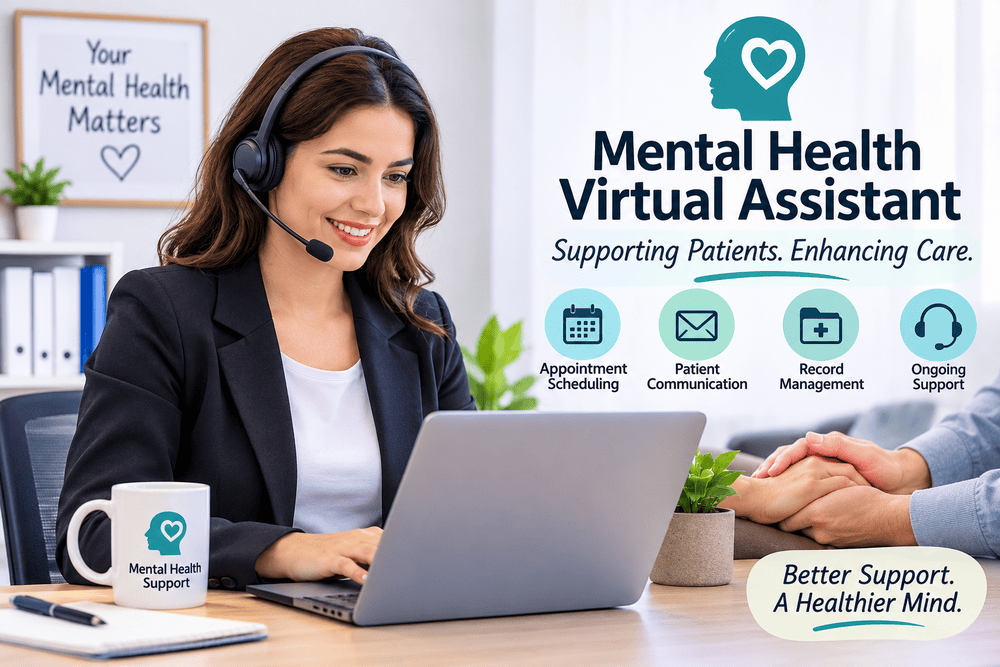
Mental health care plays an important role in improving people’s overall well-being. Many individuals experience anxiety, stress, depression, and other emotional challenges that require professional attention and ongoing support. Mental health clinics, therapists, psychologists, and counselors work hard to provide quality services, but managing daily administrative responsibilities can sometimes affect their ability to focus entirely on patients. Appointment scheduling, patient communication, record management, and follow-up activities all require time and attention.
A mental health virtual assistant can help healthcare providers manage these responsibilities while creating a more organized patient experience. These remote professionals support mental health practices by handling administrative tasks, coordinating appointments, organizing patient information, and responding to general inquiries. Their assistance allows qualified healthcare professionals to spend more time on consultations and patient care while improving the efficiency of everyday clinic operations.
What Is a Mental Health Virtual Assistant?
A mental health virtual assistant is a remote professional who provides administrative and organizational support to mental health practitioners and healthcare facilities. They work online and help therapists, psychologists, psychiatrists, and counseling centers manage routine office responsibilities.
Their duties may include scheduling appointments, managing emails, maintaining administrative records, sending appointment reminders, and helping patients understand clinic procedures. They can also assist with online consultation arrangements and general communication.
Although virtual assistants play an important role in healthcare administration, they do not replace licensed mental health professionals. They cannot diagnose medical conditions, recommend treatments, or provide therapy unless they have the required professional qualifications and are specifically engaged in that role.
How Mental Health Virtual Assistants Improve Patient Care
Patient care involves more than providing treatment during appointments. Patients also need convenient scheduling, clear communication, organized services, and timely administrative support. Virtual assistants help improve these areas through several important responsibilities.
1. Improving Patient Communication
Effective communication is essential for building trust between patients and healthcare providers. Patients often have questions about appointment availability, registration procedures, consultation schedules, and clinic policies.
A virtual assistant can respond to general inquiries through email, phone calls, or approved messaging platforms. They can provide relevant administrative information and direct clinical questions to the appropriate healthcare professional.
Quick and clear responses reduce confusion and help patients understand the services available to them. Better communication also creates a more organized experience from the first interaction with a mental health clinic.
2. Making Appointment Scheduling Convenient
Managing appointments can become challenging for busy mental health practices. Therapists and psychologists need to coordinate different schedules, handle cancellations, and arrange suitable consultation times for patients.
Virtual assistants can manage appointment calendars, confirm bookings, and coordinate rescheduling requests. They can also send reminders before scheduled sessions to help patients remember their appointments.
An organized scheduling system reduces unnecessary delays and makes it easier for patients to attend regular consultations. It also allows healthcare professionals to manage their working hours more effectively.
3. Maintaining Accurate Patient Records
Accurate patient information is important for providing organized healthcare services. Mental health clinics manage different administrative documents, including registration forms, contact details, appointment histories, and other relevant information.
Virtual assistants can help organize these records, update administrative details, and maintain digital filing systems according to clinic procedures.
Proper record management makes information easier for authorized healthcare professionals to access when required. It can also reduce administrative mistakes and prevent important documents from being overlooked.
Because mental health records contain sensitive information, assistants must receive appropriate training and follow strict confidentiality and data protection procedures.
4. Sending Appointment Reminders and Follow-Ups
Patients sometimes forget appointments because of work commitments, family responsibilities, or busy daily routines. Missing scheduled sessions can interrupt treatment plans and create scheduling problems for healthcare providers.
A virtual assistant can send appointment reminders through approved communication channels. These messages may include consultation dates, appointment times, and instructions for attending online or in-person sessions.
They can also manage administrative follow-ups when requested by the clinic. For example, an assistant may contact patients to confirm future bookings or provide information about completing registration documents.
These activities help patients stay informed and maintain better appointment organization.
Supporting Online Mental Health Services
Online healthcare services have made mental health support more accessible. Patients can communicate with qualified professionals without always needing to travel to a physical clinic. However, managing online consultations requires proper coordination and administrative support.
Helping Patients Access Virtual Consultations
Virtual assistants can help patients understand how to attend online appointments. They may share meeting instructions, confirm consultation schedules, and provide basic guidance about using approved digital platforms.
If patients experience administrative difficulties, the assistant can direct them to the appropriate support channel.
This assistance makes online consultations easier to manage and reduces confusion before scheduled sessions.
Making Registration Easier for New Patients
New patients may feel uncertain about how to begin receiving mental health services. They might need help completing registration forms, understanding clinic policies, or scheduling their first consultation.
Virtual assistants can explain the administrative process, share necessary documents, and guide patients through basic registration steps.
A simple and organized onboarding process helps patients understand what to expect and makes their first interaction with a clinic more convenient.
Reducing Administrative Pressure on Healthcare Professionals
Mental health professionals need sufficient time to assess patients, conduct consultations, and develop appropriate treatment plans. However, routine administrative work can take up a considerable part of their working day.
Virtual assistants help reduce this pressure by managing everyday responsibilities such as email communication, appointment scheduling, document organization, and general patient inquiries.
When these tasks are handled by remote administrative professionals, therapists and psychologists can focus more attention on their clinical responsibilities.
This arrangement can also benefit smaller practices that do not have enough resources to maintain a large administrative team.
Improving Patient Satisfaction Through Better Organization
A positive patient experience depends on several factors, including communication, appointment availability, organized records, and timely administrative assistance.
Virtual assistants help improve these areas by maintaining consistent administrative processes. Patients can receive appointment confirmations, obtain answers to general questions, and access important information without unnecessary delays.
For example, when a patient needs to reschedule a consultation, an assistant can coordinate the request according to the healthcare provider’s availability. This reduces confusion and makes clinic services easier to manage.
Although administrative support cannot guarantee better clinical outcomes, it can improve the overall experience of accessing mental health services.
Maintaining Patient Privacy and Confidentiality
Privacy is one of the most important responsibilities in mental health care. Patients share personal information with healthcare professionals and expect their records and communication to remain confidential.
Virtual assistants must understand the importance of protecting sensitive information. Mental health practices should provide proper training and establish clear rules for accessing and managing patient records.
Important privacy practices include:
- Using secure communication platforms.
- Protecting passwords and login credentials.
- Accessing only the information required for assigned duties.
- Avoiding unauthorized sharing of patient records.
- Following clinic confidentiality policies.
- Receiving appropriate training on applicable data protection regulations.
Healthcare organizations in the United States may also need to follow HIPAA requirements when applicable. Strong privacy procedures help protect patients and maintain trust in healthcare services.
Important Skills of a Mental Health Virtual Assistant
Choosing a qualified virtual assistant is important for maintaining professional standards and organized clinic operations. Healthcare providers should consider candidates who have experience in administrative support and understand the needs of patient-facing environments.
Some essential skills include:
Strong Communication Skills
Assistants should communicate clearly and respectfully with patients. They must understand general inquiries and know when to forward clinical questions to licensed professionals.
Healthcare Administrative Knowledge
Experience with appointment scheduling, patient registration, digital records, and healthcare office procedures helps assistants manage daily responsibilities effectively.
Technical Skills
Virtual assistants should understand commonly used scheduling tools, electronic health record systems, email platforms, and secure communication software.
Organization and Time Management
Managing multiple tasks requires attention to detail and proper planning. An organized assistant can help prevent scheduling conflicts and maintain accurate administrative information.
Empathy and Professionalism
Patients may contact mental health clinics during difficult periods. Assistants should communicate with patience and respect while maintaining professional boundaries.
How to Choose the Right Virtual Assistant for Your Mental Health Practice
Selecting the right assistant requires evaluating professional experience, communication abilities, technical knowledge, and confidentiality practices.
Healthcare providers should first identify which responsibilities they want to delegate. These may include appointment management, patient inquiries, record organization, or online consultation coordination.
Next, review candidates’ previous experience and familiarity with healthcare administration. Ask about their knowledge of secure communication systems and their approach to handling sensitive patient information.
Clinics should also establish clear responsibilities, working hours, reporting procedures, and communication guidelines. Proper training ensures that assistants understand their duties and know when to involve qualified healthcare professionals.
Conclusion
Mental health virtual assistants can play an important role in improving the administrative side of patient care. They help healthcare providers manage appointments, organize patient records, respond to general inquiries, and coordinate online consultations. These services make daily clinic operations more efficient and create a smoother experience for patients.
By reducing administrative pressure, virtual assistants allow therapists, psychologists, and counselors to dedicate more time to their professional responsibilities. With appropriate training, secure systems, and clear communication procedures, hiring a mental health virtual assistant can help healthcare practices provide more organized, accessible, and patient-focused services.
 CEO Asif