
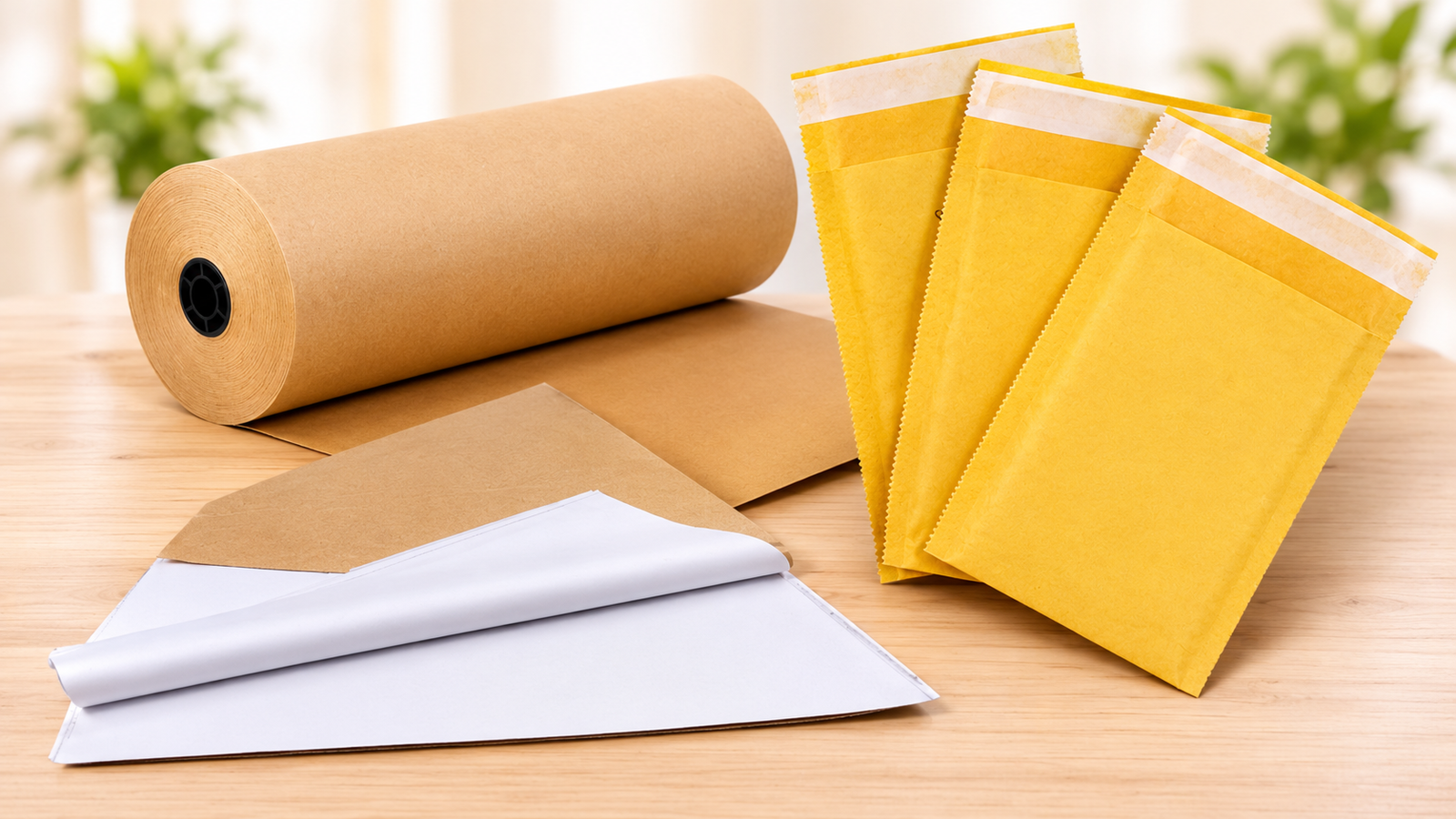
You’ve spent weeks choosing the contents: tea bags and biscuits for a homesick student in Melbourne, a framed photo, and a knitted scarf. Then the box spends a fortnight crossing oceans and arrives flattened. Care packages abroad fail because the journey is longer, rougher and damper than any domestic parcel’s, and the fix is to pack for twice the trip you expect. Good packaging supplies online make that straightforward: a strong box, each item wrapped on its own, and no spare room inside.
An hour of planning keeps a heartfelt gift from becoming a sorry heap. Here’s how to do it properly.
Why Do Care Packages Abroad Need Tougher Packing?
International parcels change hands more often, spend longer in transit and meet bigger swings in weather than domestic ones. That means more drops, more stacking and more chances for damp or heat to get in. A box that would sail from Leeds to Bristol can fail on a journey across oceans, so pack tougher than feels necessary.
More hands, more handling
Every transfer is another chance for a drop. A parcel bound for Toronto may be sorted, loaded, flown, unloaded, sorted again and carried to a van, and none of those steps is gentle. Small parcels get thrown about more, too. That’s why bubble-lined envelopes aren’t a safe bet for anything rigid or heavy on a long journey.
Time and temperature
Parcels can sit in depots for days, and some of those buildings are hot, cold or damp. Chocolate melts, boiled sweets fuse into one lump, and cardboard softens when it gets wet. In summer, skip anything that melts. In winter, assume rain will find the box at some point, and wrap the contents accordingly.
The box is only the outer layer.
A sturdy corrugated box provides significant protection, but it cannot save contents that move around inside. Look for a box with about 5 cm to spare on every side of your wrapped items, and double-wall if the parcel is heavy. When you’re comparing packaging supplies online, check the internal measurements, not the outside ones. Reused boxes are fine for light, soft contents, but buy new ones for anything that is breakable.
What Should Go in a Care Package, and What Should Stay Out?
Choose items that are sturdy, sealed and happy at room temperature: tea, biscuits in tins, socks, books, cards and photos. Omit anything that melts, leaks or smells strongly. Glass jars and open bottles cause more heartache than they’re worth. Every carrier also has its own list of things it won’t take, so check before you buy.
Pick items that survive the trip.
Tins are better than packets, sealed items are better than open ones, and soft items are better than tough ones. A £3 tin of shortbread will outlast a £3 packet of crumbly biscuits every time. Heavy things like books and tins go in first, at the bottom. Cards, letters and photographs can travel inside their own bubble envelopes, tucked flat against the box wall where nothing can squash them.
Choose the contents first, then buy the box. Ordering packaging supplies online before you’ve decided what’s going in is how people end up with a box that’s too small.
Keep strong smells apart.
Soap, scented candles and hand cream don’t mix with biscuits. Smells travel through packaging, and a bar of lavender soap can turn a tin of shortbread into something nobody asked for. Wrap smelly things separately and put them at opposite ends of the box. Or send them in a second parcel.
How Do You Wrap Each Item So It Survives the Journey?
Wrap every item on its own, with a soft layer first and a protective layer second. Tissue paper is suitable for delicate and keepsake items, kraft paper is ideal for bundling and padding, and bubble wrap is effective for protecting against impacts. Tape each wrapped item shut so layers can’t unravel, and keep heavy items low in the box so lighter ones aren’t crushed.
You can order all this online, so you don’t have to use old newspaper and random tape. The trick, as ever, is matching each material to the item.
Delicate items and keepsakes
White acid free tissue is a pure white paper, commonly around 18 gsm, with sheets of 450×700 mm among the most popular sizes. It’s free of the acids that can yellow or mark what it touches over time. That is relevant for a christening gown, handwritten letters or a handmade mug you’d hate to see stained. For a pair of socks, though, it’s overkill, and ordinary tissue does fine.
Padding and bundling
Kraft paper from paper wrapping rolls is the workhorse of a care package. Crumple sheets into balls for padding, wrap a bundle of cards in a flat sheet or line the box so loose items don’t scuff. Brown kraft in the 88 gsm range is tough enough to pull tight without tearing, yet it folds neatly around tins and books. What it can’t do is cushion a fragile item on its own.
Flat items: cards, photos and books
Cards, photos and a paperback travel well in bubble lined envelopes, which stop corners bending. Treat each one as a small sub-parcel: seal it, then stand it upright between the heavier items. Standard gold or white bubble envelopes are plenty for paper goods. The bubble layer isn’t waterproof, though, so keep photos well away from anything that might leak.
How Do You Pack the Box Step by Step?
Start with a sturdy box, put heavy items at the bottom and wrap everything individually. Cushion the base, stand wrapped items clear of the walls and fill every gap. Then shake the box firmly, adding more filler if anything shifts or rattles. Finally, seal every seam with tape and label the top clearly.
If you’re ordering packaging supplies online for a one-off parcel, buy a spare box too. It costs a few pounds and saves a repack when your first choice turns out slightly too small. Then work through the box in this order:
- Weigh your contents and choose a box with roughly 5 cm spare on every side.
- Tape the base shut along the seam and across both edges.
- Add a layer of crumpled kraft at the bottom, then the heaviest items near the centre.
- Wrap keepsakes in white acid free tissue
- , add bubble wrap over the top, and slot them in the middle.
- Slide cards and paperbacks into bubble-lined envelopes and stand them against the walls.
- Fill every remaining gap with crumpled paper from your paper wrapping rolls until nothing moves.
- Close the flaps and run the shake test below.
The shake test
Hold the sealed box with both hands and shake it, firmly but fairly. A faint thud is fine. A rattle means a gap, and a gap means breakage. Open it up, add more paper, and repeat until the box feels like one solid block.
Sealing and labelling
Tape along every seam and across both edges, in an H shape. Write the address in clear block capitals, and tuck a second copy inside the box in case the outer label tears. Any paperwork your carrier asks for is best done at the post office counter, where staff can tell you exactly what’s needed.
Frequently Asked Questions
How Early Should I Post a Care Package Abroad?
Earlier than the carrier’s estimate suggests. Delays happen on long routes, in peak seasons and in inclement weather, so aim for at least two or three weeks before the date it needs to land, and longer around Christmas. Ask at your local post office counter about current timings, because they change throughout the year.
Is White Acid Free Tissue Worth It for Keepsakes?
Yes, if the item is precious or will be stored for a long time, such as a christening gown, old photographs or handwritten letters. For everyday items like socks or biscuit tins, ordinary paper does the job just as well. Save the acid-free sheets for things you’d hate to see stained or yellowed.
Are Bubble Envelopes Enough for a Small Care Package?
For flat, soft or light items such as cards, a scarf, tea bags or a paperback, yes. For tins, glass or anything with hard edges, no. The envelope has little structure, so rigid contents can get squashed or poke through. If the contents are breakable, use a box instead.
Do I Need Paper Wrapping Rolls, or Is Newspaper Enough?
The newspaper works in a pinch, but the ink can rub off on light items, and the sheets tear easily when pulled tight. Kraft paper is a cleaner and stronger option that can be cut to any desired length. It’s also nicer to unwrap, which is relevant for a gift. One roll will usually cover several parcels.
Summing up
A care package abroad survives for a handful of simple reasons: a sturdy box, sensible contents, each item wrapped on its own and no room to rattle. Make sure that you gather your packaging supplies early, pack calmly rather than at midnight, and the only surprise at the other end will be a happy one.
 star.marquees
 kristen.mitchell