
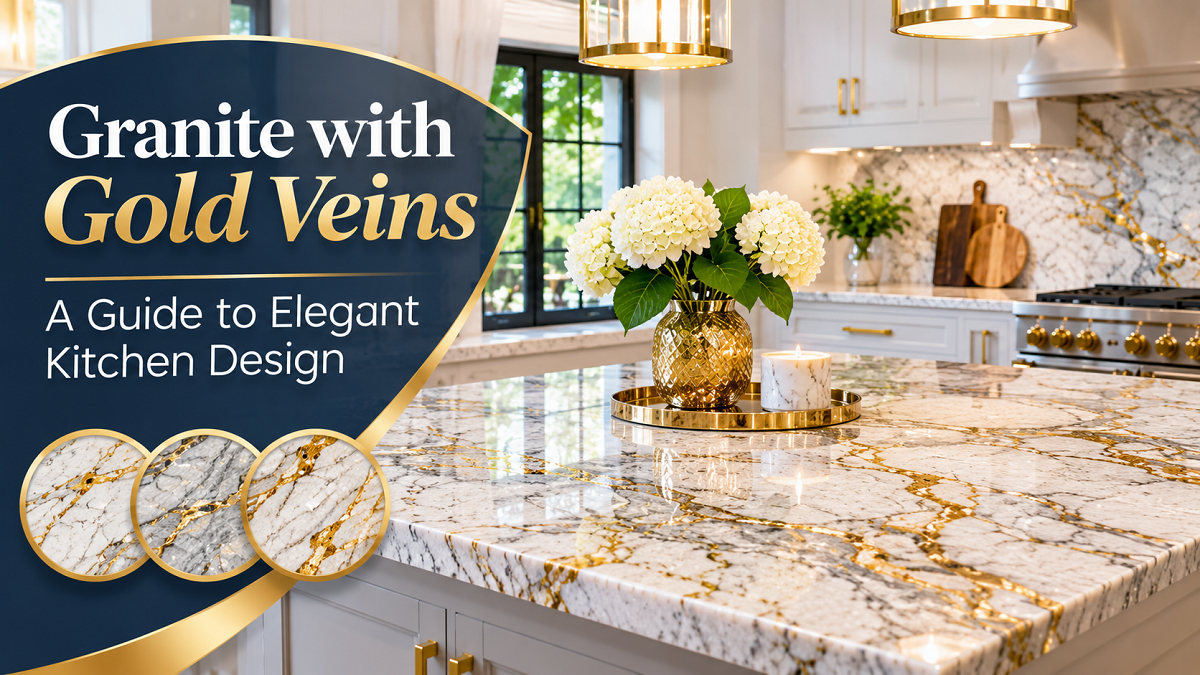
Natural stone can give a kitchen a beautiful appearance that manufactured finishes may not fully reproduce. However, choosing granite requires careful attention to color, pattern, durability, and maintenance. Every slab has different mineral details, so homeowners should examine the actual stone before making a final decision. White granite with gold veining combines a light background with warm natural movement. Therefore, it can work with cream cabinets, natural wood finishes, and darker kitchen colors. The gold patterns introduce character without requiring several decorative materials. For homeowners in Milwaukee, WI, United States, this combination may provide an attractive option for kitchen renovations. However, successful design depends on balancing the granite with surrounding surfaces.
Understand the Beauty of Gold-Veined Granite
Granite forms naturally through geological processes. As a result, each slab contains distinctive mineral arrangements, colors, and patterns. When choosing granite with gold veins, homeowners should compare the stone’s background color, strength of the golden movement, and overall pattern. Some slabs have subtle gold details, while others feature stronger movement. Additionally, certain varieties contain gray, brown, or black minerals that affect the appearance. Therefore, a small sample may not provide enough information to choose the right material.
Fine Gold Veining
Fine veins introduce a soft decorative effect. These patterns may work well with detailed cabinet doors and traditional kitchen features. However, their appearance can change under different lighting conditions.
Bold Gold Patterns
Bold veining can create a visual focal point. For example, a large granite island may highlight the stone’s movement. However, homeowners should keep nearby materials relatively simple to avoid excessive decoration.
Mixed Gold and Gray Patterns
Some granite slabs combine warm gold and cool gray mineral colors. This mixture can provide flexibility when choosing cabinet hardware, backsplash tile, and flooring. However, the exact balance of colors should guide material selection.
Key Takeaways
- Gold-veined white granite can complement modern, traditional, and transitional kitchens.
- Actual slab inspection helps homeowners understand natural patterns and color variations.
- Proper fabrication, suitable maintenance, and coordinated materials support a lasting kitchen design.
Choose Cabinet Colors That Complement Gold Veins
Cabinet selection affects the appearance of natural stone. Therefore, homeowners should compare cabinet samples directly with granite before purchasing.
White Cabinets
White cabinets can create a bright and welcoming kitchen. Meanwhile, gold veins provide natural warmth. However, cool white cabinets may look different beside granite with cream undertones.
Cream Cabinets
Cream cabinetry can emphasize the granite’s warm mineral patterns. This combination may suit traditional and transitional kitchens. However, flooring and backsplash colors should provide enough contrast.
Natural Wood Cabinets
Oak, walnut, and other wood finishes can complement gold-veined granite. For example, light oak may create a softer appearance. Meanwhile, darker wood can provide stronger contrast.
Dark cabinetry can create a bold design when combined with light granite. Additionally, brass or black hardware can connect the different materials.However, adequate lighting remains important.
Select the Right Backsplash
A backsplash should protect the wall while supporting the countertop’s appearance. However, adding a strongly patterned backsplash next to dramatic granite can make the kitchen feel visually crowded.
White Subway Tile
Simple white tile can complement gold-veined granite. Meanwhile, grout color can introduce subtle contrast. Therefore, tile and grout samples should be compared together.
Warm Neutral Tile
Cream, beige, and taupe tiles may reinforce the granite’s warm tones. However, homeowners should avoid using too many similar colors without contrast.
Matching Granite Backsplash
A full-height granite backsplash can create a continuous surface. However, additional stone and fabrication requirements may increase costs. Therefore, homeowners should review pattern placement before approving the design.
Understand the Role of Lighting
Lighting can change the appearance of granite. A slab that looks warm under showroom lighting may appear different beside a large kitchen window. Therefore, homeowners should evaluate stone colors under several lighting conditions.
Natural Daylight
Daylight can reveal mineral variations and surface movement. However, the direction and amount of sunlight affect how the stone looks.
Under-Cabinet Lighting
Under-cabinet fixtures can improve visibility across work surfaces. Additionally, they can highlight the countertop’s natural patterns.
Pendant Lighting
Pendant lights above an island provide both practical illumination and visual interest. However, homeowners should choose a fixture finish that complements the overall kitchen.
Compare Different Granite Colors
Gold-veined white granite is only one natural stone option. Homeowners can compare granite colors to understand how white, gray, black, beige, and other varieties influence kitchen design.
White Granite
White granite can support a bright interior. However, its mineral patterns may range from subtle to dramatic.
Gray Granite
Gray granite can provide a balanced appearance. Meanwhile, its cooler undertones may complement stainless steel appliances and contemporary cabinetry.
Black Granite
Black granite offers strong contrast beside light cabinets. However, fingerprints and water spots may appear more noticeable on certain dark polished surfaces.
Beige Granite
Beige granite can create a warm traditional appearance. However, surrounding finishes should complement its undertones.
Understand Granite Durability
Granite offers useful durability for kitchen surfaces. However, homeowners should not assume the material is completely resistant to damage.
Scratch Resistance
Granite generally provides good scratch resistance. However, cutting directly on the surface can damage knives and may affect the finish. Therefore, cutting boards remain useful.
Heat Resistance
Granite usually tolerates heat well. However, concentrated heat and sudden temperature changes can still create risks. Consequently, using trivets is a reasonable precaution.
Stain Prevention
Some granite slabs require sealing to reduce liquid absorption. Additionally, spills should be cleaned promptly. Homeowners should follow the specific supplier’s care instructions.
Plan Granite for Kitchen Islands
Large islands provide an opportunity to display the stone’s natural movement. However, island dimensions can affect material requirements.
Review Full Slab Dimensions
Some islands require more than one stone section. Therefore, homeowners should discuss seam placement with the fabricator.
Consider Waterfall Edges
Waterfall countertops extend vertically down an island side. This design may create a striking appearance. However, it requires extra material and accurate pattern alignment.
Plan Comfortable Seating
Extended overhangs can create seating areas. However, the stone may need additional support. The fabricator should confirm the appropriate design.
Compare Granite Edge Profiles
The countertop edge influences both appearance and cost.
Eased Edge
An eased edge creates a simple and clean appearance. It can complement both modern and traditional kitchens.
Rounded Edge
Rounded edges provide a softer profile. However, the exact shape should match the overall design.
Decorative Edge
More detailed profiles may suit traditional cabinetry. However, complex fabrication can increase expenses.
Understand Granite Installation Costs
The total granite cost depends on slab selection, fabrication, countertop dimensions, and installation requirements. However, homeowners should avoid comparing only the material’s advertised price.
Include Fabrication
Sink cutouts, edge profiles, seams, and surface finishing may affect the estimate. Therefore, measurements should reflect the actual kitchen.
Include Countertop Removal
Removing an existing countertop may involve demolition and disposal. However, these services may not appear in every estimate.
Review Plumbing Responsibilities
Sink replacement may require plumbing disconnection and reconnection. Therefore, homeowners should confirm whether the installer includes these services.
Select a Reliable Granite Supplier
Choosing the right supplier can help homeowners compare stone options and understand the installation process. For projects in Milwaukee, WI, United States, visiting a showroom can provide a clearer understanding of available materials. Homeowners should ask about slab inventory, fabrication options, installation schedules, and warranty terms.
Inspect the Actual Stone
Natural stone changes from slab to slab. Therefore, the final reserved material should receive careful inspection.
Confirm the Cutting Plan
Pattern placement influences the appearance of finished countertops. Consequently, homeowners should discuss seam placement and major veins before fabrication.
Request a Complete Estimate
A written estimate should explain materials, labor, and additional services.This makes project comparisons easier.
Final Thoughts
White granite with gold veins can create a kitchen that feels warm, natural, and elegant. However, the finished appearance depends on careful planning and suitable surrounding materials. Homeowners should compare actual slabs, cabinet finishes, lighting, and backsplash options before purchasing. For kitchen renovations in Milwaukee, WI, United States, consulting a granite countertop store Milwaukee can help homeowners review natural stone choices and discuss installation requirements. A well-planned granite countertop can provide lasting beauty while supporting daily kitchen activities.
 jwhned.wdkweo
 bill.henry
 dgc.submission