
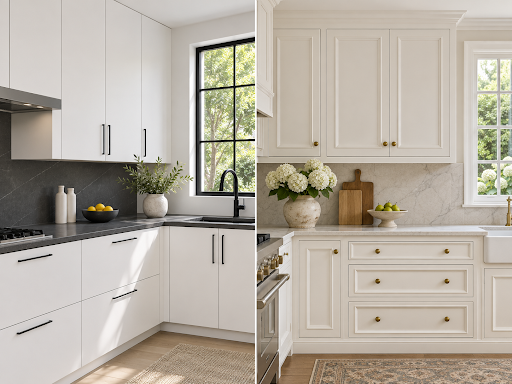
White kitchen cabinets can create a neutral foundation that works with many different design directions. Their light appearance can help a room feel brighter, while the surrounding countertop, backsplash, flooring, hardware, and lighting determine much of the final character. However, choosing white cabinetry is not simply a matter of picking the brightest finish available. Different whites can have warm, cool, or neutral undertones. The cabinet door profile can also change the way the color looks. A detailed traditional door can create a very different impression from a simple flat-panel design, even when both use the same white finish. For a kitchen renovation, it is useful to consider the cabinets as part of the complete room. Storage requirements, natural light, cabinet construction, surface finish, appliances, and surrounding materials all deserve attention before the final selection is made.
Why White Cabinets Work Across Different Kitchen Styles
White cabinetry can adapt to many design approaches because it does not strongly dictate the rest of the color palette. It can support modern, traditional, farmhouse, transitional, and other interiors depending on the door profile and materials used around it. The current Badger Cabinets collection similarly presents white cabinetry across several styles and includes multiple white cabinet products and finishes. For example, a simple white door with minimal hardware can create a streamlined appearance. A framed door with decorative hardware can create more traditional character. Adding natural wood, patterned tile, or darker surfaces can further change the visual direction. This flexibility makes white cabinetry useful when the goal is to create a kitchen that can adapt to design changes over time.
Start With the Shade of White
Not all white cabinets look identical. Some appear crisp and bright, while others have warmer cream or beige undertones. There are also whites with subtle grey or cooler influences. The right shade depends on the other materials in the room. A cool white may work well with grey flooring, stainless steel appliances, and cooler countertops. A warmer white can feel more comfortable alongside natural wood, warm stone, or cream-colored surfaces. It is better to compare actual cabinet samples rather than relying entirely on online photographs. Place the sample next to the countertop, backsplash, flooring, and wall color to see whether the undertones work together.
Consider How Natural Light Changes the Color
Natural light can change the appearance of white cabinetry throughout the day. A kitchen with large windows may make a white finish appear brighter, while a room with limited daylight can make the same finish appear softer. The direction of the windows also matters. Morning light may produce a different effect from afternoon light, while evening lighting can make the cabinet color appear warmer or cooler. Artificial lighting introduces another variable. Warm bulbs can emphasize cream or beige undertones, while cooler bulbs may make grey or blue influences more noticeable. For this reason, the cabinet finish should be reviewed under both natural and artificial lighting before the final decision is made.
Match the Door Profile With the Design Direction
The cabinet door profile can have as much influence on the finished kitchen as the color itself. Flat-panel doors generally create a simple appearance, while raised or recessed profiles introduce more detail. Shaker doors provide another option because their framed construction adds definition without creating an overly ornate appearance. For a closer look at how this profile works with different colors and layouts, the Shaker cabinet style is a useful comparison. The door profile should also relate to the home’s architecture. A detailed profile may complement traditional features, while a simpler profile may work better with contemporary interiors.
Use Countertops to Create Contrast or Continuity
White cabinets provide a neutral background for many countertop materials. This gives homeowners room to choose between a soft, coordinated appearance and a stronger contrast. A white countertop can create a bright, continuous palette. Grey or veined surfaces can add movement without introducing a dramatic color shift. Dark countertops can create stronger contrast and make the white cabinetry more prominent. Natural stone can introduce variation and texture, while quartz can provide a more consistent appearance. The countertop should be evaluated with the cabinet sample rather than chosen separately. Even two materials that appear similar online can have different undertones when placed next to one another.
Use the Backsplash to Control Visual Detail
The backsplash can connect the cabinets and countertop while adding another layer of texture. A simple white or neutral tile can maintain a clean appearance. Natural stone can add variation, while patterned tile can become a stronger focal point. The amount of backsplash detail should depend on the rest of the kitchen. If the countertop has noticeable veining and the cabinets have a detailed door profile, a quieter backsplash may create better balance. If the cabinets and countertop are both simple, the backsplash can provide more visual interest without overwhelming the room.
Add Warmth With Wood
White cabinetry can sometimes feel visually cool when every surrounding surface is also light and neutral. Wood is one way to introduce warmth without changing the cabinet color. Wood flooring, open shelving, stools, beams, or an island can create contrast against white cabinets. Light wood can produce a softer appearance, while darker wood can create stronger definition. The wood does not need to match every other wood element in the kitchen. Instead, the goal should be to create a coordinated relationship between the different tones. This combination can be especially useful in kitchens where the goal is to balance a clean cabinet color with a more natural atmosphere.
Consider Hardware as a Supporting Element
Hardware can change the appearance of white cabinetry without changing the cabinets themselves. Black pulls and knobs can create strong contrast. Brushed nickel can produce a more understated appearance, while brass and other warm metals can introduce additional warmth. The shape of the hardware also matters. Long pulls can emphasize clean horizontal or vertical lines, while knobs can create a more traditional appearance. Hardware should be proportional to the cabinet doors and drawers. Oversized hardware can dominate smaller doors, while very small hardware may look out of scale on large drawers.
Think About Two-Tone Cabinet Combinations
White cabinetry does not have to cover every cabinet in the kitchen. Two-tone designs can introduce contrast while maintaining a relatively neutral overall palette. One common approach is to use white perimeter cabinets with a darker island. Another option is to combine white upper cabinets with darker lower cabinets.
Wood-tone cabinetry can also be paired with white painted cabinets. This combination creates warmth while allowing white to remain the dominant background color. The countertop can help connect the different finishes. Repeating a color from the island or wood elements in the countertop, backsplash, or hardware can make the design feel more cohesive.
Plan Storage Around Daily Use
Cabinet appearance should never replace functional planning. A beautiful white kitchen can still be difficult to use if the storage arrangement does not match everyday routines. Base cabinets can provide space for cookware, pots, and larger items. Wall cabinets can keep dishes and frequently used supplies accessible. Pantry cabinets can organize food and taller products, while drawers can make utensils and cookware easier to reach. Storage should be planned around how the kitchen is used rather than simply maximizing the number of cabinet units. For example, frequently used items should be placed in accessible locations, while less frequently used equipment can be stored in deeper or higher areas.
Think About Cabinet Finishes
The surface finish can change how white cabinetry interacts with light. Glossy finishes reflect more light and can contribute to a brighter, more contemporary appearance. Matte finishes provide a softer visual effect and may reduce reflections. Texture can also influence the final appearance. A smooth finish creates a more uniform surface, while certain textured finishes can add subtle visual depth. The finish should be evaluated according to both appearance and maintenance. Kitchen cabinets are exposed to fingerprints, moisture, cooking residue, and frequent handling, so the selected surface should suit the expected level of use.
Consider White Cabinets in Smaller Kitchens
White cabinets can be useful in smaller kitchens because light surfaces can help create a brighter visual environment. The effect can become stronger when white cabinets are combined with adequate lighting, lighter walls, and reflective or light-colored countertops. However, color alone does not solve space problems. Cabinet dimensions, storage configuration, appliance placement, and walking clearance still need to be planned carefully. In a compact kitchen, a simple cabinet profile can also help reduce visual clutter. Keeping the countertop relatively clear can further support the feeling of openness.
Use Flooring to Balance the Cabinet Color
Flooring can influence whether a white kitchen feels warm, cool, bright, or dramatic. Light flooring can create a continuous and airy appearance. Dark flooring can create stronger contrast and make the cabinets stand out. Wood flooring can introduce natural warmth, particularly when the countertops and walls are also relatively light. Tile and stone can provide additional texture and may work well with both modern and traditional cabinet profiles. The flooring should be reviewed alongside the cabinet, countertop, and backsplash samples so that the complete palette can be evaluated.
Consider Appliances and Fixtures
Appliances can become major visual elements in a white kitchen. Stainless steel can provide a neutral contrast, while black appliances create a stronger graphic effect. White appliances can create a more continuous appearance when their color is close to the cabinetry. The same principle applies to sinks, faucets, pendant lights, and other fixtures. These elements should contribute to the overall design rather than compete with one another. If the cabinets are intended to remain visually quiet, stronger fixtures can be used selectively as accents.
Think About Maintenance Before Choosing White
One common consideration with white cabinets is visibility of dirt, grease, fingerprints, and spills. The light surface can make some marks easier to notice than they would be on darker cabinetry. This does not necessarily make white cabinets difficult to maintain. However, regular cleaning may be more noticeable. Door detailing can also affect maintenance. More grooves and recessed areas can require additional attention, while smoother surfaces may be simpler to wipe. The manufacturer’s recommended cleaning method should always be followed because different materials and finishes can have different care requirements. The Badger Cabinets white-cabinet page also notes cleaning and maintenance as considerations when choosing white cabinetry.
Consider the Kitchen’s Architectural Character
The surrounding architecture should influence the cabinet design. A traditional home may work well with white raised-panel or other detailed doors, especially when combined with decorative molding and classic fixtures. A transitional kitchen can combine white cabinets with simple hardware, natural materials, and a mix of traditional and contemporary features. A modern kitchen may benefit from white flat-panel or slab-style doors, minimal hardware, and streamlined countertops. The color stays relatively consistent, but the supporting details change the overall impression.
Use White Cabinets as a Flexible Background
One of the strongest design advantages of white cabinetry is its ability to support other visual elements. A colorful backsplash can become a focal point without competing with the cabinets. Statement lighting can stand out more clearly against a neutral background. Natural wood can add warmth, while dark hardware can introduce contrast. This flexibility can also make future updates easier. Changing hardware, wall color, lighting, or accessories can refresh the kitchen without requiring a complete cabinet replacement.
Local Considerations for Milwaukee Kitchens
Kitchen layouts in the Milwaukee area can vary considerably. Some homes have compact kitchens with limited natural light, while others have open layouts that connect directly with dining or living areas.
The cabinet color should therefore be considered alongside the actual conditions of the room. Window placement, ceiling height, flooring, existing appliances, and surrounding wall colors can all influence how white cabinets appear.
For anyone who wants to compare cabinet finishes and styles in person, a local cabinet showroom serving Milwaukee can provide a useful reference point when evaluating samples under real lighting conditions. The Badger Cabinets location is in Oak Creek, Wisconsin, and its Milwaukee-area page lists white cabinets among its available styles and colors.
A Simple White Cabinet Planning Checklist
Before selecting the final cabinet combination, it helps to review the main design factors together.
| Design Factor | What to Check |
| White shade | Warm, cool, or neutral undertones |
| Door profile | Flat, Shaker, raised, or recessed |
| Lighting | Daylight and artificial lighting |
| Countertop | Color, movement, and undertones |
| Backsplash | Texture, pattern, and visual weight |
| Flooring | Contrast and warmth |
| Hardware | Size, shape, and metal finish |
| Storage | Cabinet types and accessibility |
| Maintenance | Cleaning and surface-care requirements |
| Long-term flexibility | Ability to update surrounding elements |
Looking at these factors together makes the selection process more practical. It also reduces the chance of choosing a cabinet finish that looks good by itself but does not work with the complete room.
Three Key Takeaways
White is a flexible starting point. The color can work with modern, traditional, farmhouse, and transitional kitchens, but the door profile and surrounding materials determine the final character.
Lighting and undertones matter. A white finish can look different under daylight and artificial lighting, so physical samples should be reviewed in the actual space whenever possible.
The complete kitchen matters more than the cabinet color alone. Countertops, backsplashes, flooring, hardware, storage, and maintenance requirements should all be considered together.
Final Thoughts
White kitchen cabinets can provide a flexible foundation for many different design directions. Their neutral appearance allows countertops, backsplashes, flooring, hardware, lighting, and wood accents to shape the character of the room.
The most practical approach is to evaluate the cabinet color together with its door profile, finish, storage configuration, and surrounding materials. A white cabinet that works beautifully in one kitchen may produce a different result in another because natural light, architecture, and room proportions are not the same.
For a Milwaukee kitchen project, reviewing samples in the context of the actual room can make the selection process easier. By considering color, lighting, storage, maintenance, and long-term flexibility together, it becomes possible to create a kitchen that is both visually balanced and practical for everyday use.
 bill.henry