
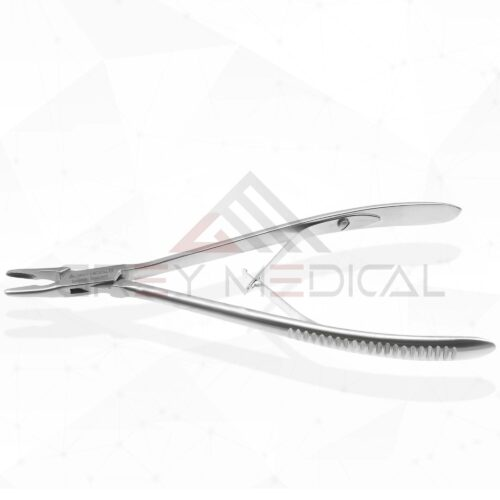
Surgical procedures often require specialized instruments that help medical professionals remove, shape, or manage bone tissue with precision. Rongeurs are among the commonly used instruments in orthopedic, neurosurgical, and other surgical settings where bone removal may be necessary. Their cutting jaws and carefully designed handles allow surgeons to work with controlled movements. A single action rongeur is a specialized surgical instrument designed to support bone removal and tissue preparation in procedures that require accuracy and careful handling.
Understanding the Single Action Rongeur
A rongeur is a surgical instrument used to remove small pieces of bone or hard tissue. Its design generally includes handles, a shaft, and cutting jaws that allow the surgeon to apply controlled force to the targeted area. Unlike instruments designed for cutting soft tissue, rongeurs feature strong jaws that help manage bone during surgical procedures.
The single-action mechanism operates through a straightforward movement in which the handles activate the cutting jaws. When the surgeon squeezes the handles, the jaws close and cut the targeted material. Consequently, this mechanism offers a direct and practical approach to bone removal. Its simple operating design also makes the instrument a useful part of various surgical instrument sets.
Design and Construction of a Single Action Rongeur
The design of a single action rongeur focuses on functionality, durability, and controlled cutting performance. Manufacturers typically produce these instruments using surgical-grade stainless steel, which supports durability, corrosion resistance, and compatibility with appropriate sterilization methods.
The instrument features a pair of handles connected to a working shaft and cutting jaws. The jaw shape, size, and profile may vary according to the intended application. Some models feature curved jaws, while others use straight or differently shaped tips to provide access to specific anatomical areas.
Additionally, the handle design influences the instrument’s comfort and control. Well-designed handles help surgeons maintain a stable grip during repeated movements. The cutting edges must also receive careful attention during manufacturing and inspection because their sharpness and alignment affect the instrument’s functional performance.
Common Applications in Surgical Practice
Rongeurs are commonly associated with orthopedic, spinal, and neurosurgical procedures that involve bone removal. Surgeons may use these instruments to remove small bone fragments, trim bone edges, or prepare specific areas during an operation. However, the exact application depends on the instrument’s design and the surgical procedure.
In orthopedic surgery, rongeurs may assist with shaping or removing bone when the surgeon needs access to a particular area. Similarly, in spinal procedures, selected rongeur designs may support bone removal as part of surgical exposure or decompression techniques. Nevertheless, surgeons must select the appropriate instrument according to the anatomy, procedure, and clinical requirements.
Furthermore, rongeurs can help surgeons manage small sections of bone with controlled biting movements. This functionality makes them valuable in surgical environments where access, visibility, and precision are important considerations.
Benefits of Using a Single Action Rongeur
The single action rongeur offers a straightforward mechanism that can support practical handling during surgical procedures. Its simple action allows the surgeon to operate the cutting jaws through direct pressure on the handles. Therefore, the instrument provides a familiar operating principle that supports controlled manipulation.
Its sturdy construction also contributes to its usefulness in surgical environments. High-quality materials and appropriate manufacturing processes help maintain the instrument’s structural integrity through repeated use and sterilization, when handled according to the manufacturer’s instructions.
Moreover, different jaw shapes and sizes allow medical professionals to choose instruments according to their specific procedural requirements. This variety helps surgical teams organize instrument sets for different specialties and applications.
Maintenance and Instrument Selection
Proper maintenance helps preserve the performance and lifespan of surgical instruments. After use, healthcare facilities should follow validated cleaning, inspection, sterilization, and storage procedures. In addition, staff should examine the cutting jaws, joints, handles, and overall surface condition for damage or signs of wear.
When selecting a rongeur, medical professionals and purchasing teams should consider the jaw configuration, instrument length, material quality, handling characteristics, and intended application. Choosing the correct instrument can support efficient instrument preparation and help maintain appropriate surgical standards.
Grey Medical® is a privately owned medical technology company dedicated to innovation and excellence in the craft of surgical instrument. The company emphasizes precision, quality craftsmanship, and functional instrument design to support healthcare professionals and medical facilities. Selecting reliable surgical instruments remains an important consideration for hospitals, clinics, distributors, and surgical teams.
Conclusion
A rongeur is an important surgical instrument for procedures that involve removing or shaping bone tissue. Its simple operating mechanism, sturdy construction, and specialized cutting jaws make it a valuable tool in several surgical specialties. By understanding the design, applications, and maintenance requirements of a single action rongeur, healthcare professionals can make more informed decisions when selecting instruments for their surgical needs. Ultimately, precision manufacturing, proper handling, and routine inspection help support the dependable use of surgical instruments in professional medical environments.
 spon bottle shop.wine bar
 growthhdigitaly.gmb1.growthhdigitaly