
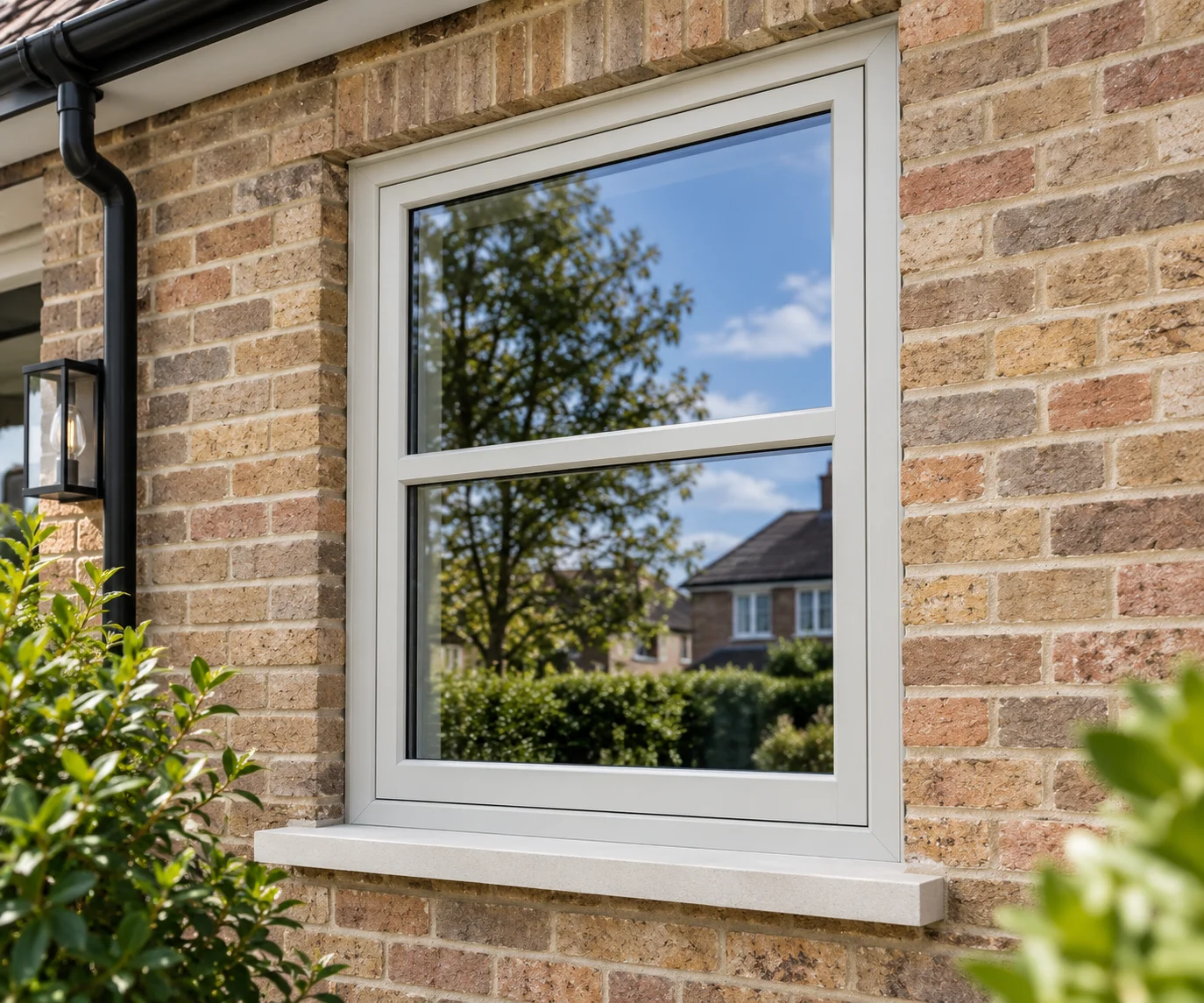
If you own a period property in Croydon, Coulsdon, or anywhere across South London, you’ll know the dilemma well. You want the thermal efficiency and security of modern windows, but you don’t want to compromise the character of your home. Traditional casement windows—with their chunky, overlapping frames—simply don’t look right on a Victorian terrace or an Edwardian semi. That’s exactly where Flush Sash Windows come into their own. At Glitz Windows & Doors, we’ve fitted flush sash windows across South London and Surrey for over 25 years, and they’ve become one of our most requested styles for heritage and period properties. This guide explains what makes them special, how they compare with Turn and Tilt Windows, and how to choose the right option for your home.
What Are Flush Sash Windows?
Flush sash windows are a modern window style designed to replicate the appearance of traditional timber box sash windows. The defining feature is in the name: when closed, the opening sash sits flush with the outer frame, creating a smooth, flat surface with no protruding edges.
Traditional casement windows have sashes that sit proud of the frame—overlapping it slightly. That’s perfectly fine on modern homes, but on period properties it can look out of place. Flush sash windows restore the flat, seamless appearance that timber sash windows originally delivered, while using modern materials and glazing technology underneath.
The Key Features of Flush Sash Windows
- Flush external profile: The sash and frame align perfectly when closed, recreating the authentic look of traditional timber.
- Mechanism options: Flush sash windows can operate as casements (hinged on one side, opening outward) or as sliding sashes (moving vertically like a traditional box sash). This flexibility means they can match almost any period property.
- Slim sightlines: Modern manufacturing allows for narrower frames than older uPVC styles, getting closer to the proportions of original timber.
- Available in uPVC and aluminium: At Glitz Windows & Doors, we supply flush sash windows in both materials, with timber-effect foils that convincingly replicate painted wood.
Why Flush Sash Windows Suit Period Homes
Croydon and the surrounding boroughs are full of Victorian and Edwardian housing stock, along with 1930s semis and conservation areas such as Addington Village and parts of the Old Town. Replacing windows on these properties comes with two competing pressures: the need for modern performance, and the need to preserve architectural character.
Flush sash windows resolve that tension better than almost any alternative.
Authentic Appearance Without Compromise
The flat external profile of a flush sash window sits comfortably within a period façade. Add a timber-effect foil finish—white, cream, or a heritage colour—and putty-line detailing around the glass, and the result is a window that reads as traditional from the street. Where standard casements can look visibly “modern” against brickwork and stone, flush sashes blend in.
Modern Performance Beneath the Surface
Underneath the heritage appearance, flush sash windows deliver everything you’d expect from a new installation: multi-chambered frames, A-rated double glazing, multi-point locking, and weather sealing that keeps draughts and rain firmly outside. For homeowners weighing the cost of heating a period property with original single-glazed timber, the difference in comfort and energy bills is substantial.
Lower Maintenance Than Timber
Original timber sash windows require regular painting, putty repair, and rot treatment. Flush sash windows in uPVC or aluminium need only an occasional wipe down. The timber-effect finishes are colour-fast and won’t need repainting, which matters greatly on upper-floor windows that are awkward to access.
Planning-Friendly in Conservation Areas
In conservation areas, planning officers often expect replacement windows to match the original style, profile, and glazing pattern. Flush sash windows—particularly with authentic detailing such as slim glazing bars and putty-line beading—are far more likely to gain approval than standard casements. Our team is experienced in advising on what’s likely to be acceptable, and we always recommend checking with the local authority before ordering.
Flush Sash Windows vs. Turn and Tilt Windows
Both styles are popular, but they serve different purposes. Understanding the distinction will help you specify the right window for each room.
Flush Sash Windows: Heritage Appearance First
Flush sash windows prioritise authentic period looks. They are the right choice for:
- Period and heritage properties where appearance matters
- Conservation areas with planning constraints
- Front elevations visible from the street
- Homeowners who want the traditional flat profile
Turn and Tilt Windows: Practicality and Ventilation First
Turn and Tilt Windows operate in two positions: tilting inward from the top for secure ventilation, or opening fully inward from the side like a door. Their strengths lie in practicality:
- Secure ventilation: The tilt position allows airflow while the window remains locked—ideal for upper floors and rooms left unattended.
- Easy cleaning: The turn position brings the exterior glass inside, so you can clean from within the room without ladders.
- Space efficiency: Because they open inward, they don’t project outward over pathways or balconies—useful for flats and restricted spaces.
- Strong security and weather sealing: Multi-point locking and compression seals perform excellently.
Which Should You Choose?
A simple rule of thumb: flush sash windows for period frontages and heritage settings; turn and tilt windows for practical, modern living spaces. It’s common for homeowners to combine them—flush sashes at the front of the house to satisfy appearance and planning, and turn and tilt windows at the rear or in kitchens and bathrooms where ventilation and easy cleaning matter most. Our survey team can help you plan a consistent scheme across the whole property.
Signs Your Existing Windows Need Replacing
If you’re considering an upgrade, watch for these warning signs on your current frames:
1. Condensation Between the Panes
This means the sealed glass unit has failed. The frame may still be sound, but the unit needs replacing—and on older windows, full replacement is often the better investment.
2. Draughts and Cold Spots
Cold air near a closed window indicates deteriorated seals or gaskets. Persistent draughts in older timber frames usually signal the end of their serviceable life.
3. Rot, Warping, or Sticking
Original timber sashes commonly rot at the base and stick in their runners. While repairs are possible, repeated rot and sticking usually justify replacement with a modern equivalent.
4. Discolouration or Frame Damage
Yellowed uPVC or cracked frames compromise both appearance and performance. Replacement is the sensible route.
The Glitz Windows & Doors Advantage
Installation quality determines how well any window performs—and flush sash windows, with their precise alignment requirements, reward careful fitting. At Glitz Windows & Doors, every project is handled by our own FENSA-registered team, with no subcontractors. All installations comply with Part L (thermal performance) and Part Q (security) of the Building Regulations, and every job is backed by our 10-year manufacturer guarantee.
We supply and fit flush sash windows in uPVC and aluminium, alongside casement, sash, tilt-and-turn, bay, and bow styles. Based in Coulsdon, we serve Croydon, Sutton, Caterham, Epsom, Crawley, and surrounding areas—with no call centres, just direct contact with our team.
Visit us: 53 Chipstead Valley Rd, Coulsdon CR5 2RB
Call: 02033707955
Email: info@glitzwindows.co.uk
Conclusion
Flush Sash Windows solve a problem that has frustrated period homeowners for decades: how to get modern thermal performance and security without losing the character of a traditional property. With their flat external profile, heritage detailing options, and low-maintenance finishes, they deliver authenticity and efficiency in equal measure. Meanwhile, Turn and Tilt Windows remain the practical choice for rooms where ventilation, cleaning access, and space efficiency matter most.
If you’re unsure which style suits your property—or planning a mixed scheme across front and rear elevations—get in touch. Glitz Windows & Doors offers free, no-obligation surveys and honest advice tailored to your home.
Frequently Asked Questions
What are flush sash windows?
Flush sash windows are a modern window style where the opening sash sits flush with the outer frame when closed, creating a smooth, flat external profile. This replicates the appearance of traditional timber sash windows while using modern uPVC or aluminium construction and A-rated double glazing.
Are flush sash windows suitable for period properties?
Yes—they’re specifically designed for them. Their flat profile, slim sightlines, and timber-effect finishes allow them to blend convincingly with Victorian, Edwardian, and 1930s architecture, making them a strong choice for conservation areas and heritage homes.
What’s the difference between flush sash and turn and tilt windows?
Flush sash windows prioritise heritage appearance, with a flat profile that mimics traditional timber. Turn and tilt windows prioritise practicality, offering secure tilt ventilation and inward opening for easy cleaning. Many homeowners use flush sashes at the front and turn and tilt windows at the rear.
Do flush sash windows meet building regulations?
Yes. Our installations comply with Part L (thermal performance) and Part Q (security) of the Building Regulations and are carried out by FENSA-registered fitters. You’ll receive a FENSA certificate on completion, which is required for conveyancing when selling your home.
Will I need planning permission for flush sash windows?
Replacing windows like-for-like generally falls under Permitted Development. In conservation areas, however, planning officers often expect replacements to match the original style—flush sash windows with heritage detailing are far more likely to gain approval. We advise checking with the local authority before ordering.
Are flush sash windows energy efficient?
Yes. Modern flush sash windows feature multi-chambered frames and A-rated double glazing as standard, delivering strong thermal performance and helping improve your home’s EPC rating.
How long does installation take?
Most standard window replacements are completed in a single day. Full-house projects are typically completed within two to five days depending on scope. We provide a clear timeline before work begins.
Are your installations FENSA registered and guaranteed?
Yes. All installations are carried out by our own FENSA-registered team and backed by a 10-year manufacturer guarantee, with full compliance to current UK Building Regulations.
 aneetta.john
 aliza.beth
 john.daniel