
Introduction
The crop cycle is limited, requiring farming families to spend their precious savings in expectation of future crop sale revenue. Buying seeds, fertilisers and pesticides, arranging labour, and setting up irrigation during planting and crop growth periods can involve significant expenses and capital outlay. If the crop does not perform well due to unexpected challenges or buyers delay payments, farmers may face difficulties managing their finances until the next income arrives.
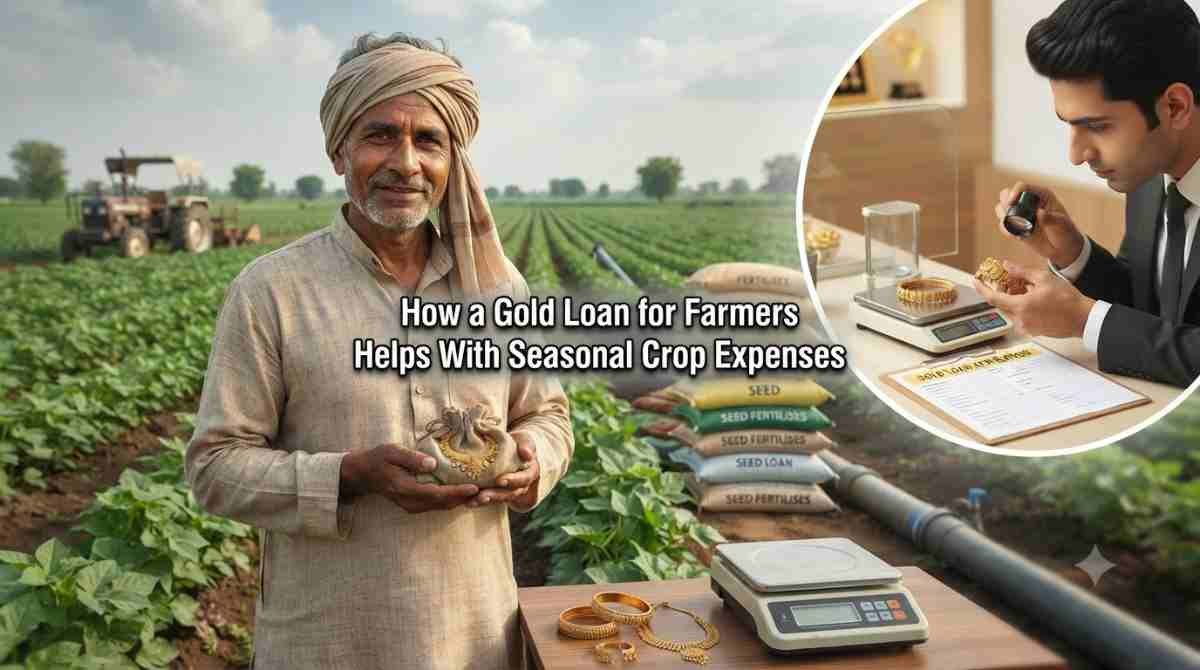
A gold loan can help meet short-term cash requirements by allowing eligible borrowers to pledge their gold jewellery as collateral. The loan is subject to the lender’s eligibility criteria, valuation process, approval, and applicable terms and conditions. It can provide access to funds for agricultural expenses without requiring farmers to sell their jewellery.
Why Farmers Need Funds During Crop Seasons
Most agricultural inputs are purchased before harvesting, whereas income is usually realised after selling the crop. This mismatched cycle creates working capital challenges. Farmers have to purchase quality seeds at planting, buy fertilisers at important crop growth intervals, and arrange labour for sowing, weeding, irrigation, and harvesting.
Unforeseen rainfall, a lack of rainfall, pests, diseases, or crop outbreaks could also result in additional expenses. A delay in receiving funds may affect farming activities and could negatively affect crop yields.
Seasonal expenses may include:
- Purchasing seeds, fertilisers, pesticides, and soil treatments.
- Paying agricultural labourers for sowing, weeding, and harvesting.
- Arranging irrigation facilities, water pumps, pipes, and fuel.
- Maintaining tractors, machinery, and other farming equipment.
- Managing unexpected crop protection and repair expenses.
Having access to timely funds can help farmers manage these requirements and maintain essential agricultural activities throughout the crop cycle.
What Is a Gold Loan for Farmers?
A gold loan for farmers is a secured loan in which a person pledges eligible gold jewellery or ornaments to a lender in exchange for funds. The amount offered to a borrower is based on the net weight and purity of the gold, its valuation, the applicable loan-to-value (LTV) limit, and the lender’s assessment.
The lender evaluates the gold offered and informs the borrower about the eligible loan amount, interest rate, applicable charges, and repayment terms. The borrower can use the funds for eligible financial requirements, including agricultural expenses, depending on the loan terms.
The pledged gold can be retrieved by the borrower once the principal amount, interest, and applicable dues have been repaid. Approval, documentation, valuation, and disbursement requirements vary by lender and application.
Gold Loan for Managing Seasonal Expenses on Crops
1. Purchasing Seeds and Fertilisers
Farmers may need to buy quality seeds, fertilisers, pesticides, and soil treatments before and during the growing season. These inputs are essential for preparing the land, supporting crop development, and protecting plants from pests and diseases.
A gold loan can provide the necessary funds to purchase these agricultural supplies when savings or other available funds are insufficient. Timely access to inputs can help farmers follow their planned cultivation schedules.
2. Compensating Agricultural Labourers
Occasionally, farmers require additional labourers for tasks such as land preparation, planting, weeding, irrigation, and harvesting. Labour expenses can increase during busy agricultural periods when several activities need to be completed within a limited time.
A gold loan may help farmers arrange the funds required to pay agricultural workers and keep essential farming operations on schedule.
3. Covering the Expenses for Irrigation and Equipment
Water pumps, irrigation pipes, fuel, and other facilities can be expensive, particularly when rainfall is insufficient or unpredictable. Farming machinery, including tractors and other equipment, may also require maintenance and repairs during the crop cycle.
A gold loan could help cover these expenses and prevent delays in important agricultural activities. Farmers should assess the cost of the required equipment or repairs before deciding how much to borrow.
4. Managing Unexpected Crop Costs
Swift action against crop pests, diseases, or difficult weather conditions can involve considerable expenses. Farmers may need to purchase crop-protection sprays, repair broken machinery, or locate additional water sources.
Where credit is accessible, it can enable farmers to respond to these situations. However, the borrowed amount should be based on actual requirements and repaid within a financially manageable period.
5. Bridging the Gap Until Harvest Income
Farmers can use a gold loan for working capital needs because it may take several months to receive payment for their harvest. During this period, they may need funds for household expenses and ongoing agricultural activities.
After the harvest, farmers may use the income received from crop sales to repay the outstanding loan, provided the repayment schedule and amount are manageable. Planning for possible delays in crop sales is important when deciding the loan tenure and repayment method.
6. Preventing the Need to Sell Jewellery
Selling gold can be a difficult decision for families who want to retain their jewellery for personal or financial reasons. A gold loan can be an alternative that involves pledging eligible jewellery as security rather than selling it.
The borrower can retrieve the pledged jewellery after completing the repayment obligations and fulfilling the lender’s release requirements. However, borrowers should understand that failure to repay the loan may put the pledged gold at risk under the applicable loan agreement and recovery process.
Advantages and Considerations to Remember
Gold loans are secured by collateral, and the loan amount is directly related to the value of the gold pledged by the borrower. Certain lenders may require the gold to be appraised and checked for purity and weight before determining the eligible loan amount.
Once the required documentation and procedures are completed, the lender may approve and disburse the loan according to its terms and conditions. For farmers, this can provide access to funds without selling their gold jewellery.
However, a gold loan is not a free source of money. Interest and other charges can increase the total repayment cost. Farmers should compare the following details before applying:
- Interest rate: Check the applicable interest rate and understand how it is calculated.
- Processing and administrative fees: Review all charges associated with the loan.
- Repayment schedule: Choose a repayment arrangement that considers the expected timing of crop income.
- Loan tenure: Ensure that the repayment period is suitable for the agricultural cycle.
- Late payment charges: Understand the financial consequences of missing repayment deadlines.
- Gold release conditions: Check the requirements for retrieving pledged jewellery after repayment.
The Bajaj Finance gold loan is available against eligible gold jewellery, subject to Bajaj Finance’s terms and conditions. Farmers considering this option should check the Bajaj Finance gold loan interest rate, fees, eligibility requirements, and repayment terms before applying.
How to Borrow Responsibly
If you borrow money to finance agricultural activities, work out the cost of the seeds, fertilisers, labour, irrigation, equipment, and other inputs you need to purchase. Borrow only as much as necessary and ensure that your expected crop income can reasonably cover the repayment. Do not base your decision on overly optimistic income projections.
Compare total borrowing costs rather than looking only at interest rates. Review the terms and conditions, check your loan agreement, understand the due dates, and find out about part-payments, foreclosure, and late payment charges. Keep copies of all loan documents safely and maintain a record of repayment dates.
Most importantly, understand the consequences of non-payment. Delays may result in additional charges, and continued failure to repay may lead to the lender taking action against the pledged gold as permitted by the loan agreement and applicable rules. Borrowing within your repayment capacity helps reduce this risk.
Farmers should also consider keeping some funds aside for household expenses and unexpected agricultural costs. This can help them avoid depending entirely on future harvest income to meet their repayment obligations.
Conclusion
Gold loans for farmers can help meet seasonal crop expenses, including the cost of agricultural inputs, labour, irrigation, equipment, and unexpected farming requirements before harvesting income is received. Farmers can access secured credit against eligible gold jewellery without having to sell it.
This option may be suitable when the borrowing cost is manageable, the loan terms meet the farmer’s requirements, and repayment is planned around realistic farm income. Farmers should compare interest rates and charges, read the loan agreement carefully, and borrow only what they can comfortably repay. With proper financial planning, a gold loan can help manage seasonal crop expenses while supporting farming activities.
 the 77.skin
 azee.med
 bottega.desires