
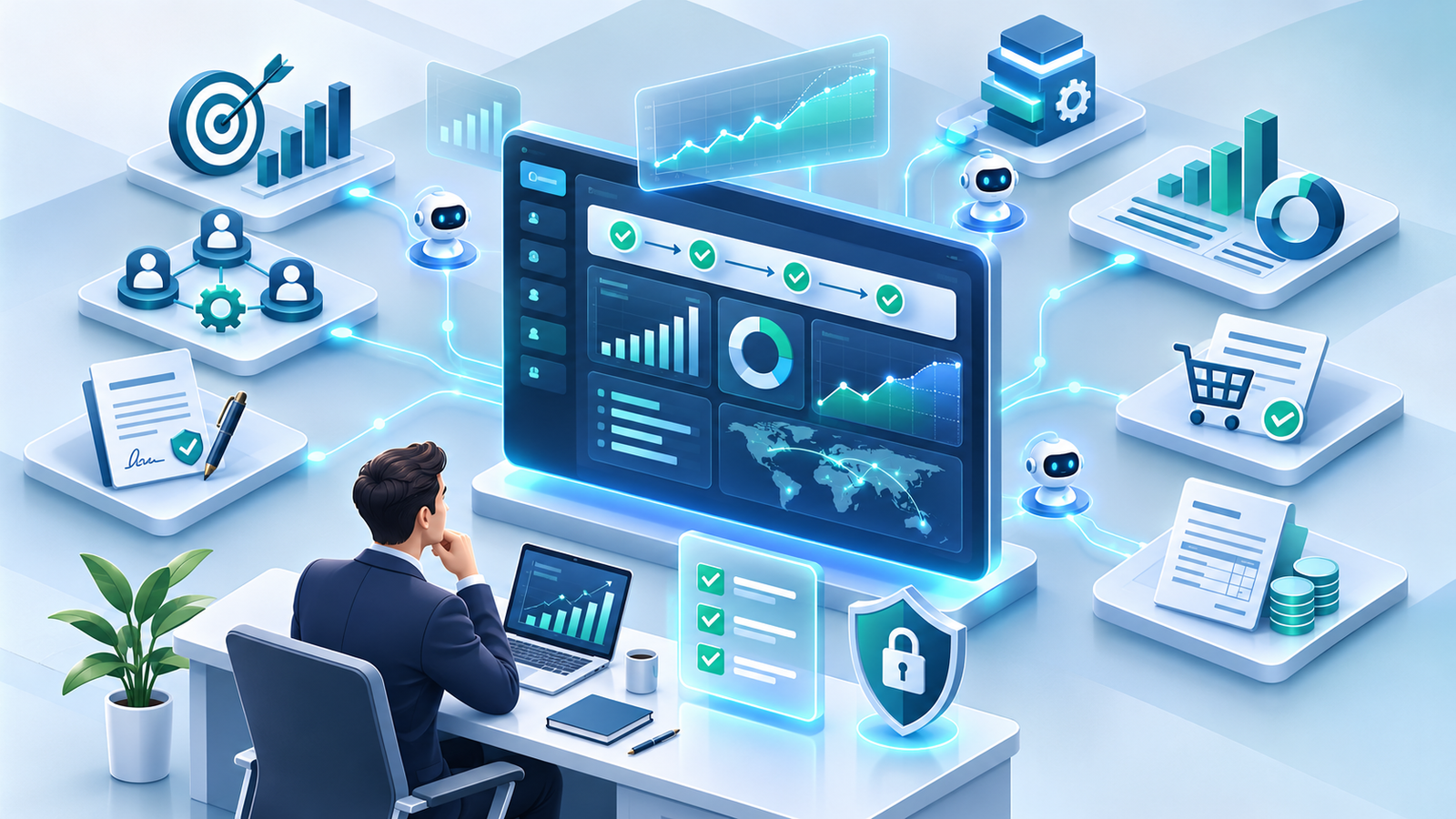
Procurement has evolved beyond purchasing goods and services at competitive prices. Today, enterprises must manage complex supplier networks, control spending, mitigate risks and maintain regulatory compliance. Managing these responsibilities through disconnected systems can result in operational inefficiencies and missed cost-saving opportunities.
Source-to-Pay (S2P) software addresses these challenges by connecting the entire procurement lifecycle within a unified digital environment. From strategic sourcing and supplier selection to contract management and invoice processing, an integrated platform helps organisations streamline procurement operations.
However, choosing the right software requires careful consideration of business objectives, technological capabilities and long-term requirements.
What Is Source-to-Pay Software?
Source-to-Pay software is an integrated procurement solution that manages the entire procurement lifecycle, from identifying sourcing opportunities to facilitating supplier payments. It combines spend analysis, strategic sourcing, supplier management, contract lifecycle management and Procure-to-Pay activities.
Unlike standalone procurement applications, a unified Source-to-Pay platform connects strategic and operational processes, enabling enterprises to improve spend visibility, maintain data consistency and strengthen collaboration between procurement and finance teams.
Why Choosing the Right Source-to-Pay Software Matters
Selecting the right procurement platform can significantly influence an enterprise’s operational efficiency, financial performance and supplier relationships.
An effective S2P solution helps organisations reduce administrative workloads, identify cost-saving opportunities, strengthen procurement compliance and make informed business decisions.
For global enterprises, an integrated platform also supports standardised procurement processes across multiple business units while accommodating regional requirements.
Key Factors to Consider When Choosing Source-to-Pay Software
Understand Your Enterprise Procurement Requirements
Before evaluating software providers, enterprises should identify existing procurement challenges and establish clear business objectives. Requirements may vary depending on industry, organisational size, geographical presence and supplier networks.
Involving stakeholders from procurement, finance, IT and compliance helps ensure that the selected platform addresses organisation-wide requirements.
Look for End-to-End Procurement Capabilities
A comprehensive Source-to-Pay platform should connect strategic sourcing, spend analysis, supplier management, contract management, purchasing and invoice processing.
An integrated environment reduces data silos and manual information transfers while improving visibility across the procurement lifecycle. It also helps organisations connect strategic sourcing decisions with operational purchasing activities.
Evaluate AI and Automation Capabilities
Modern procurement automation software incorporates artificial intelligence to streamline repetitive tasks, analyse spending patterns and generate actionable insights.
Agentic AI further extends these capabilities by enabling AI agents to execute multi-step procurement activities within established business policies and approval frameworks.
Enterprises should evaluate AI capabilities alongside human oversight, decision transparency and data governance to ensure responsible and effective automation.
Assess Integration with Existing Enterprise Systems
Source-to-Pay software should integrate effectively with existing ERP, accounting, finance and supply chain management systems.
Enterprises should evaluate ERP compatibility, API availability, integration complexity and maintenance requirements. Effective integration helps maintain consistent information across departments, reduce manual data entry and improve collaboration between procurement and finance teams.
Prioritise Scalability and Flexibility
As enterprises expand into new markets, procurement requirements become increasingly complex. The selected platform should accommodate growing transaction volumes, supplier networks and changing organisational structures.
Capabilities such as multi-currency support, multilingual interfaces and configurable approval workflows can help global enterprises maintain consistent procurement operations while addressing regional business requirements.
Consider User Experience and Adoption
The success of procurement technology depends significantly on user adoption. Complicated interfaces and purchasing workflows can discourage employees from using the platform effectively.
Enterprises should prioritise intuitive interfaces, guided buying, self-service procurement and simplified supplier onboarding. Involving end users in software demonstrations and pilot programmes can help identify usability challenges before implementation.
Review Supplier Management and Risk Capabilities
An effective Source-to-Pay solution should support supplier qualification, onboarding, performance monitoring and risk assessment.
Centralised supplier information and performance insights enable procurement teams to identify potential disruptions, strengthen supplier relationships and make informed sourcing decisions.
Ensure Data Security and Compliance
Procurement platforms handle sensitive financial information, supplier records and contractual documents. Enterprises should evaluate data encryption, access controls, audit trails, disaster recovery procedures and relevant security certifications.
For AI-enabled platforms, organisations should also understand how their enterprise data is processed, stored and used.
Evaluate Total Cost of Ownership and ROI
The cost of procurement software extends beyond licensing or subscription fees. Enterprises must consider implementation, integration, data migration, employee training and ongoing maintenance expenses.
Return on investment should be measured against improvements in procurement cycle times, cost savings, contract compliance, spend visibility and operational productivity.
Assess Vendor Expertise and Long-Term Support
Selecting a procurement technology provider is a long-term business decision. Enterprises should evaluate the vendor’s industry experience, implementation capabilities, customer references and product development roadmap.
Organisations exploring procurement digital transformation can consider Zycus’s AI-powered Source-to-Pay software, which connects strategic and operational procurement capabilities within a unified environment.
The selected provider should align with both current procurement requirements and future business objectives.
Common Mistakes to Avoid When Choosing Source-to-Pay Software
Enterprises often make the mistake of prioritising software pricing over long-term business value. Overlooking integration requirements, neglecting employee feedback and underestimating implementation complexity can also limit the effectiveness of procurement transformation.
Organisations should avoid selecting platforms based solely on immediate operational needs. Considering future business growth, technological advancements and evolving procurement requirements is equally important.
How Agentic AI Is Shaping the Future of Source-to-Pay
Procurement technology is moving beyond conventional workflow automation towards intelligent and increasingly autonomous operations.
Agentic AI enables procurement teams to support complex workflows, analyse contextual information and execute tasks within defined organisational controls. Combined with predictive analytics, these capabilities can help enterprises identify sourcing opportunities, anticipate supplier risks and improve decision-making.
Businesses investing in procurement technology should consider platforms that support both current operational requirements and future advancements in AI-driven procurement.
Conclusion
Choosing the right Source-to-Pay software requires a comprehensive evaluation of enterprise procurement requirements, integration capabilities, AI functionality, scalability, security and long-term business value.
The right platform goes beyond automating procurement transactions. It enables greater spend visibility, stronger supplier relationships, improved compliance and informed decision-making. By investing in a flexible and intelligent procurement solution, enterprises can build more efficient, resilient and future-ready procurement operations.
 growthhdigitaly.gmb1.growthhdigitaly
 spon bottle shop.wine bar
 grey.medical