
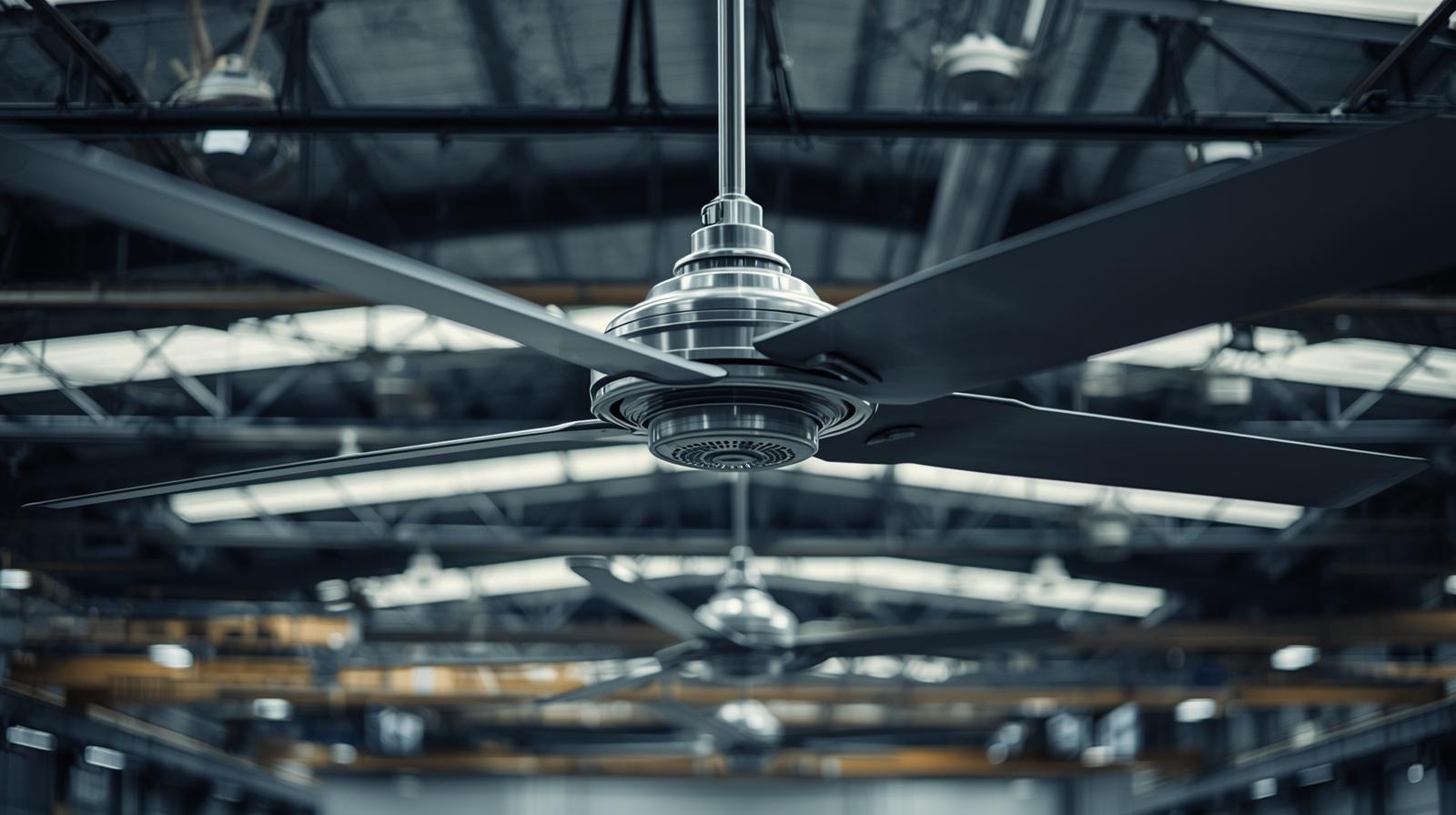
Large commercial and industrial facilities face a constant challenge when it comes to maintaining comfortable indoor environments. Warehouses, factories, gyms, distribution centers, workshops, and agricultural buildings often struggle with heat buildup, stagnant air, and inconsistent ventilation. In these environments, traditional cooling systems may not provide sufficient airflow or energy efficiency. This is where industrial ceiling fans have become an essential solution for modern facilities.
Unlike residential fans, industrial-grade ceiling fans are designed to move large volumes of air across expansive spaces. Their powerful motors, larger blade spans, and durable construction allow them to improve air circulation in demanding environments. Whether installed in manufacturing plants or sports arenas, these fans help regulate temperature, reduce humidity, and create healthier indoor conditions.
As businesses continue to prioritize energy efficiency and workplace comfort, industrial airflow systems are receiving greater attention. Understanding how these fans work, where they are used, and what factors influence their performance can help facility managers make informed decisions about ventilation and climate control.
Why Air Circulation Matters in Large Facilities
Air circulation is more than a comfort issue in industrial settings. Poor airflow can affect worker productivity, equipment performance, and even safety. Large spaces tend to trap warm air near the ceiling while cooler air remains near the floor, creating uneven temperatures throughout the building.
This temperature imbalance can lead to several problems. Employees may experience discomfort or fatigue during hot weather, while machinery can overheat in poorly ventilated conditions. Moisture buildup may also contribute to mold growth or corrosion in storage facilities.
Proper airflow addresses these concerns by continuously moving air throughout the environment. Industrial ventilation systems, including ceiling fans, help distribute conditioned air more evenly. During colder months, fans can also push warm air downward, reducing heating inefficiencies caused by heat stratification.
By improving circulation, facilities can maintain more stable indoor temperatures while reducing dependence on heating and cooling equipment.
How Industrial Ceiling Fans Work
The operating principle behind industrial ceiling fans is relatively simple, but their engineering is highly specialized. These fans use large blades powered by high-performance motors to move significant amounts of air at low rotational speeds.
Many modern industrial fans are classified as HVLS fans, which stands for High-Volume, Low-Speed. Instead of generating fast, concentrated airflow like smaller fans, HVLS systems create a broad column of moving air that spreads across a large area.
This gentle but continuous airflow produces an evaporative cooling effect on the skin, making occupants feel cooler even if the actual room temperature remains unchanged. The process can significantly improve comfort without drastically lowering thermostat settings.
The effectiveness of these fans depends on several factors, including blade size, ceiling height, motor efficiency, and placement within the building. Larger blade diameters generally provide wider airflow coverage, making them ideal for open industrial spaces.
Common Applications Across Different Industries
Industrial facilities vary widely in design and operational requirements, yet many share the need for reliable airflow management. As a result, industrial ceiling fan systems are now used across multiple sectors.
Warehouses are among the most common environments for these fans. Storage buildings often have high ceilings and limited natural ventilation, which can create hot and stagnant conditions. Large fans help circulate air throughout loading docks, shelving areas, and work zones.
Manufacturing plants also benefit from improved airflow. Heat generated by machinery, welding operations, or industrial processes can raise indoor temperatures quickly. Effective ventilation helps maintain safer working conditions and supports employee comfort during long shifts.
Agricultural facilities frequently install industrial ceiling fans in barns, poultry houses, and greenhouses. Air movement helps regulate humidity, reduce odors, and improve animal welfare. In greenhouses, proper circulation can support healthier plant growth by maintaining consistent environmental conditions.
Sports complexes and fitness centers also rely on large-scale fans to improve ventilation in crowded indoor spaces. Better airflow helps manage odors, humidity, and temperature during physical activities.
Retail stores, shopping centers, and event venues have increasingly adopted industrial fan systems as well. Their ability to improve comfort while lowering energy consumption makes them attractive for commercial environments with high occupancy levels.
Energy Efficiency and Cost Reduction Benefits
One of the primary reasons organizations invest in industrial airflow solutions is energy efficiency. Cooling large facilities entirely through air conditioning can be extremely expensive, particularly in regions with warm climates.
Industrial fans help reduce energy usage by supporting existing HVAC systems. The increased airflow allows occupants to feel cooler at higher thermostat settings, which lowers cooling demands. Even a small thermostat adjustment can produce noticeable savings over time.
During winter months, fans can operate in reverse mode to redistribute warm air that accumulates near the ceiling. This process, often called destratification, improves heating efficiency by pushing warmth back toward occupied areas.
Because of these advantages, many businesses use industrial ceiling fans as part of broader energy management strategies. Facilities aiming to reduce operational costs or improve sustainability often view these systems as practical long-term investments.
Advanced fan technologies have further improved efficiency. Many modern systems use direct-drive motors and variable speed controls, which reduce maintenance requirements while optimizing energy performance.
Key Features to Consider When Selecting a Fan
Choosing the right fan for an industrial environment requires careful evaluation of several factors. Not all systems are suitable for every facility, and performance can vary significantly depending on operational conditions.
Fan size is one of the most important considerations. Larger fans generally move more air and provide wider coverage areas. However, the correct size depends on ceiling height, floor layout, and airflow requirements.
Motor quality also plays a major role in reliability and efficiency. Industrial-grade motors are designed for continuous operation and demanding environments. Facilities with dust, moisture, or chemical exposure may require specialized motor protection.
Blade design influences airflow performance and noise levels. Aerodynamically engineered blades can improve circulation while reducing energy consumption. Noise control is especially important in environments such as gyms, schools, or retail spaces.
Control systems have become increasingly sophisticated in recent years. Many industrial fan systems now include programmable settings, temperature sensors, and smart automation features. These technologies help optimize airflow based on occupancy or environmental conditions.
Durability is another essential factor. Industrial environments often expose equipment to vibration, debris, and fluctuating temperatures. High-quality construction materials such as aluminum or steel improve long-term performance and safety.
The Role of Industrial Ceiling Fans in Workplace Comfort
Employee comfort has become an important operational priority across many industries. Research consistently shows that indoor environmental conditions can affect concentration, productivity, and overall job satisfaction.
In hot or poorly ventilated facilities, workers may experience fatigue, dehydration, or reduced performance. Air movement created by industrial fans helps improve thermal comfort and creates a more pleasant working environment.
Comfort is especially critical in facilities where employees perform physically demanding tasks. Warehouses, assembly lines, and logistics centers often require workers to remain active throughout the day. Better airflow can help reduce heat stress and improve working conditions.
In addition to temperature regulation, fans can improve indoor air quality by reducing stagnant air zones. Some facilities integrate industrial ceiling fans with ventilation and filtration systems to enhance overall environmental performance.
The psychological impact of airflow should not be overlooked either. People generally perceive moving air as fresher and more comfortable, even when temperatures remain constant.
Installation and Maintenance Considerations
Proper installation is essential for achieving optimal fan performance. Industrial fans must be positioned strategically to maximize airflow coverage while avoiding obstructions such as lighting systems, sprinklers, or structural beams.
Ceiling height significantly affects installation requirements. HVLS fans are typically most effective in buildings with high ceilings, though smaller industrial fans may be suitable for medium-height spaces.
Electrical infrastructure must also support the fan system’s power requirements. Professional installation ensures compliance with local building codes and safety standards.
Maintenance needs vary depending on fan design and operating conditions. Traditional belt-driven systems may require periodic inspections and adjustments, while direct-drive motors often require less maintenance.
Routine cleaning is important in dusty or dirty environments. Accumulated debris on blades can affect balance and reduce efficiency over time. Regular inspections also help identify loose components or wear that could impact safety.
Many manufacturers now offer monitoring systems that track fan performance and maintenance schedules. Predictive maintenance technologies can help reduce downtime and extend equipment lifespan.
Future Trends in Industrial Airflow Technology
The future of industrial ventilation is increasingly connected to automation, sustainability, and smart building management. Modern fan systems are evolving beyond simple airflow devices into integrated environmental control solutions.
Smart sensors now allow fans to adjust speed automatically based on temperature, humidity, or occupancy levels. This improves efficiency while minimizing unnecessary energy use.
Integration with building management systems is also becoming more common. Facility operators can monitor airflow performance remotely and make real-time adjustments to optimize comfort and energy savings.
Noise reduction technologies continue to improve as well. Manufacturers are developing quieter blade designs and motor systems that enhance performance without increasing sound levels.
Sustainability initiatives are likely to drive continued adoption of energy-efficient ventilation systems. As businesses seek to reduce carbon emissions and operational costs, industrial airflow solutions will remain an important part of facility management strategies.
Conclusion
Maintaining effective airflow in large commercial and industrial spaces is essential for comfort, productivity, and operational efficiency. From warehouses and factories to agricultural facilities and sports centers, industrial ventilation systems play a critical role in creating safer and healthier environments.
By improving air circulation, reducing temperature stratification, and supporting HVAC efficiency, industrial ceiling fans provide practical solutions for modern facilities. Their ability to move large volumes of air while consuming relatively little energy makes them valuable in both industrial and commercial applications.
As technology continues to evolve, these systems are becoming smarter, more efficient, and easier to manage. Businesses that prioritize indoor environmental quality and energy performance will likely continue to rely on industrial airflow solutions as part of their long-term operational strategies.