
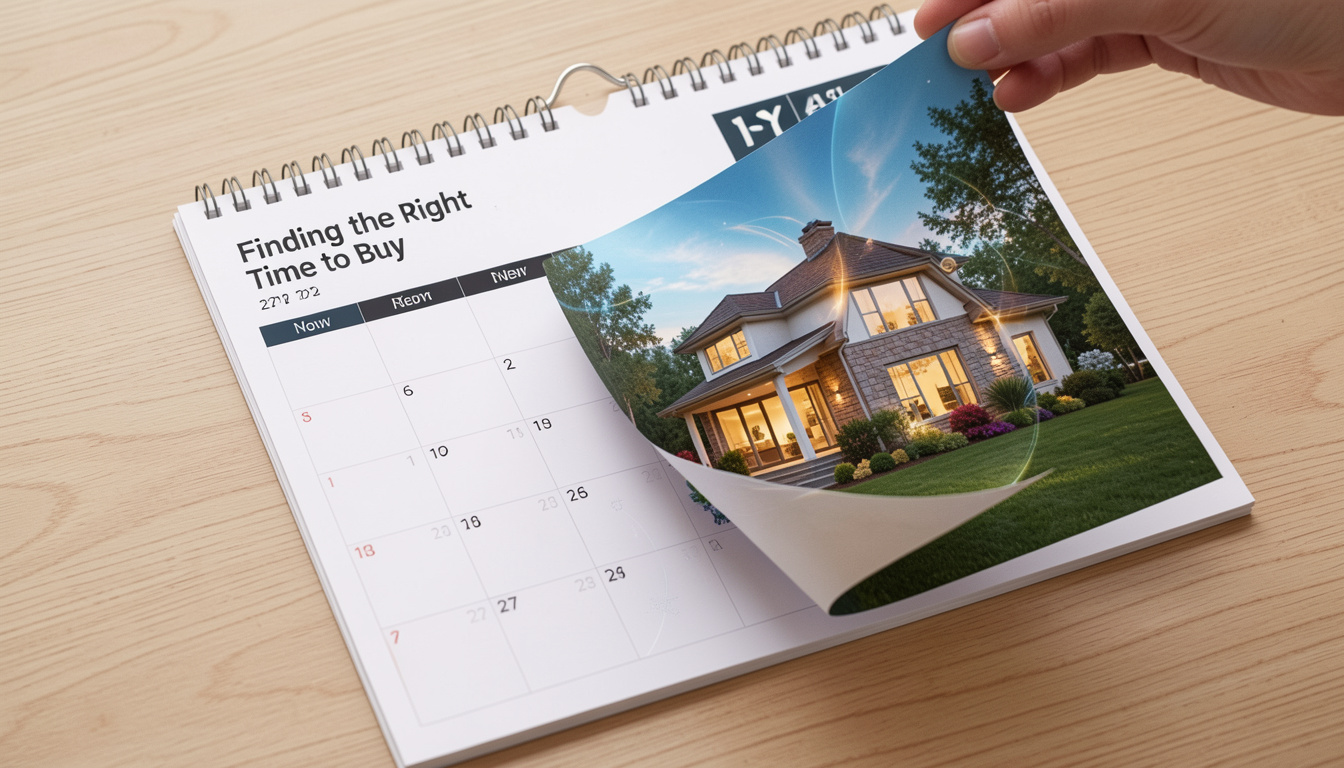
The question ‘Is now a good time to buy a house?‘ is one of the most searched real estate topics every year, and for good reason. Buying a home is likely the largest financial decision most people will ever make, and timing can significantly impact the value you receive. In 2026, the housing market is shaped by evolving mortgage rates, shifting inventory levels, and changing economic conditions. This guide walks you through every key factor you need to evaluate before deciding whether now is the right time for you to purchase a home.
1. The Current State of the 2026 Housing Market

The 2026 housing market is characterized by gradual stabilization after several turbulent years. Home prices in most major metros have leveled off compared to the sharp increases seen between 2020 and 2025. Mortgage rates, while significantly higher than their pandemic-era lows, have shown signs of stabilizing in the 6 to 7 percent range. Inventory has improved slightly in many markets, giving buyers more choices than they had in 2021 and 2022. However, demand remains strong in cities with job growth and limited new construction. Understanding your specific local market is crucial because national headlines do not always reflect what is happening in your city or neighborhood.
2. How Mortgage Rates Affect Your Home Buying Decision
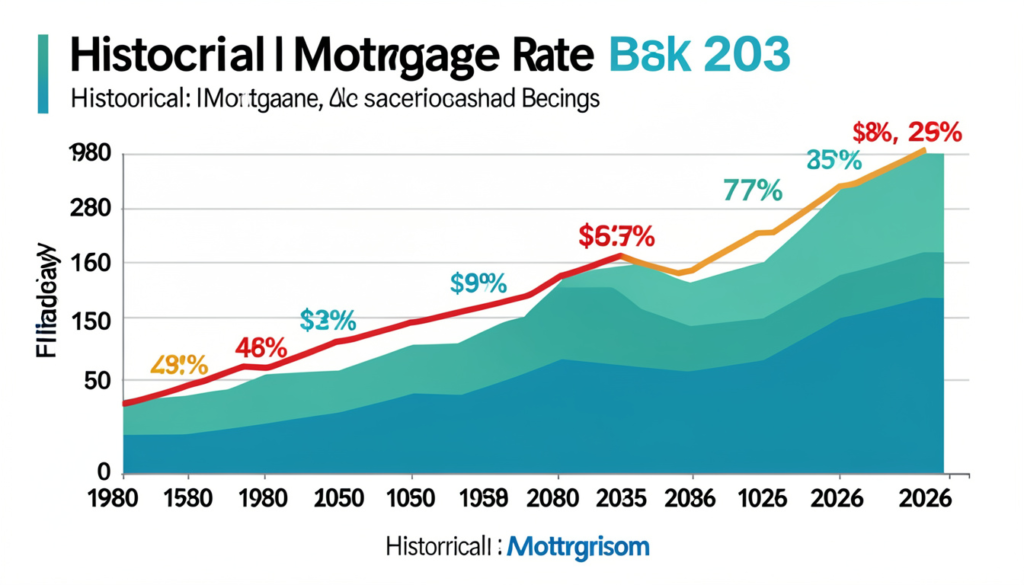
Mortgage rates are one of the most critical factors in determining affordability and whether it is a good time to buy. A one-percent increase in mortgage rates can increase your monthly payment by hundreds of dollars on a typical home purchase. In 2026, the average 30-year fixed mortgage rate hovers between 6.5 and 7 percent, depending on your credit score and loan type. While these rates feel high compared to the sub-3 percent rates of 2021, they are historically normal and still below the double-digit rates of the 1980s. Many financial advisors use the phrase ‘marry the house, date the rate’ to remind buyers that you can always refinance when rates drop, but you cannot always find the right home at the right time.
3. Signs That It May Be a Good Time to Buy a House
Several market indicators suggest 2026 presents genuine opportunities for prepared buyers. First, increased inventory means less competition and fewer bidding wars than the frenzied market of 2021 to 2022. Second, some sellers are offering concessions such as covering closing costs, buying down the buyer’s interest rate, or including appliances — a significant shift from the seller-dominated market of recent years. Third, if you are buying in an area with strong employment growth, good schools, and infrastructure investment, property values are likely to appreciate over the medium to long term regardless of short-term rate fluctuations. Fourth, if you are currently renting, rising rents in many markets mean the gap between renting and owning has narrowed considerably.
4. Signs That It May Not Be the Right Time for You Personally
Market timing is only one part of the equation. Personal readiness is equally important. Buyers without a stable income or those facing employment uncertainty should think carefully before taking on a 30-year mortgage, regardless of market conditions. A credit score below 640 can result in significantly higher interest rates and make it more difficult to secure favorable loan terms. Carrying substantial high-interest debt is another factor to consider, as paying it down first is often a smarter financial move than adding a mortgage obligation. In addition, purchasing a home may not make financial sense if there is uncertainty about remaining in the same area for at least three to five years. Transaction costs—including agent commissions, closing costs, and moving expenses—can easily outweigh any short-term appreciation, reducing the financial benefits of homeownership.
5. Renting vs. Buying: The Real Financial Comparison
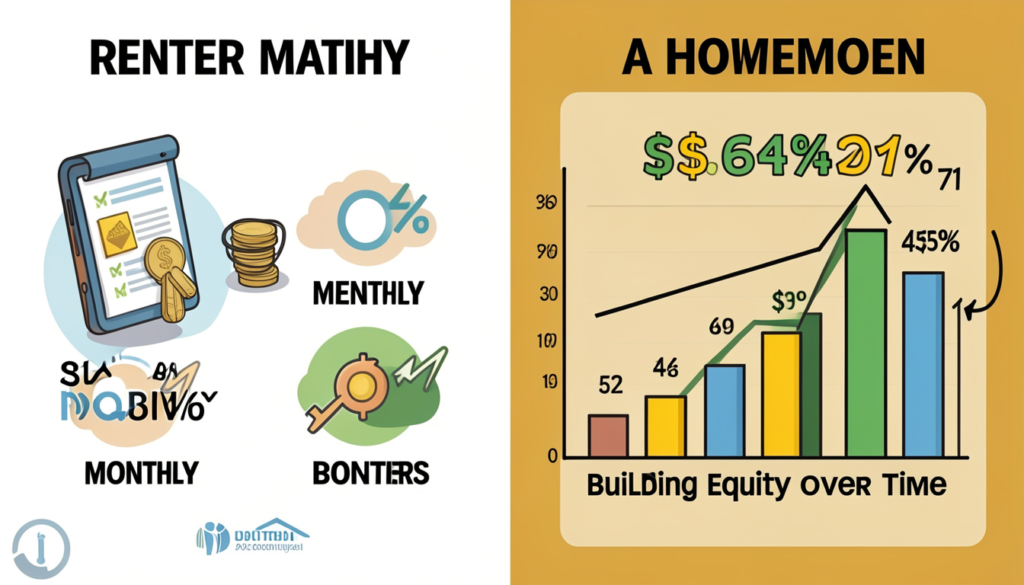
The rent versus buy debate is more nuanced than most people realize. Many financial tools oversimplify this decision by ignoring the full cost of homeownership. Beyond your mortgage payment, homeowners must budget for property taxes, homeowner’s insurance, HOA fees if applicable, and maintenance costs typically estimated at one to two percent of the home’s value annually. However, homeownership builds equity with every payment, provides a hedge against inflation, and offers significant tax advantages in many cases. When rents are rising rapidly — as they have in many cities — owning locks in your primary housing cost and provides long-term financial stability. A detailed rent-versus-buy calculator that accounts for your specific income, tax bracket, local market, and investment alternatives is the best tool for making this comparison.
6. How to Evaluate Your Financial Readiness to Buy
Before deciding whether now is a good time to buy a house, you need to honestly assess your financial health across several dimensions. Your credit score should ideally be 740 or above to qualify for the best mortgage rates, though loans are available for scores as low as 580 for FHA financing. Your debt-to-income ratio (DTI) should be below 43 percent, and many lenders prefer 36 percent or lower. You should have enough saved for a down payment — ideally 20 percent to avoid private mortgage insurance (PMI), though many programs allow 3 to 5 percent down — plus three to six months of reserves for emergencies. Get pre-approved by a reputable lender before you start shopping so you know exactly what you can afford.
7. Regional Market Differences: Why Location Matters in 2026
The national housing market is really a collection of thousands of local markets, each with its own supply, demand, and pricing dynamics. Markets like Austin, Phoenix, and Boise that saw explosive growth during the pandemic have seen price corrections of 10 to 20 percent from their peaks. In contrast, markets in the Midwest and Southeast — such as Columbus, Raleigh, and Nashville — remain competitive with strong job markets and relatively affordable entry points. Coastal cities like New York, Los Angeles, and San Francisco continue to have high prices but also strong long-term appreciation track records. Doing deep research on your specific target market — vacancy rates, days on market, price trends, and employment statistics — is far more valuable than following national news.
8. Expert Tips for Buying a Home in Any Market Condition
Regardless of whether the current market favors buyers or sellers, certain strategies consistently help homebuyers achieve better outcomes. Work with an experienced buyer’s agent who knows your target area well and can identify value before it becomes obvious to the broader market. Get fully pre-approved — not just pre-qualified — before making offers. Be decisive: in most markets, the best homes still move quickly. Negotiate smartly by asking for seller concessions on closing costs or rate buydowns rather than just focusing on the purchase price, which can be more valuable and create less friction. Consider homes that have been on the market longer than average, as motivated sellers often offer better terms.

Conclusion: Whether now is a good time to buy a house in 2026 depends on a combination of market conditions, your personal financial readiness, and your long-term goals. The market has shifted to favor prepared buyers more than at any point since 2020. Mortgage rates, while higher than recent historical lows, are stable and refinanceable. Inventory has improved, and seller concessions are back on the table. If your finances are in order, you plan to stay for at least three to five years, and you have found a property that meets your needs at a fair price, 2026 may be an excellent time to make your move. Focus on the long game: real estate purchased in any reasonable market condition tends to build wealth over time for patient, informed buyers.
 Willow Brook
 Robert