
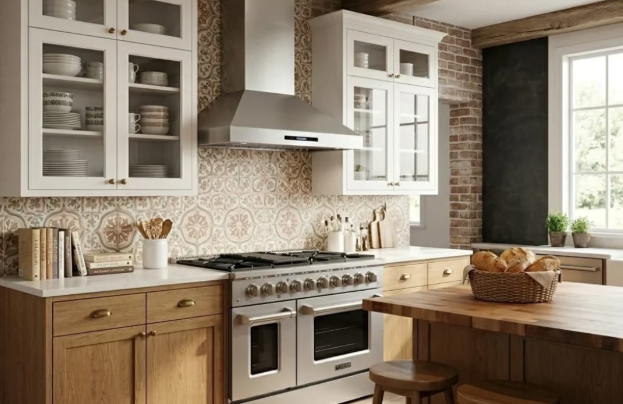
Cooking appliances influence how efficiently a kitchen operates, particularly when several dishes require different temperatures and preparation methods. Selecting the right equipment like a free-standing gas range involves considering available space, fuel connections, cooking habits, and ventilation requirements. Gas cooking remains a popular option because it offers direct flame control and quick adjustments during food preparation. Understanding its configurations and installation requirements helps homeowners plan a practical cooking area.
What Is a Freestanding Gas Range?
A freestanding gas range combines a gas cooktop and an oven in one independent appliance. Unlike separate cooktops and built-in wall ovens, this configuration brings both cooking functions together within a single unit.
Most freestanding models have finished sides, allowing them to sit between cabinets or independently along a kitchen wall. Their installation generally requires a suitable gas connection, electrical supply for ignition and other functions, and sufficient clearance around the appliance.
Gas burners operate through controlled combustion, producing an adjustable flame that transfers heat directly to cookware. This makes it possible to change cooking intensity quickly, which is useful when moving between boiling, sautéing, simmering, and searing.
Understanding Burner Performance and Oven Configurations
Burner output is commonly measured in British Thermal Units per hour (BTU/h). This measurement indicates the amount of heat energy a burner produces over time.
Higher-output burners can bring large quantities of water to a boil or heat cookware quickly. Lower-output settings are useful for preparing delicate sauces and maintaining gentle cooking temperatures.
A free-standing gas range may have four, six, or eight burners depending on its width and configuration. Larger models can also incorporate griddles or additional cooking surfaces, allowing multiple preparation methods to be used simultaneously.
Oven configuration is another important consideration.
All-Gas Ovens
All-gas models use gas for both the cooktop and oven. Gas ovens typically produce combustion-related moisture alongside heat, creating a different cooking environment from electric ovens.
They can be suitable for roasting, braising, and everyday baking, although individual results depend on oven design, temperature control, and airflow.
Dual-Fuel Ovens
Dual-fuel configurations combine gas burners with an electric oven. The cooktop provides direct flame control, while the electric oven offers a different heating system that some cooks prefer for baking.
The choice depends on cooking preferences, available utility connections, and installation requirements.
Choosing the Correct Appliance Size
Width affects both cooking capacity and the amount of kitchen space required. Common configurations include 30-inch, 36-inch, and 48-inch appliances.
A 30-inch free-standing gas range generally suits kitchens with standard appliance openings and moderate cooking requirements. It can provide several burners and an oven without occupying excessive floor space.
A 36-inch model offers a wider cooking surface and can accommodate additional burners. It may be useful for households that regularly prepare several dishes at once.
A 48-inch configuration provides considerably more cooking capacity. Some models include multiple ovens, additional burners, and integrated griddles.
Why Ventilation Matters in Gas Cooking
Gas appliances produce more than cooking heat. Their combustion process can release pollutants such as nitrogen dioxide and carbon monoxide, making appropriate ventilation an important part of kitchen planning.
Cooking itself also generates grease particles, moisture, smoke, and odours. These contaminants can accumulate indoors when ventilation is insufficient.
A correctly sized free-standing gas range should therefore be paired with a suitable extraction system. The ventilation appliance should cover the cooking surface effectively and provide sufficient airflow for the expected cooking intensity.
Conclusion
Choosing a gas range requires evaluating burner capacity, oven configuration, appliance dimensions, fuel supply, and maintenance requirements. These considerations help create a cooking area that supports different preparation methods without compromising safety or functionality.
A properly selected professional kitchen hood also contributes to managing combustion byproducts, cooking smoke, grease, and moisture. Planning both appliances together produces a more practical and well-ventilated kitchen.
 olivia.leonard
 heath.henry
 CEO Asif