
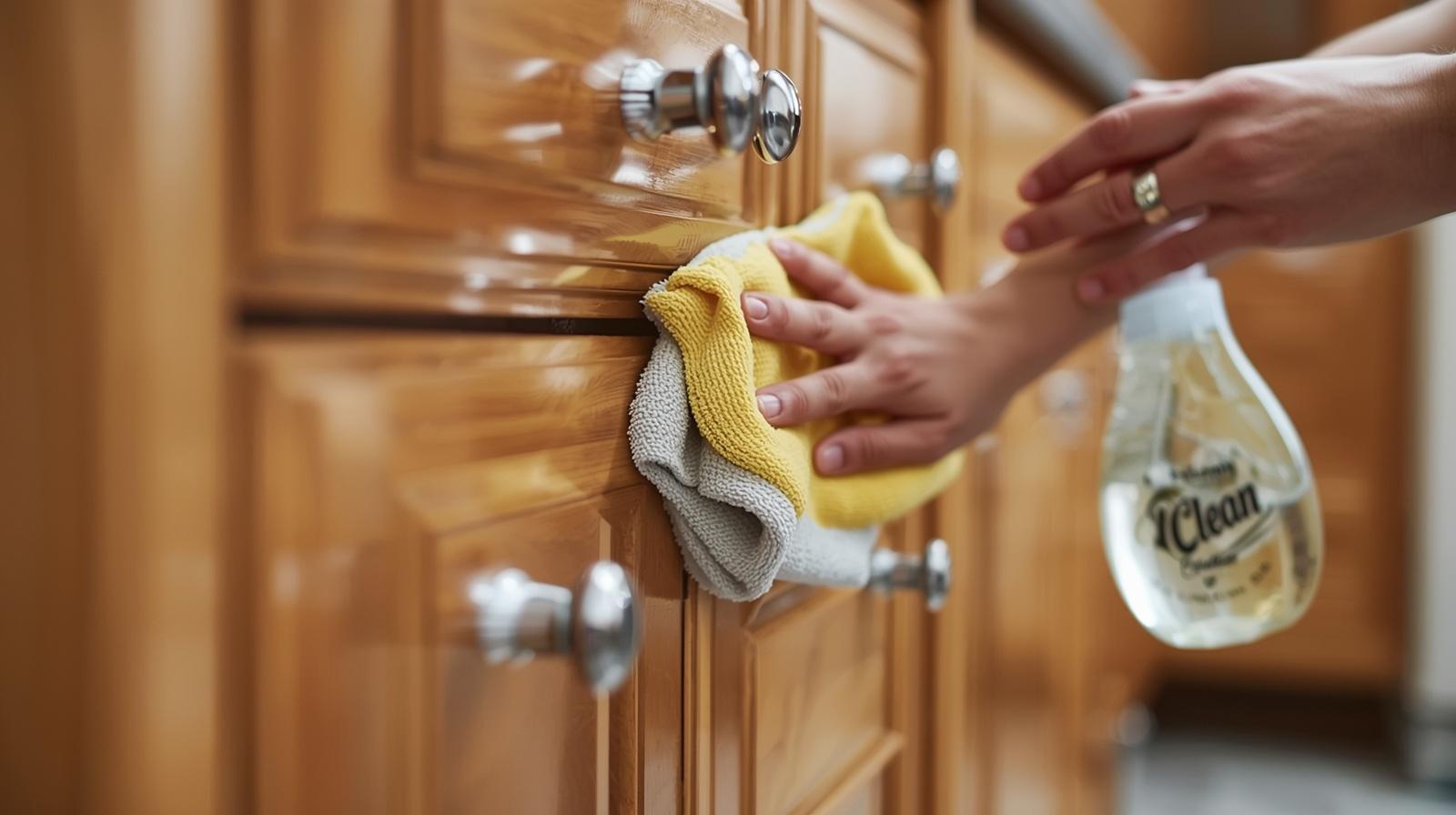
Cabinets take on more grime than almost any other surface in the kitchen. Cooking steam, airborne grease, and constant hand contact near handles all combine to leave a sticky film that a quick wipe rarely removes. Learning how to deep clean kitchen cabinets properly, inside and out, restores both their appearance and their function, and it’s simpler than most people expect once you have the right approach.
This guide covers safe cleaning methods for different cabinet finishes, how to tackle built-up grease, and how to keep the inside of your cabinets just as fresh as the outside.

Identify Your Cabinet Material First
Before you deep clean kitchen cabinets, it’s important to know what you’re working with. Painted wood, stained wood, laminate, and high-gloss finishes all respond differently to cleaning products.
- Painted or stained wood: use mild, pH-neutral cleaners to avoid stripping finish
- Laminate: tolerates most all-purpose cleaners and degreasers well
- High-gloss or lacquered surfaces: avoid abrasive scrubbers that can dull the shine
- Unfinished or raw wood: minimize water exposure to prevent warping
Testing any new product on a small, hidden area first is a smart precaution, especially with painted or specialty finishes.
If you’re unsure what material your cabinets are made from, check List the manufacturer’s care instructions if you still have them, or look at the inside of a door panel where the finish is often less worn and easier to identify. When in doubt, start with the gentlest method, warm water and a few drops of dish soap, and only move to stronger products if that doesn’t fully cut through the buildup.
Removing Grease From Cabinet Doors

Grease buildup is the most common challenge when you Natural deep clean kitchen cabinets, particularly on doors near the stove. A simple, effective approach uses ingredients you likely already have.
- Mix warm water with a few drops of dish soap, or use a dedicated degreasing spray
- Apply the solution to a microfiber cloth rather than spraying directly onto the cabinet
- Wipe in the direction of the wood grain, applying gentle pressure to lift grease
- For stubborn spots, let the solution sit for one to two minutes before wiping
- Dry immediately with a clean cloth to prevent moisture damage
For particularly heavy grease, a paste of baking soda and water can be gently rubbed onto the area with a soft cloth, then wiped clean.
Cleaning Inside Cabinets and Drawers

The interior of your cabinets deserves the same attention as the doors. Crumbs, spills, and shelf liner residue accumulate over time, especially in cabinets used for food storage.
- Remove all items and sort them, discarding expired products
- Vacuum or sweep out crumbs and debris before wiping
- Wipe shelves with a damp cloth and mild cleaner, then dry thoroughly
- Replace worn shelf liners if needed
- Return items in an organized manner, grouping similar items together
Doing this for one cabinet at a time, rather than emptying the whole kitchen at once, keeps the task manageable and prevents countertop clutter from taking over.
Don’t Skip the Hardware and Edges
Handles and knobs are touched constantly, making them one of the dirtiest spots in the kitchen even though they’re often overlooked. An old toothbrush dipped in soapy water works well for cleaning around hardware, hinges, and the grooves where cabinet doors outdoor meet the frame.
- Soak removable handles in warm soapy water for a deeper clean
- Use a toothbrush to scrub around screws and crevices
- Wipe the top edges of cabinet doors, where dust commonly settles
- Check the underside of upper cabinets for grease splatter
These small details are often what separates a cabinet that merely looks clean from one that’s genuinely free of buildup.
Tips to Keep Cabinets Cleaner for Longer
Once you’ve finished a deep clean kitchen cabinets session, a few habits help maintain the results. Wipe doors near the stove weekly, since that area accumulates grease fastest. Use a vent hood while cooking to reduce airborne grease in the first place, and consider a quick monthly wipe-down of handles and high-touch areas.
With this routine in place, your cabinets will need a full deep clean far less often, and the process will go faster each time since you won’t be fighting months of accumulated grime.
It’s also worth considering small upgrades that reduce future buildup altogether. Adding a simple backsplash extension or a removable splatter guard near the stove can catch a surprising amount of grease before it ever reaches the surrounding cabinet doors. Over time, these preventive steps add up, meaning the deep cleaning routine described here becomes more of an occasional refresh than a recurring battle against stubborn, baked-on residue.
 Robert