
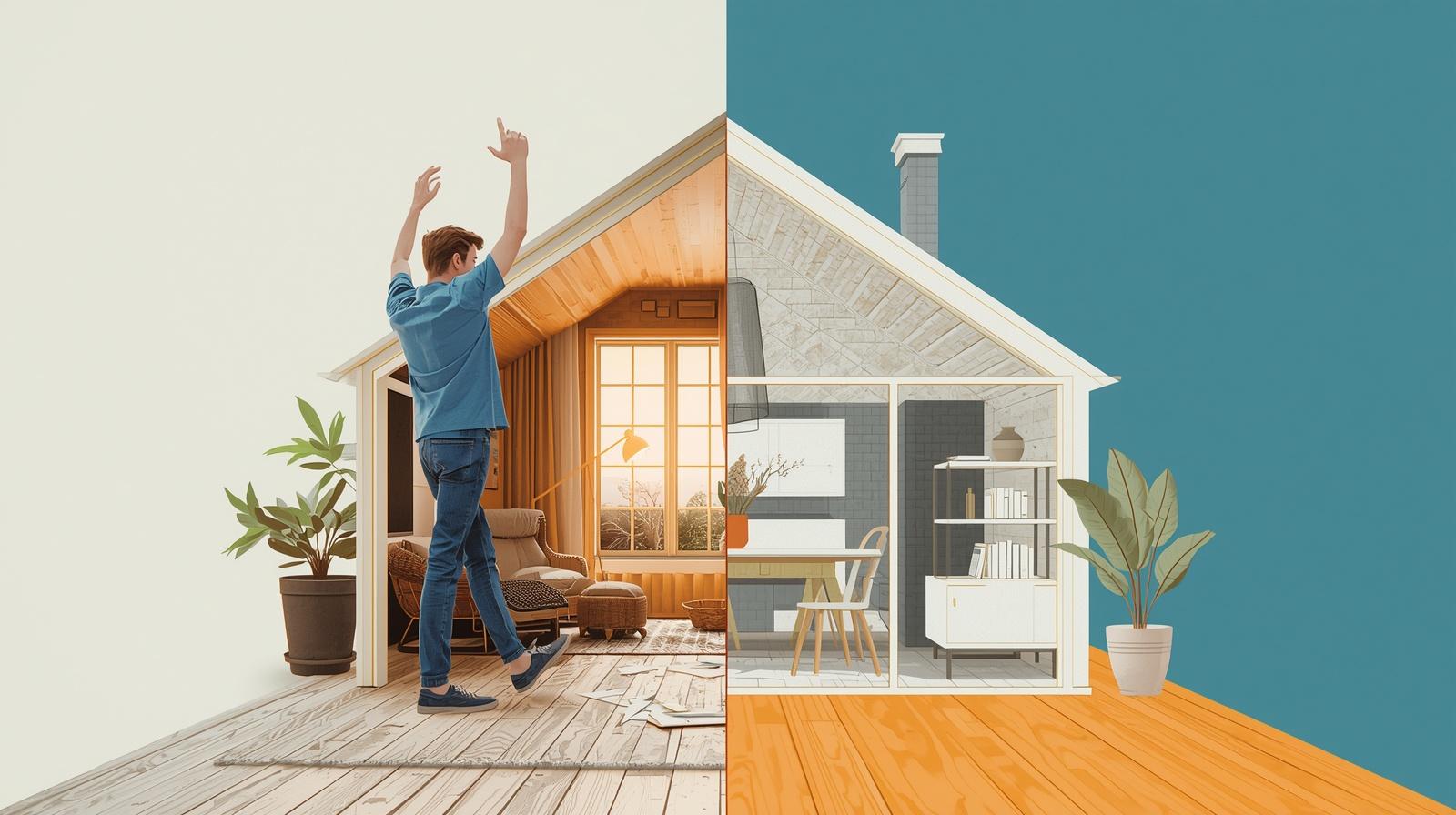
There’s a moment after a move when you stand in the middle of your new place, surrounded by half-unpacked boxes, and realize the lamp you’ve owned for six years suddenly looks wrong. The proportions are off. The color clashes. You loved it last week.
This happens to almost everyone. A move doesn’t just relocate your belongings. It changes how you see them. New walls, new light, new ceiling height, new floor texture, and the things you thought defined your taste are up for review.
The boxes get unloaded in an afternoon. The redesign that follows can take months.
A New Space Tells the Truth About Your Stuff
Your old apartment was forgiving. You knew where the light hit, which corner needed a lamp, why that rug ended up in the hallway. Familiarity smooths the rough edges of design choices.
A new home strips that away. Suddenly scale and proportion start telling on you. Your floor lamp is too tall for the ceiling. Your dining table eats half the kitchen. The bookshelf you swore you’d keep forever looks like it belongs in someone else’s house, because the wall behind it is a different width and a different shade of off-white.
Some designers describe this as a kind of context shift. Most people just call it the move-in slump. According to U.S. Census Bureau mobility data, millions of Americans relocate each year. For many of them, moving also becomes an opportunity to rethink how their homes look and function.
Sorting Forces Decisions You’ve Been Avoiding
Packing makes you touch every single thing you own. Every book, every mug, every weirdly shaped vase from a wedding registry you forgot existed. By the time you’re halfway through the kitchen, you’ve probably already mentally donated a quarter of it.
That sorting changes what comes next. You unpack with fresh eyes. Anything that felt like clutter in box form usually doesn’t make it back to a shelf. And the empty spaces left behind, the bare counter, the half-filled bookcase, start whispering about what could go there instead.
This is where new design choices sneak in. Not through Pinterest boards. Through subtraction.
The Way Rooms Actually Flow Takes Over
Floor plans on paper never quite match how a room behaves. You can’t predict where you’ll naturally drop your keys, which window will pull you in for morning coffee, or where the dog will park itself. Layout, the real working kind, only reveals itself once you start moving through the rooms.
And those habits drive design. The chair that used to anchor your old living room ends up in a bedroom corner because that’s where you now read. The desk that lived in a sunroom gets moved to the kitchen because that’s where calls happen. Function quietly overrules the floor plan you sketched on a napkin.
The physical move itself, boxes loaded, furniture wrapped, truck dispatched, is the easy part to hand off. The team at Up N’ Go Moving handles the logistics in a day, getting everything from one address to the next without the furniture or the schedule falling apart. What they can’t pack is the slow mental recalibration that follows. People often think they redecorated. They didn’t, exactly. They followed the room.
Stress Quietly Shapes What You Keep
Anyone who’s moved recently knows the toll it takes. Psychologists have long noted that major life changes, including relocation, can contribute to stress, and that pressure doesn’t disappear once the truck pulls away.
What it does is push people toward calmer environments. Warmer materials, softer light, fewer objects on every surface. Linen instead of polyester. A single low lamp instead of an overhead glare. After weeks of chaos and cardboard, almost no one wants their new home to feel busy. The instinct is to simplify and soften the space.
You’ll see this in how people set up a new bedroom first. Even if the rest of the house is a disaster, the bed gets made, the side table holds maybe two items, and the room becomes a small recovery zone. That’s not design. That’s relief turning into design.
Old Habits Don’t Always Come Along
Some routines from the old place make the move. Others die quietly in the boxes labeled “miscellaneous.” You used to keep a dish on the entryway table for keys. The new entryway doesn’t have a table. So now keys live in a bowl in the kitchen. And just like that, a small piece of your daily layout got redesigned.
These shifts pile up. A coffee station appears because the new kitchen has counter space the old one didn’t. A reading nook materializes near a window you didn’t know you’d love. The home isn’t designed around an idea anymore. It’s designed around how you actually live, which is usually different from how you thought you lived.
Why the Redesign Keeps Going Long After the Move
For many households, settling into a new home takes far longer than expected, sometimes many months or more. That’s not procrastination. It’s the slow process of a home catching up to its new occupant.
Walls stay bare longer than expected because hanging art too early feels like committing to something you’re not sure of yet. Rugs get swapped twice. The “temporary” arrangement of the couch becomes permanent, then gets moved anyway after a few seasons of using the room and seeing how the afternoon light actually falls across it.
This drift is normal, and arguably healthy. A home designed all at once tends to feel like a showroom. A home that grows into itself feels like somewhere you live.
What Helps Most Isn’t a Design Plan
People often think they need a clear vision before they start. They really don’t. The most useful thing after a move is patience and a willingness to leave things half-done while you figure out how you actually want to use the space.
Live in it first. Notice where light gathers in the afternoon. Pay attention to which corners feel dead and which feel alive. Test a chair in three different spots before deciding. Wait to buy the big piece until you’ve used the room for a few weeks. That kind of slow listening tends to lead to a home that feels right, instead of one that just looks right.
A move ends up doing something useful, even when it’s exhausting. It pulls the rug out from under your design habits and gives you a chance to pick again. Not everyone enjoys that part. But looking back, many people find it was worth it.
 Robert