
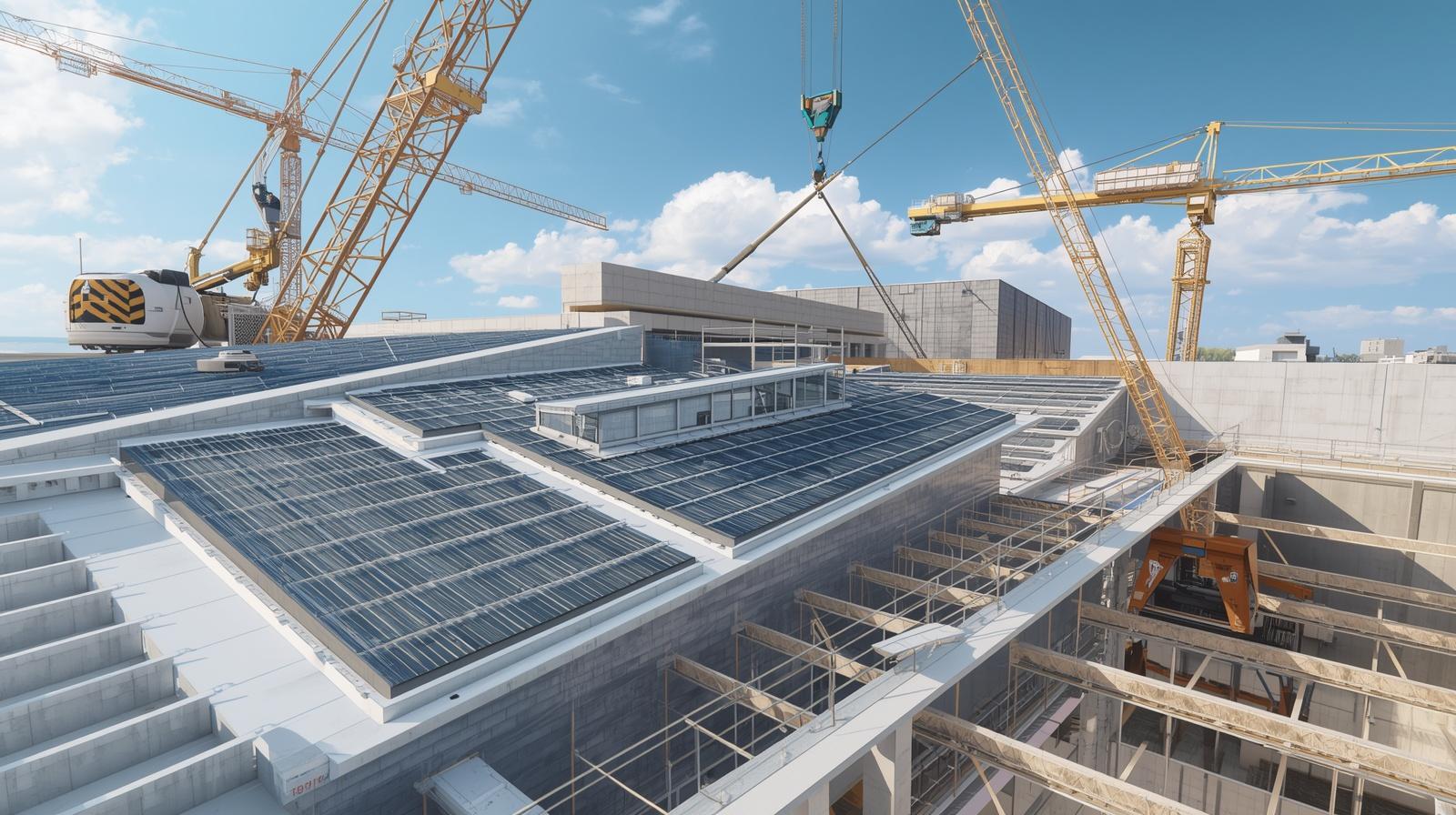
Modern roofing projects have evolved far beyond simple shingle replacement. Today’s residential and commercial roofing systems often include oversized materials, steep rooflines, solar integrations, rooftop HVAC systems, custom architectural features, and tighter project timelines. As roofing projects grow more complex, heavy-lift equipment has become essential for completing work safely, efficiently, and with greater precision..
From cranes and material hoists to rigging slings and spreader bars, specialized lifting equipment helps contractors move heavy roofing materials, reducing manual labor and improving jobsite safety. Many roofing systems on modern homes and buildings would be far more difficult to install without professional lifting solutions.
Modern Roofing Projects Require Smarter Material Handling
Roofing materials are heavier and more complex than many people realize. Bundles of shingles, metal roofing panels, timber trusses, insulation systems, skylights, HVAC units, and solar panels must be safely transported to elevated work areas.
On larger homes or multi-story structures, manually carrying materials up ladders is inefficient and increases the risk of injury. Heavy-lift equipment enables crews to move substantial amounts of material directly to the roof with far less physical strain.
This is especially important for modern custom homes with steep roof pitches, large open spans, or oversized architectural elements. In many cases, cranes and lifting systems help contractors complete installations that would otherwise take much longer with traditional methods.
Cranes Help Improve Roofing Efficiency
Mobile cranes play a major role in modern roofing and residential construction projects. They enable roofing contractors to lift pallets of shingles, steel roofing panels, roof trusses, and prefabricated assemblies directly onto the roof in a controlled manner.
This improves productivity by reducing the time crews spend manually moving materials across the jobsite. It also reduces congestion around ladders and scaffolding, helping crews maintain safer working conditions.
Roof truss installation clearly demonstrates how heavy-lifting equipment improves roofing operations. Large trusses can be extremely heavy and awkward to maneuver. Crane systems, paired with rigging hardware such as synthetic slings, shackles, and spreader bars, enable contractors to position trusses quickly and accurately.
Spreader bars are especially valuable during truss installation because they help distribute loads evenly across the structure. This reduces stress on the truss and improves overall load stability during the lift.
Material Hoists Reduce Physical Strain
Roofing material hoists are another essential tool for modern roofing projects. These systems allow crews to move shingles, tiles, tools, and equipment vertically without relying solely on manual labor.
By reducing repetitive lifting and carrying, material hoists help reduce worker fatigue and improve overall efficiency. Crews can spend more time installing roofing systems and less time moving materials.
For residential roofing projects in densely populated areas, compact hoisting systems can also reduce disruption around the property by enabling a more organized and controlled flow of materials.
Rigging Equipment Provides Better Load Control
Heavy lifting in roofing projects requires more than simply moving weight. Proper load control is critical to protecting both workers and materials during lifting operations.
Rigging tools such as synthetic web slings, wire rope slings, hooks, and lifting clamps help stabilize roofing materials during lifting. Synthetic slings are commonly used because they provide strong lifting capacity while helping prevent surface damage to finished materials, such as painted metal panels or architectural components.
Tag lines are commonly used during crane lifts to control suspended loads and minimize unwanted movement from wind or shifting weight. This is especially important when installing large rooftop equipment or oversized prefabricated sections.
Chain hoists and lever hoists may also be used during roofing work when contractors need controlled positioning of steel supports, rooftop mechanical systems, or suspended architectural features.
Heavy Lifting Supports Safer Roofing Operations
Roofing remains one of the more physically demanding areas of construction. Heavy-lift equipment helps reduce many of the risks associated with carrying materials across elevated surfaces and steep rooflines.
By mechanizing material movement, contractors can reduce repetitive-strain injuries and lower the risk of slips, falls, and dropped materials. Controlled lifting systems also help prevent damage to roofing materials during transport and installation.
Load monitoring systems are increasingly used during larger lifting operations to verify weight distribution and maintain safe lifting conditions. Professional rigging crews also evaluate sling angles, load balance, connection points, and environmental conditions before major lifts begin.
This level of planning becomes especially important when working around expensive residential properties or in confined urban construction sites.
Supporting Modern Roofing Trends
Many current roofing trends rely heavily on advanced lifting solutions. Solar panel installations, rooftop outdoor living spaces, large skylight systems, and modern standing seam metal roofs often involve oversized or delicate components that require precise handling.
Heavy lifting equipment allows contractors to install these systems with greater accuracy while reducing installation time. Vacuum lifting systems, for example, are sometimes used to position large glass skylights or architectural panels safely.
As homes continue to incorporate more complex rooftop features, lifting technology will remain a critical part of modern roofing construction.
Heavy Lifting Equipment Is Changing Roofing Projects
Modern roofing projects demand speed, precision, and safety. Heavy lifting equipment helps contractors meet those demands by improving material handling, reducing labor strain, and supporting more advanced architectural designs.
From cranes and material hoists to synthetic slings, spreader bars, and chain hoists, professional lifting equipment has become an essential part of roofing operations. As roofing systems continue to evolve, the role of heavy lifting and rigging technology will only become more important in helping contractors complete projects safely and efficiently.
 Robert