
Introduction
Today’s homeowners expect more from their roofs than basic protection. They want a roof that enhances curb appeal while improving energy efficiency. Modern roofing designs combine sleek architectural lines, sustainable materials, and smart technology to lower energy costs without sacrificing style.
Why Modern Roofing Matters
A well-designed roof boosts your home’s appearance while improving its overall performance. Energy-efficient materials help regulate indoor temperatures, reduce heating and cooling costs, and extend the roof’s lifespan. This guide explores modern roofing design ideas that blend visual appeal with energy-saving features, helping you choose a roof that looks great and performs even better.
1. Cool Roofing Materials That Reflect Heat
Cool roofing materials, designed with reflective coatings or naturally light colors, reflect more sunlight and absorb less heat than traditional roofing, reducing cooling costs in warmer climates. Metal roofing with reflective finishes and light-colored tile are two popular cool roofing options that combine modern style with genuine energy savings.

2. Solar-Integrated Roofing Systems
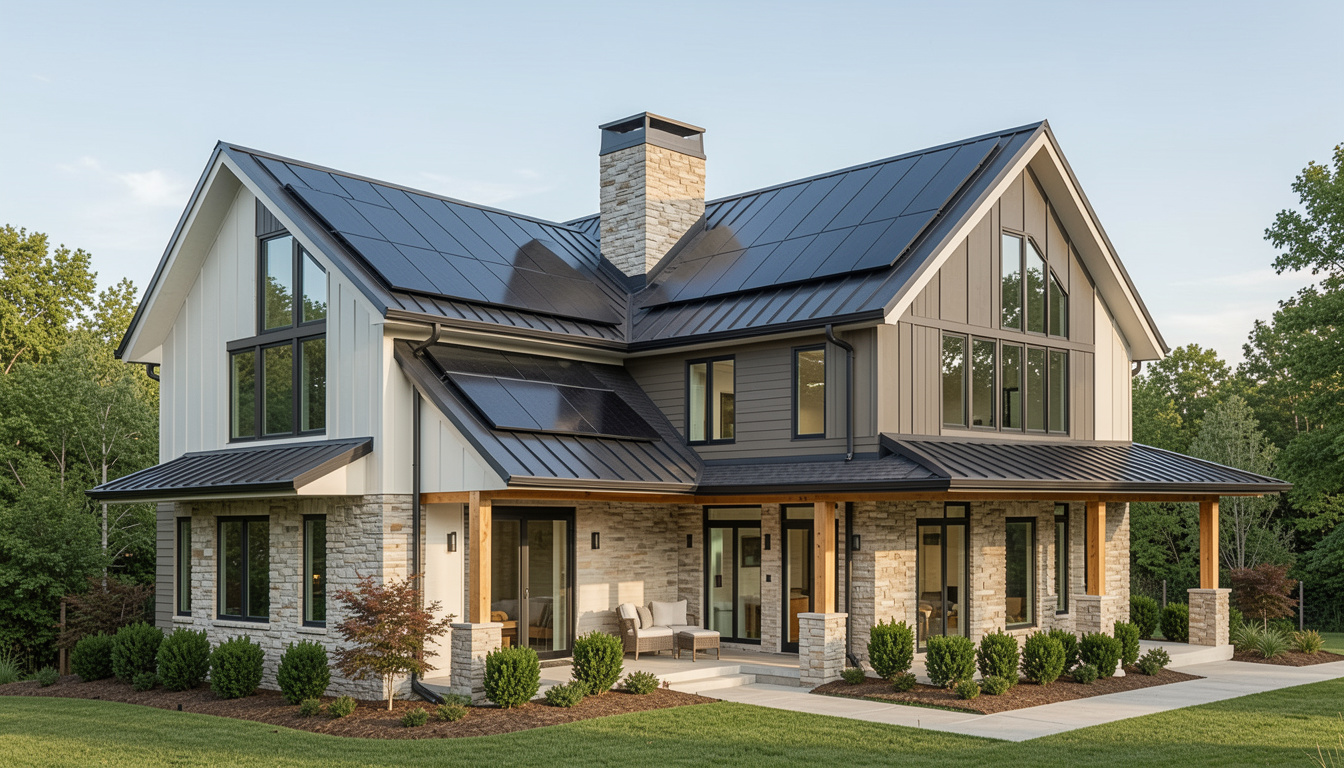
Solar shingles and integrated solar roofing systems have become a defining feature of modern, energy-efficient homes. Unlike traditional bulky solar panels, integrated solar roofing systems blend seamlessly into the roofline. They generate clean energy while preserving your home’s visual appeal and enhancing its overall aesthetic.
3. Sleek Low-Slope and Flat Roof Designs
Low-slope and flat roof designs have become increasingly popular in modern residential architecture, offering a clean, minimalist look that pairs well with contemporary home styles. Additionally, these designs allow homeowners to create rooftop gardens, install solar panels, and expand their outdoor living space.

4. Green Roofs for Sustainability
Green roofs, covered with vegetation over a waterproof membrane, provide natural insulation, reduce stormwater runoff, and support biodiversity in urban areas. Although commercial buildings have traditionally used green roofs, more homeowners now choose them for their sustainability and unique appearance. As a result, green roofs have become an attractive option for improving curb appeal while supporting eco-friendly living.
5. Standing Seam Metal for a Contemporary Look
Standing seam metal roofing, with its clean vertical lines and hidden fasteners, has become a signature feature of modern residential design. Additionally, manufacturers offer metal roofing in a wide range of colors and finishes. It complements both minimalist and industrial-inspired home exteriors while providing exceptional durability and improving energy efficiency.
6. Skylights and Roof Windows for Natural Light
Adding skylights and roof windows to a modern roofing design brings more natural daylight into your home and reduces the need for artificial lighting during the day. Additionally, energy-efficient double-glazed skylights help minimize heat loss in winter and reduce heat gain in summer. As a result, they improve your home’s overall energy efficiency while creating a brighter and more comfortable living space.
Frequently Asked Questions (FAQs)
Find answers to the most searched questions about modern roofing design, energy-efficient roofing systems, materials, costs, and maintenance.
1. What is the best roofing material for energy-efficient homes?
Metal roofing, cool roofs, clay tiles, slate, and high-quality architectural asphalt shingles are among the best options for improving energy efficiency. Reflective roofing materials reduce heat absorption, helping lower cooling costs during summer.
Learn more: U.S. Department of Energy – Cool Roofs
2. How can a modern roof improve home energy efficiency?
Modern roofing systems use reflective coatings, proper insulation, attic ventilation, and durable materials to reduce heat transfer. These features help maintain comfortable indoor temperatures while lowering heating and cooling expenses.
3. Which roofing color keeps a house cooler?
White, light gray, beige, and other light-colored roofs reflect more sunlight than dark colors. This helps reduce roof temperatures and improves overall energy efficiency, especially in warm climates.
4. Are metal roofs better than asphalt shingles?
Metal roofs generally last longer, require less maintenance, and offer better energy efficiency. Asphalt shingles are more affordable upfront and remain one of the most popular roofing choices for residential homes.
5. What is the lifespan of a modern roof?
The lifespan depends on the material:
- Asphalt shingles: 20–30 years
- Metal roofing: 40–70 years
- Clay tiles: 50–100 years
- Slate roofing: 75–150 years
6. What roofing style is most popular for modern homes?
Flat roofs, low-slope roofs, standing seam metal roofs, butterfly roofs, and minimalist gable roofs are among today’s most popular modern roofing styles because they combine clean aesthetics with excellent functionality.
7. Can solar panels be installed on any modern roof?
Most modern roofs can support solar panels when they are structurally sound and receive sufficient sunlight. Metal roofs are especially popular because they simplify installation and improve long-term durability.
Learn more: Homeowner’s Guide to Going Solar
8. How much does a modern roof cost?
Roofing costs vary depending on material, labor, roof size, and location. Asphalt shingles are generally the most affordable, while slate and premium metal roofs require a higher initial investment but often provide better long-term value.
9. What maintenance does a modern roof require?
Homeowners should inspect the roof twice a year, clean gutters, remove debris, check flashing, repair damaged shingles, and schedule professional inspections after severe storms to maximize roof lifespan.
10. How do I choose the right roofing contractor?
Select a licensed and insured contractor with positive customer reviews, written warranties, transparent pricing, and experience installing your preferred roofing material.
Contractor tips: National Roofing Contractors Association (NRCA)
11. Is roof insulation important for energy savings?
Yes. Proper roof insulation helps reduce heat transfer, lowers energy bills, improves indoor comfort, and minimizes strain on heating and cooling systems throughout the year.
12. What are cool roofs, and are they worth it?
Cool roofs are designed with highly reflective materials that absorb less solar heat. They help reduce indoor temperatures, improve energy efficiency, and may extend the lifespan of roofing materials.
Conclusion
Modern roofing design proves that energy efficiency and style do not have to be mutually exclusive. From solar-integrated shingles to sleek standing seam metal and sustainable green roofs, today’s roofing options allow homeowners to create a roof that reflects their personal style while genuinely reducing energy costs. As you plan your next roofing project, consider how these modern design ideas can enhance both the appearance and performance of your home.
 Robert