
Introduction
A roof is one of the most important investments in any home, protecting everything beneath it from weather, sun, and structural damage. Whether you are building a new home or replacing an aging roof, understanding the roofing installation process helps you make informed decisions and avoid costly mistakes. This complete roofing installation guide walks through the materials, step-by-step process, and best practices that professional roofers follow, so you know exactly what to expect and how to evaluate the quality of the work being done on your home.
1. Choosing the Right Roofing Materials
Before installation begins, selecting the right roofing material is essential. Asphalt shingles remain the most common choice for residential homes due to their affordability and ease of installation, while metal roofing offers superior durability and energy efficiency. Tile and slate provide a premium, long-lasting option for homeowners willing to invest more upfront. Your climate, budget, and the pitch of your roof all influence which roofing material is the best fit for your project.
2. Roof Inspection and Preparation
Every roofing installation begins with a thorough inspection of the existing roof deck and structure. Roofers check for rot, water damage, and structural weaknesses before removing the old roofing material. Proper preparation, including repairing or replacing damaged decking, ensures the new roof has a solid, stable foundation.

3. Installing the Underlayment
Roofers install underlayment as a water-resistant barrier directly over the roof deck before they apply shingles or other roofing materials. This protective layer prevents moisture from entering your home when strong winds or heavy rain force water beneath the primary roofing material. Every roofing system relies on underlayment for an extra layer of protection, so homeowners and contractors should never skip this essential step during roof installation.
4. Flashing and Ventilation Installation
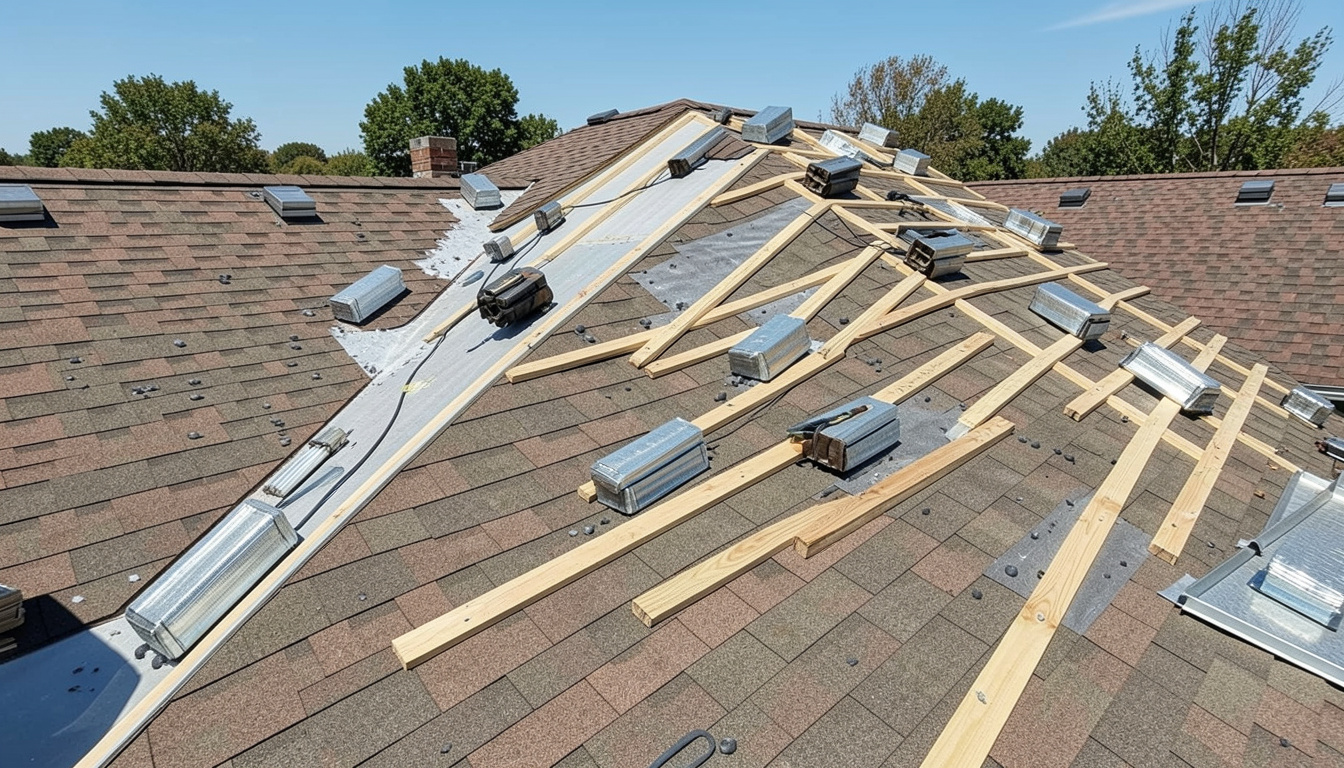
Roofers install flashing around chimneys, vents, skylights, and roof valleys to direct water away from vulnerable seams. They also install proper attic ventilation with the roofing system to regulate temperature and moisture. This ventilation helps prevent ice dams during winter and reduces heat buildup in summer, allowing the roof to last longer.

5. Applying the Roofing Material
Roofers install shingles, metal panels, or tiles according to the manufacturer’s specifications after placing the underlayment and flashing. They start at the bottom edge of the roof and work upward in overlapping rows. Proper nailing patterns and correct spacing improve wind resistance and ensure long-term durability.
6. Final Inspection and Cleanup
After installation, our team inspects every seam, flashing point, and ridge cap to ensure proper sealing and secure installation. Reputable roofing contractors also perform a thorough cleanup, removing old materials, nails, and debris from the property before considering the job complete.
Complete Roofing Installation Guide: FAQs
Find answers to the most searched roofing installation questions. These FAQs help homeowners understand roofing materials, installation methods, maintenance, costs, warranties, and best practices.
What is the best roofing material for residential homes?
How long does a new roof installation take?
How much does a complete roof replacement cost?
What are the main steps in roof installation?
Why is roof flashing important?
What is roof underlayment?
How often should a roof be inspected?
Can a new roof increase home value?
What is the average lifespan of different roofing materials?
Why is attic ventilation important for roofing?
Helpful Roofing Resources
Learn more about roofing installation, maintenance, and safety from trusted organizations:
Conclusion
A successful roofing installation depends on careful material selection, proper preparation, and strict adherence to best practices at every stage of the process. By understanding what a quality installation involves, from underlayment to final inspection, homeowners can better evaluate contractor bids and ensure their new roof provides lasting protection for decades to come.
 Robert